Hybrid
MCAA Annual Conference 2026
- General Info
- Agenda
- Session abstracts
- Speakers
- Participant guide
- Satellite events
- Sponsorships
- Calls
The MCAA Annual Conference 2026 will take place on 22–25 April in Brussels, Belgium, and online under the theme “Research careers beyond borders: 30 years of the MSCA.”
Join our flagship event bringing together hundreds of researchers, policymakers, and innovators from around the world to exchange ideas, network, and shape the future of research and innovation!
Register for the MCAA Annual Conference 2026!
Read this step-by-step registration guide and click on the button below to secure your spot before 20 April 2026.
Agenda
You can find the agenda of the MCAA Annual Conference 2026 below. Please note that the information presented is tentative and might change. You can find the list of session topics at the bottom of the page.
DAY 1 - Wednesday 22 April 2026
Time
Room
Event
Speakers
DAY 2 - Thursday 23 April 2026
Time
Room
Event
Speakers
DAY 3 - Friday 24 April 2026
Time
Room
Event
Speakers
DAY 4 - Saturday 25 April 2026
Time
Room
Event
Speakers
Session abstracts
Plenary session 2
Shaping research autonomy: Architecting the future of Horizon Europe
Negotiations for the Multiannual Financial Framework (MFF) and the legislative succession of Horizon Europe (2028–2034) define the scientific trajectory of the next decade. This strategic plenary evaluates the evolving programme architecture in light of the landmark Heitor, Draghi, and Letta reports, which collectively establish the rationale for an ambitious €220 billion budget to secure Europe's global standing. The session examines significant amendments introduced in recent European Parliament draft reports to ensure the next framework remains a standalone, autonomous instrument. These proposals specifically aim to protect research governance from subordination to industrial manufacturing objectives within the proposed European Competitiveness Fund (ECF), asserting that scientific priorities must remain independent of short-term political steering. Incorporating perspectives from the European Commission and Member States, the discussion analyses the structural requirements for a simplified, trust-based funding model designed to empower the research community. Central to this deconstruction is the future of the Marie Skłodowska-Curie Actions (MSCA); the panel addresses the legislative necessity of a dedicated work programme and evaluates the risks of top-down thematic directionality to ensure that bottom-up excellence remains the primary driver of European innovation.
Parallel session slot 1
The MCAA roadmap for research assessment reform
While the global momentum for reforming research assessment has reached a critical mass through initiatives like CoARA and DORA, a significant implementation gap remains at the level of individual researchers. For early-career researchers (ECRs) in particular, the transition towards qualitative evaluation is often marked by a lack of institutional coordination and a misalignment between high-level policy and career progression reality. This inward-focused session presents key insights of the 2025 MCAA Survey on Research Assessment, highlighting the specific systemic barriers and challenges identified across the MCAA community.
Mental health in academia: risks and strategies to take into account
Mental health is increasingly recognised as a key dimension of research careers, yet many risks remain overlooked, from precarity and isolation to burnout, hyperproductivity, and toxic workplace cultures. This session will explore the main mental health challenges affecting researchers and discuss practical, structural, and community-based strategies that institutions, supervisors, and researchers themselves can take into account to foster healthier and more sustainable academic environments.
Precarious returns: Research careers in emerging and under-resourced contexts
This session addresses precarious returns, structural inequalities, and career precarity among researcher returnees (former MSCA fellows) in emerging and under-resourced research contexts, particularly in the Western Balkans and the Global South. It highlights barriers to stable careers within and beyond academia, precarious working conditions, and broader social inequalities, especially in the Humanities, Arts and Social Sciences (HASS). It also examines non-voluntary return, cross-sector reintegration challenges, and potential pathways toward more inclusive, equitable, and sustainable research careers and broader professional trajectories.
Advancing citizen science in Europe: From collaboration to sustainable research futures
This panel brings together European Citizen Science (ECS) Project partners (MCAA, UPCité/LPI, SfC) to reflect on advancing citizen science through collaboration, capacity building, and inclusive practice. It will highlight key outputs, including NR4CS, training resources, and the ECS Academy, while exploring future directions such as competency frameworks, science communication, and links to CoARA and COALESCE. The session will discuss how to embed citizen science sustainably in research systems and support researchers in engaging with society.
Parallel session slot 2
Freedom of scientific research: Protecting autonomy, integrity and safety in a changing world
Freedom of scientific research is a fundamental principle of the European Union, enshrined in Article 13 of the Charter of Fundamental Rights. It concerns researchers’ ability to define questions, methods, collaborations and dissemination pathways without undue political, economic or institutional interference. This session explores how that freedom is exercised in practice, the pressures it faces today, and the safeguards needed to protect researcher autonomy, integrity and safety.
Human-centred Open Science: Reimagining Open Science for societal engagement
Open Science promises transparency, accessibility and collaboration, but does it actually serve the needs of society, citizens and researchers? This session explores putting people at the centre, specifically how communities participate in knowledge creation on their own terms. It examines the MCAA’s advocacy for rights retention and open infrastructures in supporting a research ecosystem where knowledge is a shared public good. By shifting toward non-commercial, collaborative models and citizen science, the session identifies pathways for science to become truly inclusive and responsive.
The new lingua franca of science: Beyond English, beyond words
Science communication is evolving beyond a single dominant language and beyond static text-based formats. While English has long served as the lingua franca of research, emerging technologies are fundamentally reshaping how knowledge is created, shared, and understood across borders.
This session explores the emergence of a new, multilayered language of science—one that integrates AI-driven multilingual translation, computational methods and code, and visual and interactive media for broader accessibility. Research is no longer simply read; it is visualised, executed, and experienced through formats that transcend linguistic and disciplinary barriers.
Simultaneously, conversational AI is transforming science communication from a one-way broadcast into interactive dialogue. Researchers can now create AI interfaces that allow audiences to query findings, receive personalised explanations tailored to their level of expertise, and engage with research in real time—all potentially in their native language.
These developments open unprecedented possibilities for inclusion, collaboration, and global reach. Yet they also raise critical questions:
- How do we ensure accuracy when AI mediates scientific communication?
- What happens to authorship and attribution in AI-generated explanations?
- How do we address algorithmic bias in translation and curation systems?
- Can we maintain public trust in science when the line between human and machine communication blurs?
The session brings together experts to:
- Examine how AI translation, code, and multimedia formats are creating new pathways for borderless science communication.
- Demonstrate emerging tools through live examples—from multilingual computational notebooks to AI research assistants.
- Engage participants in designing communication strategies that leverage these technologies while addressing their limitations.
- Equip researchers with practical frameworks for choosing appropriate formats, tools, and approaches for diverse audiences.
MSCA funded networks: From European to global talent
Over the last 30 years, MSCA-funded Training Networks have evolved from predominantly European recruitment processes into truly global talent magnets. Drawing on more than a decade of coordination experience, this panel session examines how applicant patterns have shifted, bringing cultural enrichment, global networks, and diverse mindsets, but also new challenges: assessing international candidates, navigating visa and mobility rules, and coordinating calls across time zones.
In an increasingly complex geopolitical landscape, the session will also address the growing tension between the aspiration for open, merit-based recruitment and the realities of research security. Certain geopolitical contexts create additional scrutiny around applicants from specific regions, requiring consortia and host institutions to develop nuanced strategies that balance openness with due diligence. The panel will explore how coordinators and institutions can maintain inclusive recruitment practices while meeting evolving compliance and security requirements.
A further challenge lies in the assessment of candidate excellence beyond familiar European frameworks. Coordinators often lack the institutional knowledge to evaluate qualifications from non-European higher education systems, where grading scales, degree structures, and markers of academic merit differ fundamentally from the European Credit Transfer System (ECTS) and the Bologna framework. The session will discuss practical approaches to designing fair, competency-based selection criteria that can recognise talent regardless of its origin.
A panel of project managers, coordinators, fellows, and EU programme officers will share lessons learned and practical recommendations for inclusive, effective, and security-aware recruitment in the next generation of MSCA Doctoral Networks.
Parallel session slot 3
Research careers within and beyond the ERA Act: Delivering the Fifth Freedom
Europe’s ambition to build a stronger and more integrated Research Area (ERA) increasingly rests on the idea of a fifth freedom: the free movement of researchers, knowledge, and innovation across borders, sectors, and institutions. Yet this ambition can only succeed if research careers themselves are sustainable, attractive, and genuinely portable. Across Europe, researchers still face fragmented career structures, precarious contracts, uneven social protection, mobility and visa barriers, weak recognition of qualifications and skills, and limited interoperability between academic and non-academic career paths. Research careers are therefore not a peripheral issue, but central to making the fifth freedom real.
This session will explore how Europe can move from policy ambition to practical implementation. It will discuss how current initiatives, chiefly the ERA Act, can create the framework conditions for researchers to move without losing rights, build careers across sectors, and contribute to an open and competitive knowledge system. The session will address persistent structural gaps in employment conditions, career progression, portability of rights, and balanced talent circulation, while also asking what political commitment, institutional change, and investment are still needed within and beyond the Act itself.
The institutional and territorial impact of the MSCA
While the MSCA are widely recognised for shaping individual research careers, their broader institutional and territorial impact remains insufficiently articulated. Across Europe, universities face persistent challenges in attracting, retaining, and reintegrating talent, often lacking coordinated strategies to fully leverage MSCA investments within their organisational and regional contexts, and to strengthen Europe’s competitiveness in attracting and retaining global talent.
This session will examine how the MSCA can act as a strategic instrument for strengthening universities and talent ecosystems, bringing together institutional, policy, alumni, and governance perspectives. It will explore systemic barriers, highlight emerging practices, and identify pathways to enhance the long-term institutional and territorial impact of the MSCA across Europe.
From lab to market: The commercialisation journey with the EU Inc. initiative
MSCA researchers often struggle with the "where" of innovation: where to start, where to find support, and how to bridge the gap between a complex idea and commercial reality. This session provides a strategic roadmap from "idea to ideal," specifically highlighting the EU Inc. initiative as a transformative solution. By offering 48-hour registration, zero minimum capital, and a "once-only" digital interface for tax and VAT, EU Inc. removes the bureaucratic weight that stifles deep tech. We explore how its pan-European employee stock options and simplified investment rules empower researchers to attract talent and scale across the Single Market without the traditional friction of 27 different legal systems.
Care, confidence, and careers: Supporting inclusive research pathways
This session explores how caregiving responsibilities, well-being, and supportive research environments shape researchers’ confidence and career progression. It will look at the realities many researchers face while navigating international mobility, parenting and other family caregiving responsibilities across diverse family structures, and the broader pressures of academic life. In this context, the discussion will consider how institutions and programmes can better support researchers in balancing mobility, family responsibilities in their broadest sense, and professional development.
The session will move across three interconnected dimensions. First, it will reflect on care, including parenting and family caregiving during international mobility, institutional policies that support researchers with family responsibilities, and the importance of well-being and mental health in academic careers. It will then turn to confidence, addressing issues such as imposter syndrome among early-career researchers, the confidence gaps that can affect women and underrepresented groups in academia, and the role of mentoring and peer networks in building a sense of belonging. Finally, the session will explore careers, focusing on inclusive funding schemes and career pathways after fellowships or career breaks, inclusive recruitment and career progression processes, including leadership opportunities, and how research institutions can retain diverse talent, while recognising different life circumstances and career trajectories.
Parallel session slot 4
Empowering researcher networks as strategic actors in science diplomacy
The global research ecosystem currently operates within a paradox: while the professional lives and mobility of researchers are the first to be disrupted by geopolitical fractures, their representative networks are often the last to be consulted in formal diplomatic loops. In the wake of the 2026 Council Recommendations on Science Diplomacy, a critical challenge persists: transitioning non-state actors from “passive shock absorbers” of state-level decisions to strategic participants in the policy-making process.
This session moves beyond the theoretical to examine the practical “plumbing” of science diplomacy. It investigates how professional researcher networks can proactively inform political agendas, translate community-driven evidence into policy-ready insights, and preserve a stable space for collaboration during periods of significant geopolitical rupture—such as shifting transatlantic dynamics or regional conflicts. By analysing the strategic agency of organisations like the MCAA, the discussion provides a roadmap for leveraging the collective voice of the research community. The goal is to ensure that value-based international collaboration is treated not as a diplomatic luxury, but as a foundational prerequisite for informed foreign policy.
Ethics in the MSCA context: Culture, supervision, integrity
This session will explore research ethics and integrity in the MSCA through the lens of research culture. It will address ethical supervision and power relations in international settings, integrity in cross-border collaboration, and institutional responsibility for fair and accountable research environments. Moving beyond compliance, it will examine how MSCA can foster ethical cultures that support independence, fairness, and trust, and identify practical improvements at supervisory, institutional, and programme levels in diverse international research contexts.
Navigating scientific mobility abroad: integration challenges
While international mobility - core for the MSCA framework - offers significant professional development opportunities, it implies under-addressed challenges. Researchers moving abroad frequently face complex administrative procedures, including securing accommodation, navigating local residency requirements, healthcare systems, banking, and taxation. These are further complicated by limited institutional guidance, language barriers, and local regulations not tailored to international researchers. The session aims to spark discussion on existing initiatives and emerging strategies meant to facilitate practical settlement during scientific mobility.
Green innovation pathways and career development in research
This session explores how sustainability can shape research careers and drive green innovation across academia and industry. From doctoral training to senior leadership, speakers will discuss how researchers can embed sustainability into research design, lab and data practices, mobility, funding strategies, and institutional culture. Building on the MSCA Green Charter, the session will highlight practical tools, career opportunities, and innovation pathways that connect environmental responsibility with research excellence, societal impact, and future funding competitiveness.
Parallel session slot 5
Doctoral training, skills and research careers
Doctoral education and researcher training should be placed more firmly at the heart of Europe’s competitiveness, resilience, and innovation agenda. This session will explore how doctoral programmes can better develop and recognise researchers’ scientific, transferable, digital, entrepreneurial, and intersectoral skills. It will discuss structured training, career readiness, and the contribution of the MSCA to connecting education, skills, mobility, and research careers across Europe.
Sustainable research careers: Frameworks for the future
The European research landscape is facing a critical transition from temporary, precarious contracts to sustainable career models. This session will explore the systemic evolution of Researcher Career Frameworks through the lens of crucial European projects and initiatives (SECURE, SECURE2, CCA) and the ResearchCOMP competence framework. By examining future tenure track designs and the necessary mindset shifts for early-career researchers, the discussion bridges the gap between regional implementation and European Strategic goals. The narrative focuses on empowering researchers with transferable skills and stable structures to thrive in a diverse, intersectoral labour market.
Responsible AI in global research careers: From principles to practice
Artificial intelligence (AI) is increasingly embedded in research workflows, yet guidance on responsible AI use remains fragmented across countries, institutions, and disciplines. For globally mobile researchers, such as MSCA alumni working in international collaborations, this creates uncertainty around issues such as authorship, disclosure of AI use, data governance, and accountability. This session explores how researchers can translate emerging AI governance frameworks into practical research practices across borders and identifies key gaps in current guidance.
Career development through leadership, impact, and cultural change
This session explores how leadership, societal impact, and cultural change are becoming central to career development across sectors. In a context shaped by artificial intelligence, global mobility, and shifting institutional and social expectations, career sustainability increasingly relies on the capacity to lead with purpose, engage across cultures, and translate expertise into meaningful impact. Moving beyond a narrow focus on technical skills, the session will explore how leadership, communication, adaptability, and cultural awareness can support more resilient, inclusive, and socially relevant professional pathways across academia, industry, policy, and entrepreneurship.
Distinguished Speakers



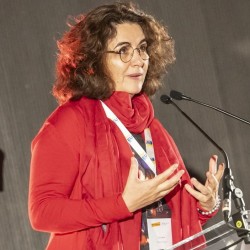
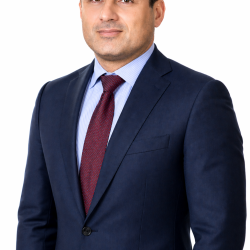
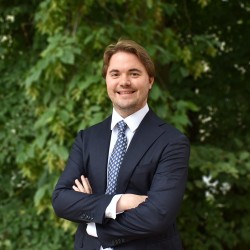
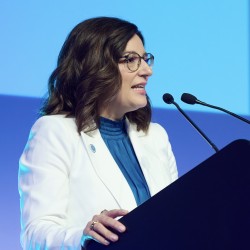
Speakers



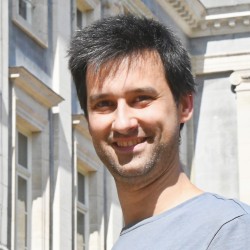

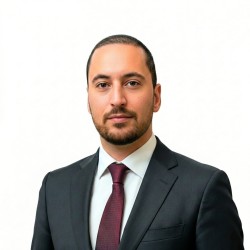







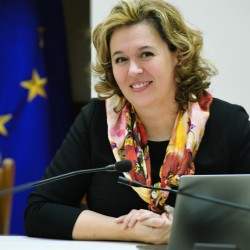




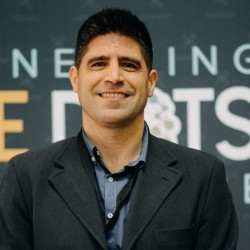
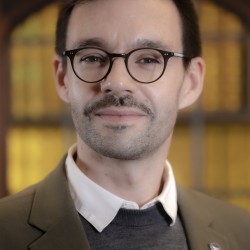






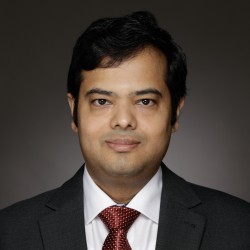




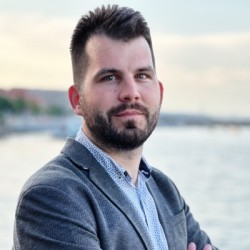


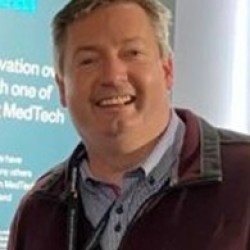









Participant guide
On this page, you can find information on the conference venue, travel options, hotel recommendations, and our conference host city, Brussels. Click on the titles below for more information!
Venue
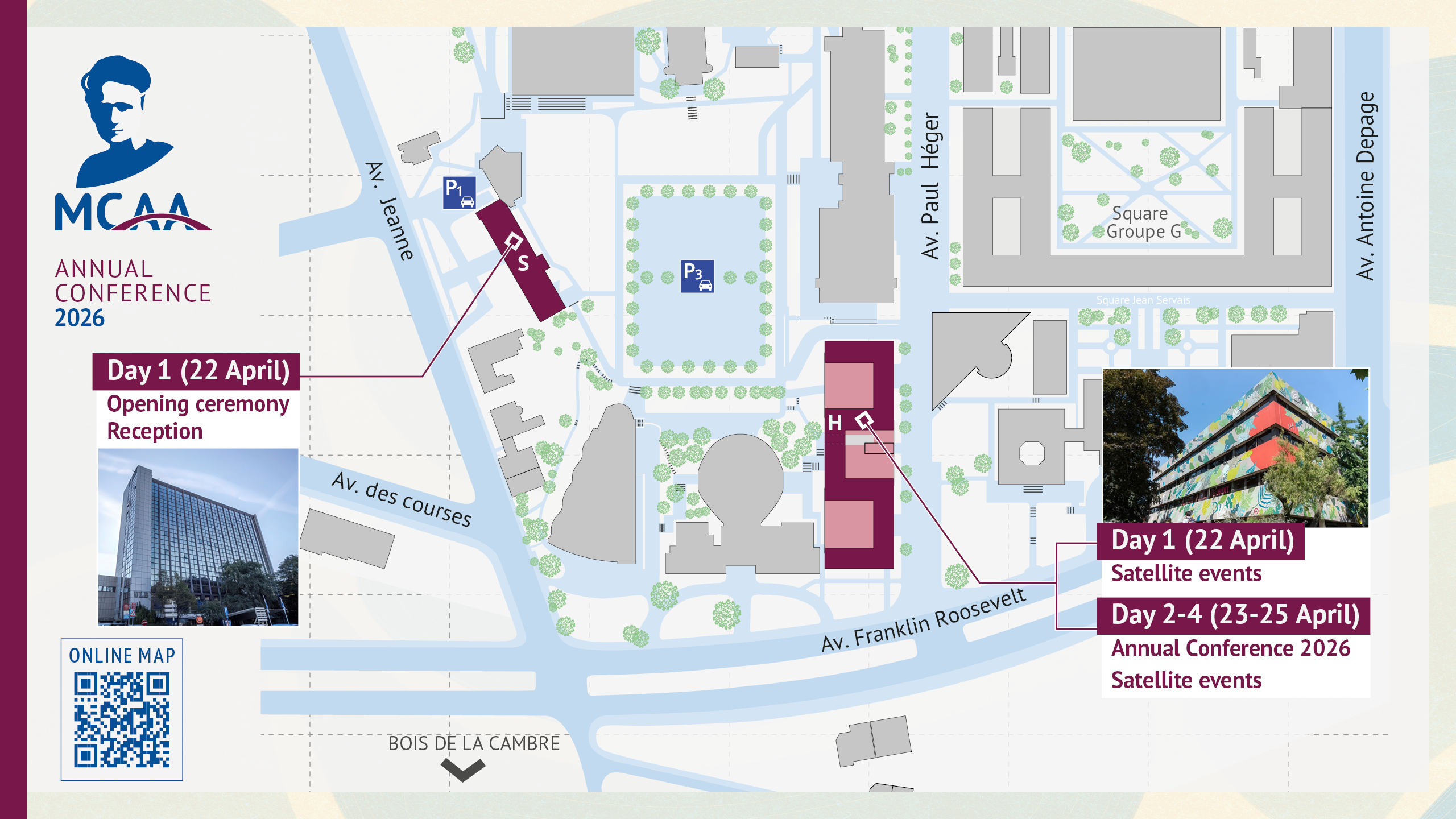
The conference will be held at the Université libre de Bruxelles (ULB) on its Solbosch campus. On the first day of the conference (22 April), the reception and opening ceremony will take place in building S (see it in purple on the left in the image below).
The rest of the conference on days 23-25 April, as well as all satellite events (also on 22 April), will be held in building H (in purple on the right in the image below).
Travelling to Brussels
Thanks to its central location in Europe, Brussels is easily accessible by air, rail, road, and long-distance bus.
Arriving by plane
Brussels Airport (BRU–Zaventem)
- Belgium’s main international airport
- Located approximately 12 km from the city centre
- Direct train connections to Brussels Central, Brussels Midi (South), and Brussels North stations (travel time: ~20 minutes)
- Taxis and airport shuttle services are widely available
Brussels South Charleroi Airport (CRL)
- Located approximately 55 km south of Brussels
- Primarily used by low-cost airlines
- Regular shuttle buses connect the airport to Brussels Midi station (travel time: ~60 minutes)
Official carrier of the MCAA Annual Conference 2026
We have partnered with the Lufthansa Group airline network to offer discounts on flights to and from Brussels for the conference dates. Click the button below to browse special prices for flights up to one week before and one week after the event.
Arriving by train
Train travel is one of the most convenient ways to reach Brussels from neighbouring countries.
- Paris → Brussels: ~1 hour 25 minutes (high-speed services)
- London → Brussels: ~2 hours 20 minutes (Eurostar)
- Amsterdam → Brussels: ~2 hours
- Cologne → Brussels: ~2 hours
Main stations in Brussels:
- Brussels Midi (South)
- Brussels Central
- Brussels North
Once in Belgium, trains are an excellent option for visiting nearby cities such as Ghent, Bruges, Antwerp, and Leuven.
Brussels is well connected to France, the Netherlands, Germany, and Luxembourg by motorways. Parking in the city centre can be limited and expensive; public transport is recommended once you arrive.
Hotel options
Here you can find a list of hotels offering discounted rates for our conference participants. You can see the reservation instructions and potential discount codes for each hotel below.
Ibis Brussels Centre Chatelain (between 21 – 26 April)
Ibis Brussels Centre Châtelain is located in the Châtelain neighbourhood of Brussels, an area well known for cafés, restaurants, and local atmosphere. The hotel is well connected by public transport, making it easy to reach the conference venue in around 20 minutes.
Address: Chau. de Vleurgat 191, 1050 Brussels
Reservation: The guest must complete the reservation form and email it to [email protected].
Cost per night in a standard single room: €125 (+ city tax €5,30)
Breakfast included in the price: Yes
Distance from the conference venue: 1,5 km / 16–20 min by bus/tram
Number of available rooms: Depending on availability.
Cancellation: Free cancellation up to 3 days before arrival.
Reservation deadline with these rates: 15 April 2026
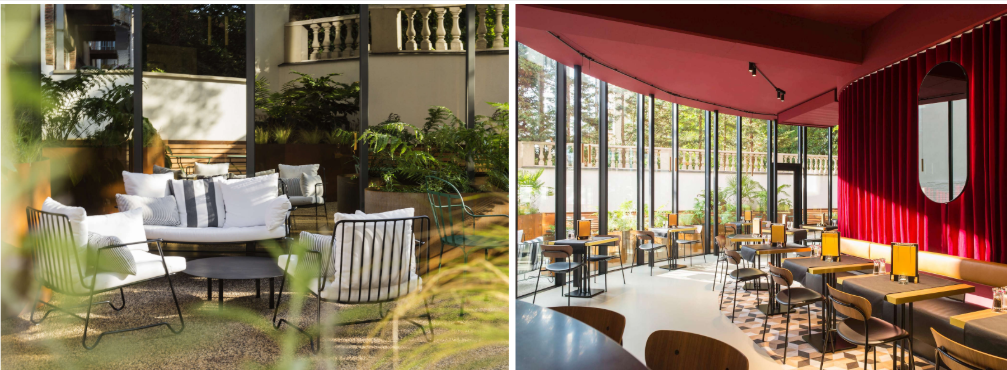
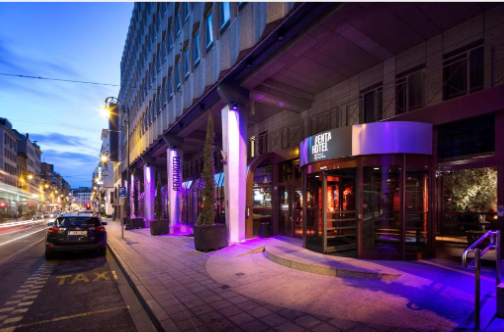
Pentahotel Brussels City Center (between 21 – 25 April)
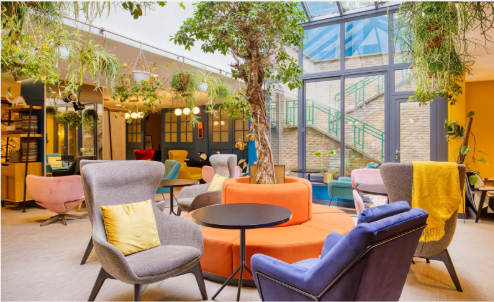
Pentahotel Brussels City Centre is a modern, stylish hotel with easy access to shops, restaurants, the city centre, and cultural sites. Its central location makes it convenient for participants who want to explore the city before or after the conference.
Address: Chau. de Charleroi 38, 1060 Brussels
Reservation: Reservations should be made via this link.
Cost per night in a standard single room: €160 (+ city tax €5,30)
Breakfast included in the price: Yes
Distance from the conference venue: 3 km / 27 min by tram
Number of available rooms: 30
Cancellation: Free cancellation up to 7 April 2026
Reservation deadline with these rates: 7 March (50% of the special-rated rooms) and 21 March 2026 (the remaining 50% of special-rated rooms)
*Note: Besides the agreed rate, the hotel has a 15% discount on the best available rate. Reservations with this discount should be made via this booking link.
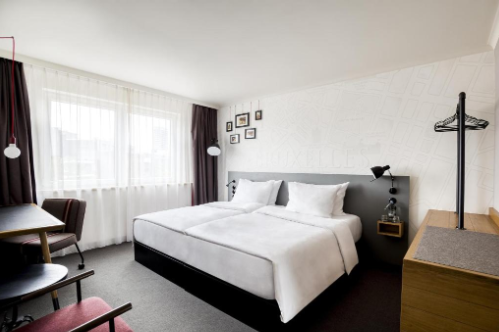
Adagio Access Brussels Europe (any dates)
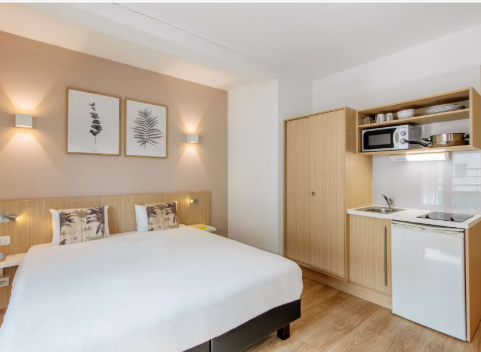
Adagio Access Brussels Europe is a comfortable aparthotel located in the European district of Brussels, close to the European Parliament, Place du Luxembourg, offices and restaurants. The conference venue is easily reachable by bus. The aparthotel offers equipped studios, providing guests with a flexible, home-like environment.
Address: Rue de l'Industrie 12, 1000 Brussels
Reservation:
1) For booking via the hotel website, you must use the following codes:
- Company number: SCP4509391
- Access code: MA316BE899
2) For booking by email, write to [email protected]
3) For booking by phone, call +32 2 274 17 80.
Cost per night in a standard single room: Around €160–€180 (after applying a 10% discount)
Breakfast included in the price: Yes
Distance from the conference venue: 2,7 km / 15 min by bus
Number of available rooms: Depending on availability.
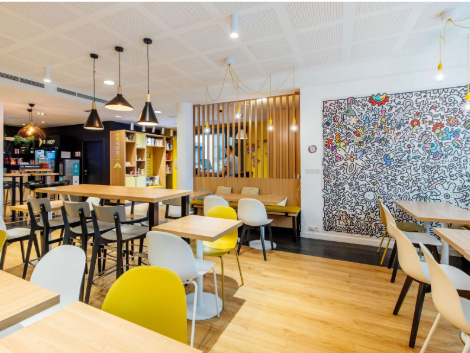
CityBox Brussels (any dates)
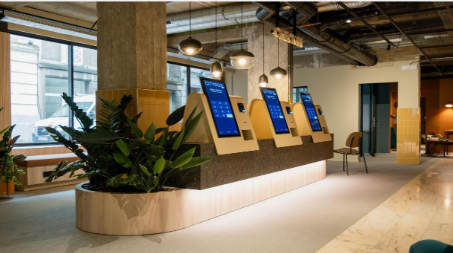
CityBox Brussels is located close to public transport, shops, cafés and restaurants. It is a good option for participants seeking a simple, affordable stay in a central location.
Address: Rue Dejoncker 53, 1060 Brussels
Reservation: To receive a 10% discount, sign up as a CityBox friend via this link. Once the account is created, you will be eligible for the discount directly on the website.
Cost per night in a standard single room: €130–€140 (after a 10% discount)
Breakfast included in the price: No. The breakfast costs €15.
Distance from conference venue: 3 km / 22 min by bus/tram
Number of available rooms: Depending on availability.
Cancellation: Free cancellation 24 hours before arrival.
Reservation deadline with these rates: N/A
B&B HOTEL Brussels Centre Louise (21– 25 April)
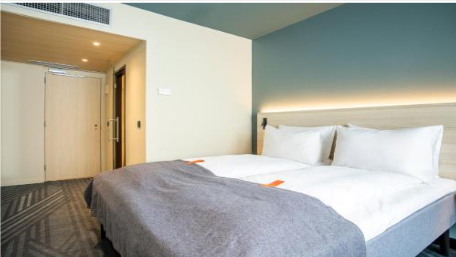
Modern and comfortable rooms, good public transport connections to the conference venue, and proximity to shops and restaurants.
Address: Rue Paul Spaak 15, 1000 Brussels
Reservation: 10% discount on the public rates, to be booked via the hotel website with the code MCAAC26.
Cost per night in a standard single room: €164–€174
Breakfast included in the price: Yes
Distance from the conference venue: 2,3 km / 17 min by tram
Number of available rooms: Depending on availability.
Cancellation: Free cancellation until April 21, 2026.
Reservation deadline with these rates: N/A
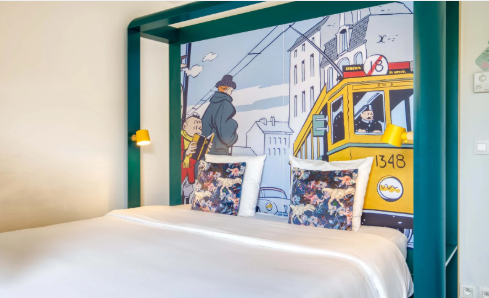
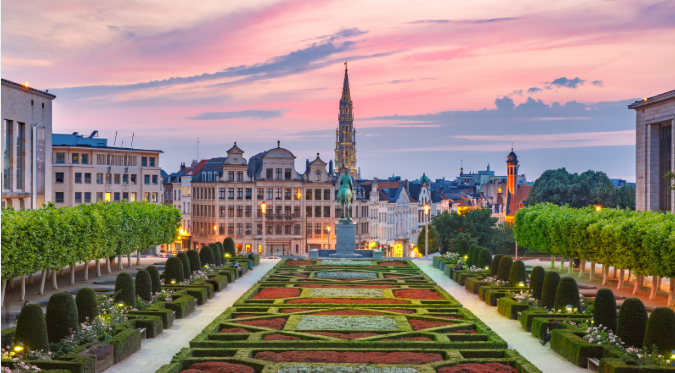
Visiting Brussels, Belgium
Brussels, the capital of Belgium and the political heart of the European Union, is a dynamic, multicultural city that combines rich history with modern European life. With excellent transport connections, a compact city centre, and a vibrant cultural and culinary scene, Brussels is an ideal location for international conferences and meetings.
This guide provides practical information to help you plan your journey to the MCAA Annual Conference 2026 and make the most of your stay.
Getting around Brussels
Brussels has a reliable and easy-to-use public transport system.
- Metro, trams, and buses: Operated by STIB/MIVB
- Walking: The historic centre is compact and walkable
- Taxis and ride services: Widely available
- Trains: Ideal for regional travel and day trips
Single tickets and multi-day passes are available, and contactless payment is accepted on most public transport.
What to see in Brussels
Brussels offers a distinctive mix of medieval heritage, modern architecture, and European institutions.
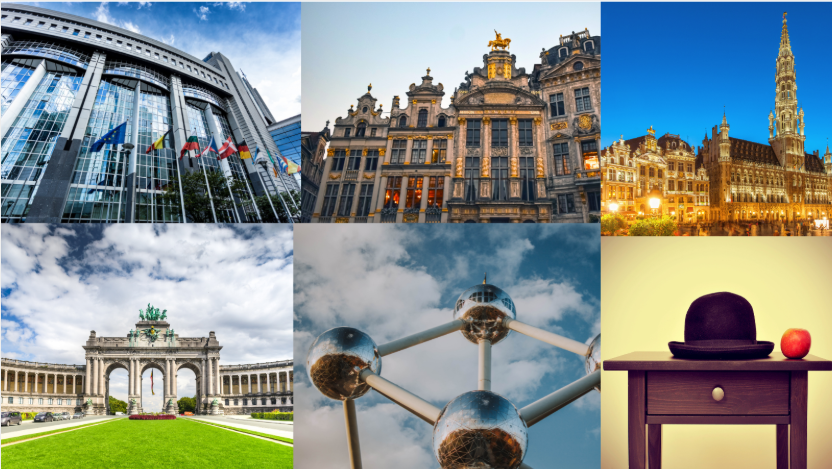
Must-see landmarks
- Grand Place: UNESCO World Heritage Site and the city’s central square
- Manneken Pis: Iconic and symbolic statue
- Royal Galleries of Saint Hubert: Historic covered shopping arcade
- Atomium: Landmark of modern architecture with panoramic views
- Royal Palace of Brussels: Official palace of the Belgian monarchy, showcasing grand architecture and ceremonial rooms.
- Cinquantenaire Park and Arc: Expansive park featuring a triumphal arch, museums, and scenic green spaces.
Museums and cultural spots
- Magritte Museum: Dedicated to surrealist artist René Magritte
- Royal Museums of Fine Arts of Belgium
- Brussels City Museum: Includes the original Manneken Pis
- Belgian Comic Strip Centre: Museum dedicated to Belgium’s rich comic tradition, featuring Tintin, The Smurfs, and other famous characters.
- Train World: Interactive railway museum showcasing historic locomotives and the evolution of train travel in Belgium.
- Chocolate Museum: Museum exploring the history of Belgian chocolate, with demonstrations and tastings.
Many museums are included in the Brussels Card, which also offers access to public transport.
Belgian cuisine and dining
Belgian cuisine is renowned for its quality, variety, and accessibility.
Traditional Belgian dishes
- Moules-frites: Mussels served with fries
- Carbonnade flamande: Beef stew cooked with Belgian beer
- Waterzooi: Creamy chicken or fish stew
- Chicons au gratin: Endives with ham and cheese
- Filet Américain: Seasoned raw beef spread
Waffles, chocolate, and fries
- Belgian waffles: Brussels-style (light and rectangular) and Liège-style (sweet and caramelised)
- Chocolate: Famous pralines and artisan chocolate shops throughout the city
- Fries: Typically served in cones with a wide range of sauces
Belgian beer
Belgium is world-famous for its beer culture, with hundreds of styles and breweries.
Popular beers include:
- Stella Artois
- Leffe
- Chimay
- Duvel
Beer tastings and brewery tours are widely available across the city.
Dining areas and prices
- Average restaurant meal: €20–25 per person
- Budget options available from €5–10
-
Popular dining areas:
- Grand Place: Central and historic, generally higher prices
- Rue des Bouchers: Wide range of options and price levels
Restaurants in central areas typically remain open until late evening.
Day trips from Brussels
Brussels is an excellent base for exploring Belgium and neighbouring countries.
Popular day trips include:
- Bruges—a medieval city and canals
- Ghent—historic yet vibrant university city
- Antwerp—fashion, art, and diamonds
- Dinant and Luxembourg
- Amsterdam
Most destinations are easily accessible by train or organised excursions.
Practical tips
- Time zone: Central European Time (CET, UTC+1); Central European Summer Time (CEST, UTC+2) during daylight saving (late March to late October).
- Weather: Mild maritime climate with cool summers and chilly winters; weather can be changeable, so layers and a light rain jacket are recommended year-round.
- Language: French and Dutch are the main languages; English is widely spoken
- Currency: Euro (€).
- Electricity: Type E plugs, 230V.
- Tipping: Service is usually included; rounding up is appreciated but not required.
Satellite events
Several satellite events will be organised as part of the MCAA Annual Conference 2026 on Wednesday 22 April, Friday 24 April, and Saturday 25 April. Complement your conference experience by signing up for one or more of these events!
Registration for the satellite events happens through the same Whova platform as the overall conference registration. When registering for the Annual Conference, choose the satellite events you wish to attend from the list.
Read the satellite event descriptions below for more information.
The future of the MSCA
Date: 22 April 2026 | Time: 12:30–15:30 | Mode: Onsite
The aim of this session is to reflect on the future of the Marie Skłodowska-Curie Actions (MSCA) under the next Framework Programme for Research and Innovation (FP10, 2028–2034). The European Commission is interested in receiving feedback from the alumni community on the future of the programme, its overall architecture and the key features of the actions, with a particular focus on postdoctoral opportunities. The discussion will be organised in a world café format, allowing participants to share their reflections on the MSCA and how the programme should be structured in FP10 to deliver on its ambitions to support researchers and their organisations.
PEP-CV workshop: How to develop a narrative CV
Date: 22 April 2026 | Time: 13:00–15:30 | Mode: Onsite
This interactive workshop is designed for researchers looking to understand and develop narrative CVs by effectively communicating their skills, experiences, and impact. As narrative CVs become increasingly important in research assessment and career progression, the session will introduce the CAR (Context–Action–Result) approach, guiding participants to move beyond listing achievements toward structured, evidence-based storytelling. Through practical exercises and peer exchange, attendees will reflect on their experiences, identify relevant evidence, and initiate drafting their own CVs, while building confidence in this format. Please note that this session will require separate registration and is limited to 25–30 participants, as it follows a closed, interactive workshop format to ensure meaningful engagement. More details to follow soon.
2nd Ibero-American Chapters’ meeting
Date: 24 April 2026 | Time: 17:30–19:00 | Mode: Onsite
The meeting, organised by the MCAA Andean-Caribbean, Argentina, Brazil, Chile, Mexico and Spain-Portugal Chapters, includes a presentation of each Chapter, examples of relationships with institutions, definition of common objectives, discussion of possible new joint events and networking.
Combating uncertainty in research through movement and dance
Date: 24 April 2026 | Time: 17:30–19:00 | Mode: Onsite
This practical workshop focuses on movement and dance as tools for managing uncertainty in research, from job security to navigating the unknown as part of the research process. Participants will have the opportunity to explore their own power and confidence through intuitive dancing, synchronised movement, and improvisation.
Mastering essential grant writing skills: The interactive GRANTED Workshop
Date: 25 April 2026 | Time: 9:00–13:00 | Mode: Onsite
The event, organised by the MCAA Communication Working Group, will focus on transversal skill development, specifically targeting early-stage researchers entering the grant-writing or entrepreneurship landscape. The workshop will familiarise participants with the requirements and demands of these critical career activities through an innovative gaming format. Participants will play the GRANTED game, which simulates real-world grant writing scenarios and helps build the skeletal framework of a grant application. The workshop will be led by Rajiv Vaid Basaiawmoit, full-time professor at Aarhus University and creator of the GRANTED Game.

MSCA-GLOPOL Policy Impact Day Summit: Bridging Research and Global Policy
Date: 25 April 2026 | Time: 9:00–13:00 | Mode: Onsite and online
The MSCA Global Cooperation: Policy Enhancement and Strategic Promotion (MSCA-GLOPOL) project aims to foster international collaboration within the MSCA across 26 targeted geographies worldwide. The objectives of this satellite event are to:
- Identify policy gaps and review the status quo of bilateral and bi-regional research and innovation (R&I) cooperation, identifying where current participation lags behind joint priorities.
- Strengthen synergies between MSCA opportunities and broader EU initiatives, such as the African Union (AU)–European Union (EU) Innovation Agenda, the EU’s Global Gateway strategy, and regional R&I roadmaps.
- Foster dialogue between researchers, policymakers, and industry actors to address participation barriers such as administrative complexity and low awareness.
Sponsorship
We are proud to present the sponsors of the MCAA Annual Conference 2026. Their support is essential for the organisation of our flagship event.
You can browse our available sponsorship packages at the bottom of this page.
Diamond sponsor
None

Academia sponsors
None
Official carrier of the MCAA Annual Conference 2026
We have partnered with the Lufthansa Group airline network to offer discounts on flights to and from Brussels for the conference dates. Click the button below to browse special prices for flights up to one week before and one week after the event.
Conference sponsorship packages
MCAA events are meeting places for people building the future. We are committed to achieving excellence in science and research by organising events that foster interaction, networking, and the dissemination of high-quality scientific knowledge.
Discover our conference sponsorship packages below and contact us to discuss the different options and tailor them to your specific needs and audiences.
Please note that all sponsor content is subject to review. The MCAA reserves the right to decline publication of content that does not align with its values.
Virtual event
Scroll left and right to view all packages available for the virtual event. Please note that VAT isn't included in the sponsorship package prices.
-
Bronze
EUR 1,500
Sponsor logo on the MCAA website over a 12-month periodAcknowledgement as an event sponsor on the MCAA LinkedIn and X accountsPasses to virtual events (Bronze: 1; Silver: 2; Gold: 3; Platinum: 4; Diamond: 5)Posting of a max. 2-minute video during the event1 advertorial in the MCAA's IRRADIUM magazineNaming of a poster award7-minute online talk during the eventPosting of a max. 2-min video related to the event on the MCAA LinkedIn and X accountsAdvertorials in the MCAA Newsletter (Silver: 1; Gold: 2; Platinum: 3; Diamond: 4)Discount for the digital sponsorship package (Silver: -5%; Gold: -10%; Platinum: -30%; Diamond: -50%)Discount for the in-person sponsorship package (Silver: -5%; Gold: -10%; Platinum: -30%; Diamond: -50%)Virtual space during the event -
Silver
EUR 2,500
Advertorials in the MCAA Newsletter (Silver: 1; Gold: 2; Platinum: 3; Diamond: 4)Discount for the digital sponsorship package (Silver: -5%; Gold: -10%; Platinum: -30%; Diamond: -50%)Discount for the in-person sponsorship package (Silver: -5%; Gold: -10%; Platinum: -30%; Diamond: -50%)Virtual space during the eventSponsor logo on the MCAA website over a 12-month periodAcknowledgement as an event sponsor on the MCAA LinkedIn and X accountsPasses to virtual events (Bronze: 1; Silver: 2; Gold: 3; Platinum: 4; Diamond: 5)Posting of a max. 2-minute video during the event1 advertorial in the MCAA's IRRADIUM magazineNaming of a poster award7-minute online talk during the eventPosting of a max. 2-min video related to the event on the MCAA LinkedIn and X accounts -
Gold
EUR 5,000
Posting of a max. 2-min video related to the event on the MCAA LinkedIn and X accountsAdvertorials in the MCAA Newsletter (Silver: 1; Gold: 2; Platinum: 3; Diamond: 4)Discount for the digital sponsorship package (Silver: -5%; Gold: -10%; Platinum: -30%; Diamond: -50%)Discount for the in-person sponsorship package (Silver: -5%; Gold: -10%; Platinum: -30%; Diamond: -50%)Virtual space during the eventSponsor logo on the MCAA website over a 12-month periodAcknowledgement as an event sponsor on the MCAA LinkedIn and X accountsPasses to virtual events (Bronze: 1; Silver: 2; Gold: 3; Platinum: 4; Diamond: 5)Posting of a max. 2-minute video during the event1 advertorial in the MCAA's IRRADIUM magazineNaming of a poster award7-minute online talk during the event -
Platinum
EUR 8,000
Posting of a max. 2-minute video during the eventNaming of a poster award7-minute online talk during the eventPosting of a max. 2-min video related to the event on the MCAA LinkedIn and X accountsAdvertorials in the MCAA Newsletter (Silver: 1; Gold: 2; Platinum: 3; Diamond: 4)Discount for the digital sponsorship package (Silver: -5%; Gold: -10%; Platinum: -30%; Diamond: -50%)Discount for the in-person sponsorship package (Silver: -5%; Gold: -10%; Platinum: -30%; Diamond: -50%)Sponsor logo on the MCAA website over a 12-month periodAcknowledgement as an event sponsor on the MCAA LinkedIn and X accountsPasses to virtual events (Bronze: 1; Silver: 2; Gold: 3; Platinum: 4; Diamond: 5)1 advertorial in the MCAA's IRRADIUM magazineVirtual space during the event -
Diamond
EUR 10,000
Posting of a max. 2-minute video during the event1 advertorial in the MCAA's IRRADIUM magazineNaming of a poster award7-minute online talk during the eventPosting of a max. 2-min video related to the event on the MCAA LinkedIn and X accountsAdvertorials in the MCAA Newsletter (Silver: 1; Gold: 2; Platinum: 3; Diamond: 4)Discount for the digital sponsorship package (Silver: -5%; Gold: -10%; Platinum: -30%; Diamond: -50%)Discount for the in-person sponsorship package (Silver: -5%; Gold: -10%; Platinum: -30%; Diamond: -50%)Virtual space during the eventSponsor logo on the MCAA website over a 12-month periodAcknowledgement as an event sponsor on the MCAA LinkedIn and X accountsPasses to virtual events (Bronze: 1; Silver: 2; Gold: 3; Platinum: 4; Diamond: 5)
Physical event
Scroll left and right to view all packages available for the physical event. Please note that VAT isn't included in the sponsorship package prices.
-
Bronze
EUR 1,500
Sponsor logo on the MCAA website over a 12-month periodAcknowledgement as an event sponsor in the event programme and on the MCAA LinkedIn and X accountsSponsor logo on the screen in the event hallFree passes to the physical event and career fair (Bronze & Silver: 1; Gold & Platinum: 2; Diamond: 4)VIP conference dinnerPublicity in 5 events of 5 different MCAA Chapters of choiceNetworking event named by sponsorNaming of an MCAA AwardBanners and logo visible throughout the event and a sponsor’s welcome packageDedicated meeting room during the eventPosting of a max. 2-min video during the eventNaming of a poster award (Platinum: 1; Diamond: 2)7-min time slot in a suitable session during the eventNetworking event passes (Gala Dinner) (Gold & Platinum: 2; Diamond: 4)Advertorials in the MCAA Newsletter (Silver: 1; Gold: 2; Platinum: 3; Diamond: 4)Discount for the digital sponsorship package (Silver: -5%; Gold: -10%; Platinum: -30%; Diamond: -50%)Discount for the virtual sponsorship package (Silver: -5%; Gold: -10%; Platinum: -30%; Diamond: -50%)Exhibitor booth at the career fair -
Silver
EUR 2,500
Advertorials in the MCAA Newsletter (Silver: 1; Gold: 2; Platinum: 3; Diamond: 4)Discount for the digital sponsorship package (Silver: -5%; Gold: -10%; Platinum: -30%; Diamond: -50%)Discount for the virtual sponsorship package (Silver: -5%; Gold: -10%; Platinum: -30%; Diamond: -50%)Exhibitor booth at the career fairSponsor logo on the MCAA website over a 12-month periodAcknowledgement as an event sponsor in the event programme and on the MCAA LinkedIn and X accountsSponsor logo on the screen in the event hallFree passes to the physical event and career fair (Bronze & Silver: 1; Gold & Platinum: 2; Diamond: 4)VIP conference dinnerPublicity in 5 events of 5 different MCAA Chapters of choiceNetworking event named by sponsorNaming of an MCAA AwardBanners and logo visible throughout the event and a sponsor’s welcome packageDedicated meeting room during the eventPosting of a max. 2-min video during the eventNaming of a poster award (Platinum: 1; Diamond: 2)7-min time slot in a suitable session during the eventNetworking event passes (Gala Dinner) (Gold & Platinum: 2; Diamond: 4) -
Gold
EUR 5,000
Networking event passes (Gala Dinner) (Gold & Platinum: 2; Diamond: 4)Advertorials in the MCAA Newsletter (Silver: 1; Gold: 2; Platinum: 3; Diamond: 4)Discount for the digital sponsorship package (Silver: -5%; Gold: -10%; Platinum: -30%; Diamond: -50%)Discount for the virtual sponsorship package (Silver: -5%; Gold: -10%; Platinum: -30%; Diamond: -50%)Exhibitor booth at the career fairSponsor logo on the MCAA website over a 12-month periodAcknowledgement as an event sponsor in the event programme and on the MCAA LinkedIn and X accountsSponsor logo on the screen in the event hallFree passes to the physical event and career fair (Bronze & Silver: 1; Gold & Platinum: 2; Diamond: 4)VIP conference dinnerPublicity in 5 events of 5 different MCAA Chapters of choiceNetworking event named by sponsorNaming of an MCAA AwardBanners and logo visible throughout the event and a sponsor’s welcome packageDedicated meeting room during the eventPosting of a max. 2-min video during the eventNaming of a poster award (Platinum: 1; Diamond: 2)7-min time slot in a suitable session during the event -
Platinum
EUR 8,000
Banners and logo visible throughout the event and a sponsor’s welcome packageDedicated meeting room during the eventPosting of a max. 2-min video during the eventNaming of a poster award (Platinum: 1; Diamond: 2)7-min time slot in a suitable session during the eventNetworking event passes (Gala Dinner) (Gold & Platinum: 2; Diamond: 4)Advertorials in the MCAA Newsletter (Silver: 1; Gold: 2; Platinum: 3; Diamond: 4)Discount for the digital sponsorship package (Silver: -5%; Gold: -10%; Platinum: -30%; Diamond: -50%)Discount for the virtual sponsorship package (Silver: -5%; Gold: -10%; Platinum: -30%; Diamond: -50%)Exhibitor booth at the career fairSponsor logo on the MCAA website over a 12-month periodAcknowledgement as an event sponsor in the event programme and on the MCAA LinkedIn and X accountsSponsor logo on the screen in the event hallFree passes to the physical event and career fair (Bronze & Silver: 1; Gold & Platinum: 2; Diamond: 4)VIP conference dinnerPublicity in 5 events of 5 different MCAA Chapters of choiceNetworking event named by sponsorNaming of an MCAA Award -
Diamond
EUR 10,000
VIP conference dinnerPublicity in 5 events of 5 different MCAA Chapters of choiceNetworking event named by sponsorNaming of an MCAA AwardBanners and logo visible throughout the event and a sponsor’s welcome packageDedicated meeting room during the eventPosting of a max. 2-min video during the eventNaming of a poster award (Platinum: 1; Diamond: 2)7-min time slot in a suitable session during the eventNetworking event passes (Gala Dinner) (Gold & Platinum: 2; Diamond: 4)Advertorials in the MCAA Newsletter (Silver: 1; Gold: 2; Platinum: 3; Diamond: 4)Discount for the digital sponsorship package (Silver: -5%; Gold: -10%; Platinum: -30%; Diamond: -50%)Discount for the virtual sponsorship package (Silver: -5%; Gold: -10%; Platinum: -30%; Diamond: -50%)Exhibitor booth at the career fairSponsor logo on the MCAA website over a 12-month periodAcknowledgement as an event sponsor in the event programme and on the MCAA LinkedIn and X accountsSponsor logo on the screen in the event hallFree passes to the physical event and career fair (Bronze & Silver: 1; Gold & Platinum: 2; Diamond: 4)
Digital package
Scroll left and right to view all packages available for the digital sponsorship. Please note that VAT isn't included in the sponsorship package prices.
-
Bronze
EUR 1,500
Posting 4 publications on the MCAA LinkedIn account over a 12-month periodSponsor logo on the MCAA website over a 12-month periodOne half-page advertorial in the MCAA NewsletterOnline event promotion: One event promoted within the appropriate MCAA Chapter / Working GroupPublishing 2 job posts at the MCAA job portal over a 12-month periodPosting 4 publications on the MCAA X account over a 12-month period -
Silver
EUR 2,500
Publishing 2 job posts at the MCAA job portal over a 12-month periodPosting 4 publications on the MCAA X account over a 12-month periodPosting 4 publications on the MCAA LinkedIn account over a 12-month periodSponsor logo on the MCAA website over a 12-month periodOne half-page advertorial in the MCAA NewsletterOnline event promotion: One event promoted within the appropriate MCAA Chapter / Working Group -
Gold
EUR 3,500
One half-page advertorial in the MCAA NewsletterOnline event promotion: One event promoted within the appropriate MCAA Chapter / Working GroupPublishing 2 job posts at the MCAA job portal over a 12-month periodPosting 4 publications on the MCAA X account over a 12-month periodPosting 4 publications on the MCAA LinkedIn account over a 12-month periodSponsor logo on the MCAA website over a 12-month period
Social event exposure
Scroll left and right to view all packages available for the social events. Please note that VAT isn't included in the sponsorship package prices.
-
Reception sponsor
EUR 2,000
Sponsor logo on the MCAA website over a 12-month periodSponsor logo in the event agenda and abstractPosting of a short interview on the MCAA LinkedIn and X accounts (Reception sponsor: 2 min; Networking event sponsor: 5 min)Free passes to the events and career fair (Reception sponsor: 1; Networking event sponsor & Name sponsor: 2)Networking event named by sponsor5-min interview played in the event hallDiscount for the digital sponsorship package (Networking event sponsor: -30%; Name sponsor: -60%)A talk during a networking event (Networking event sponsor: 5 min; Name sponsor: 8 min)Naming of an MCAA Award -
Networking event sponsor
EUR 5,000
Discount for the digital sponsorship package (Networking event sponsor: -30%; Name sponsor: -60%)A talk during a networking event (Networking event sponsor: 5 min; Name sponsor: 8 min)Naming of an MCAA AwardSponsor logo on the MCAA website over a 12-month periodSponsor logo in the event agenda and abstractPosting of a short interview on the MCAA LinkedIn and X accounts (Reception sponsor: 2 min; Networking event sponsor: 5 min)Free passes to the events and career fair (Reception sponsor: 1; Networking event sponsor & Name sponsor: 2)Networking event named by sponsor5-min interview played in the event hall -
Name sponsor
EUR 10,000
Networking event named by sponsor5-min interview played in the event hallDiscount for the digital sponsorship package (Networking event sponsor: -30%; Name sponsor: -60%)A talk during a networking event (Networking event sponsor: 5 min; Name sponsor: 8 min)Naming of an MCAA AwardSponsor logo on the MCAA website over a 12-month periodSponsor logo in the event agenda and abstractFree passes to the events and career fair (Reception sponsor: 1; Networking event sponsor & Name sponsor: 2)Posting of a short interview on the MCAA LinkedIn and X accounts (Reception sponsor: 2 min; Networking event sponsor: 5 min)
Call for abstracts for poster presentations and lightning talks
Deadline: 23 March 2026
The MCAA invites its members to submit abstracts for poster presentations or lightning talks at the MCAA Annual Conference 2026 in Brussels. This is a unique opportunity to showcase your research, share project results, present collaboration ideas, highlight your startup story or entrepreneurial journey, or reflect on your MSCA experience within a vibrant, international community of researchers, innovators, and professionals.
Call for the MCAA Awards 2025
Deadline: 8 March 2026
The MCAA announces the call for applications and nominations for the MCAA Awards 2025. These prestigious awards highlight and reward members who have demonstrated exceptional contributions to their fields, significant societal impact, outstanding innovation, and dedicated service to the MCAA community.
Call for topic proposals
Deadline: 9 February 2026
The MCAA will host thematic sessions on 23 and 24 April as part of its Annual Conference. All sessions will be held onsite in Brussels and live-streamed. While most sessions are built around pre-defined topics, a few sessions are open to topic proposals, allowing MCAA members to contribute directly to the conference programme.
Annual Conference Micro Grants for MCAA members
Deadline: 22 February 2026
The Annual Conference Micro Grants (ACMGs) 2026 aim to help MCAA members attend the MCAA Annual Conference and related satellite events by providing financial support to cover part or the totality of their travel and accommodation expenses.
Micro Internal Travel Grants for Board Members and Chairs of Chapters and Working Groups
Deadline: 22 February 2026
The Micro Internal Travel Grants for the Annual Conference (MITG-AC) 2026 aim to help MCAA Board members and the Chairs of the Chapters and Working Groups attend the MCAA Annual Conference and related satellite events by providing financial support to cover part or the totality of their travel and accommodation expenses.