Looking back at the MSCA Presidency Conference 2026
The Marie Skłodowska-Curie Actions (MSCA) Presidency Conference, themed “Celebrating Mobility, Shaping Resilience,” was held on 4–5 November in Dublin, Ireland, as part of the Irish Presidency of the Council of the European Union (EU). The Marie Curie Alumni Association (MCAA) took part in the event and actively contributed to the discussions.
Researchers, policymakers, university leaders, government officials, industry representatives, and other stakeholders gathered at Technological University Dublin (TU Dublin) to celebrate 30 years of the MSCA and discuss how Europe can better support resilient research careers.
The conference, organised by Research Ireland in collaboration with the Irish Government Department of Further and Higher Education, Research, Innovation and Science (DFHERIS), and co-funded by the European Commission, took place at a crucial time as Europe looks towards the next European Framework Programme for Research and Innovation (FP10).
The programme featured keynote speeches, panel discussions, and networking opportunities, allowing participants not only to reflect on the impact of the MSCA but also on how to reinforce Europe’s capacity to attract, retain, and empower researchers in the coming years. The MCAA had the pleasure of engaging in and contributing to these important discussions.
Fostering resilient research careers
The first day of the conference focused on generating practical, policy-relevant recommendations to foster resilient research careers and strengthen Europe’s research and innovation (R&I) landscape.
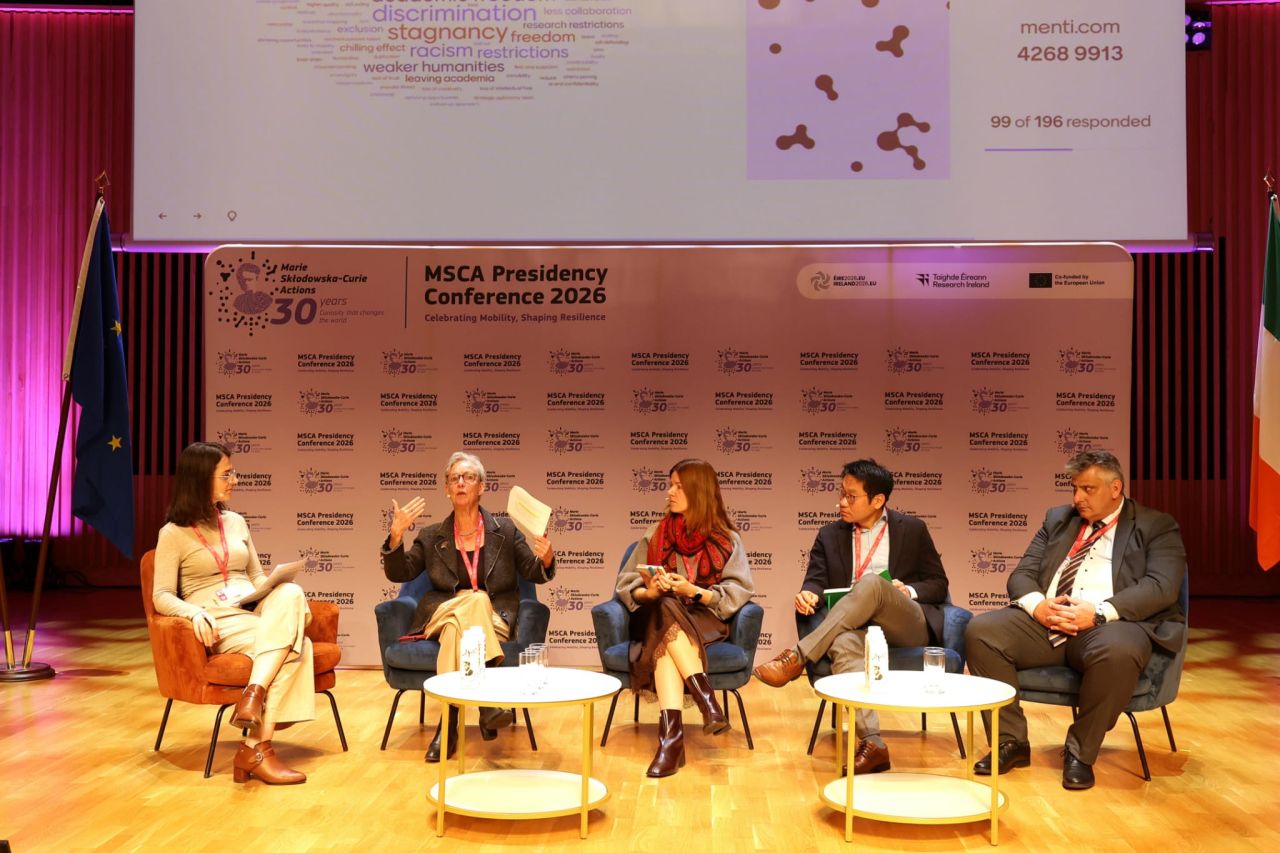
The MCAA Chair, Ornela Bardhi, moderated the panel “Global challenges to researcher mobility: Scientific freedom, research security and barriers to mobility,” featuring Marijk van der Wende (Utrecht University), Maryna Shevtsova (KU Leuven), Tommy Shih (KTH Royal Institute of Technology and Lund University), and Iakovos Yakoumis (MONOLITHOS Catalysts & Recycling Ltd) as speakers.
The panel examined how geopolitical instability, research security concerns, and pressures on academic freedom are reshaping international mobility, cross-sector collaboration, and scientific openness. Speakers emphasised the need to strike a balance between protecting openness and meeting security obligations, and called for coordinated action to create sustainable career pathways, reduce administrative barriers, and strengthen links between academia and industry.
Celebrating 30 years of the MSCA
The second day of the conference shifted the focus to the MSCA, highlighting the programme’s transformative contributions to researcher development, mobility, training, and European research excellence.
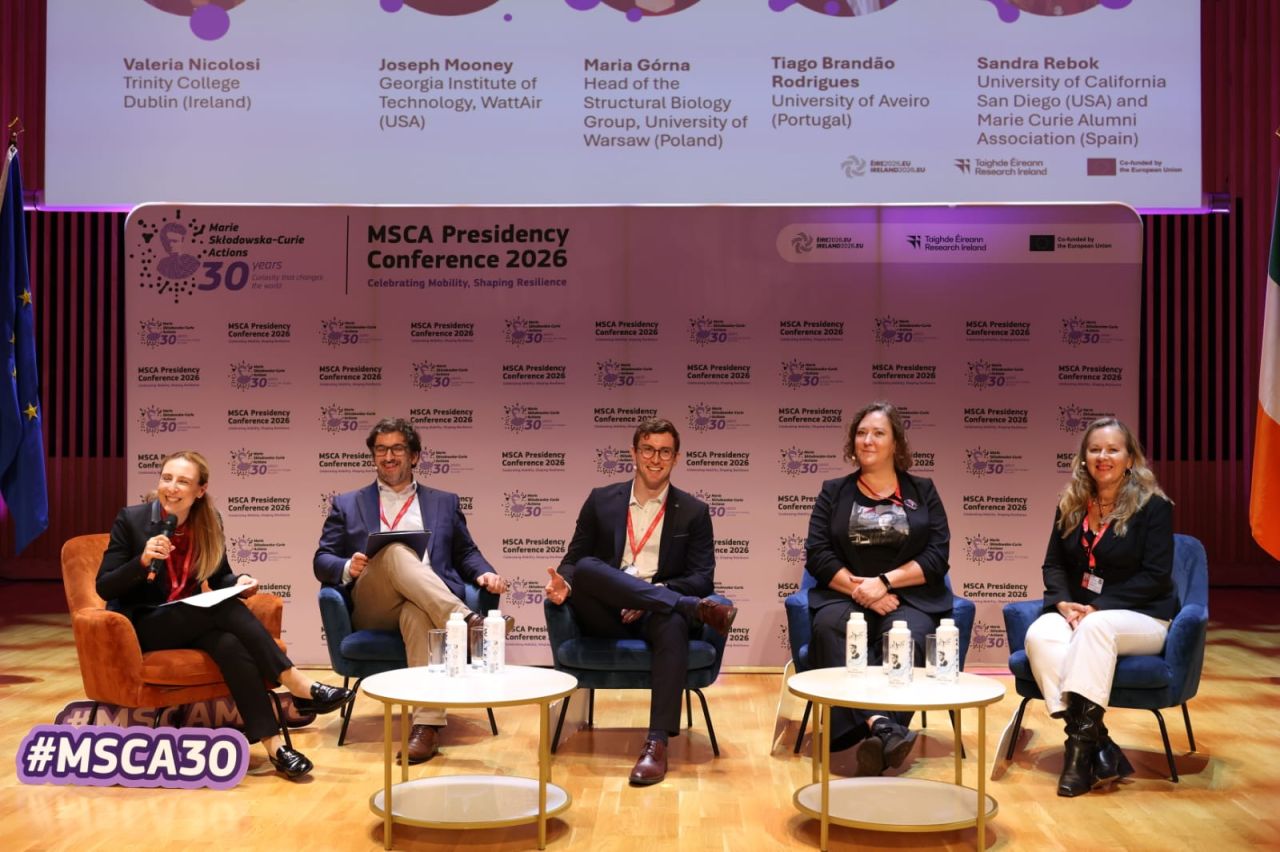
The panel “Stories of Success – Alumni Voices over 30 Years,” moderated by Valeria Nicolosi (Trinity College Dublin), brought together MCAA Board member Sandra Rebok, MCAA members Maria Górna (University of Warsaw) and Tiago Brandão Rodrigues (University of Aveiro), and former MSCA fellow Joseph Mooney (WattAir) to reflect on their journeys and opportunities created through the MSCA.
Drawing on their experiences, speakers emphasised the lasting value of international, interdisciplinary, and intersectoral mobility. They also encouraged fellow researchers to persevere despite current challenges, embrace diverse career opportunities, and advocate for stronger support and funding for science.
Looking ahead
In his closing plenary address, Luca Perego, Head of Unit for Choose Europe and MSCA at the Directorate-General for Education, Youth, Sport and Culture (DG EAC) of the European Commission, looked beyond the past 30 years of the MSCA, highlighting the need to preserve the features that make the programme special while also strengthening its capacity in the future. He noted that for Europe to maintain its position as a global powerhouse, it must continue investing in talent while enhancing research conditions and providing more stable career opportunities for researchers facing uncertainty and precarity. He also referred to the negotiations on FP10 as a key milestone in achieving this objective.
Discussions on how to sustain the impact of the MSCA, improve research careers, and strengthen the European Research Area (ERA) will continue in 2027. The next MSCA Presidency Conference will take place on 20–21 May 2027 in Vilnius, Lithuania.
About the MCAA
The MCAA is a global network of researchers who have benefited from or are benefiting from the MSCA. The MCAA supports and contributes to advancing knowledge for a global, diverse, and informed society. Its primary focus is to support its members’ career development, offer networking opportunities, and contribute to shaping research and innovation policies in the EU. Currently, the MCAA has over 25,000 members from 160+ countries, at all career stages and from diverse research fields.