The MCAA supports the right to participate in and benefit from science
The Marie Curie Alumni Association (MCAA) endorses the International Science Council (ISC)’s interpretation of the right to participate in and benefit from science, recognising science as a universal human right.
Although the right to participate in and benefit from science is rooted in internationally recognised human rights instruments, it is still poorly understood and insufficiently implemented worldwide.
The ISC’s interpretation clarifies what the right to do science and to benefit from science means in practice, outlining the obligations required to ensure equitable access, protect scientific freedoms, and promote scientific literacy and education. It reinforces the ISC’s vision of science as a global public good: a resource whose benefits should be freely and permanently accessible and available to all.
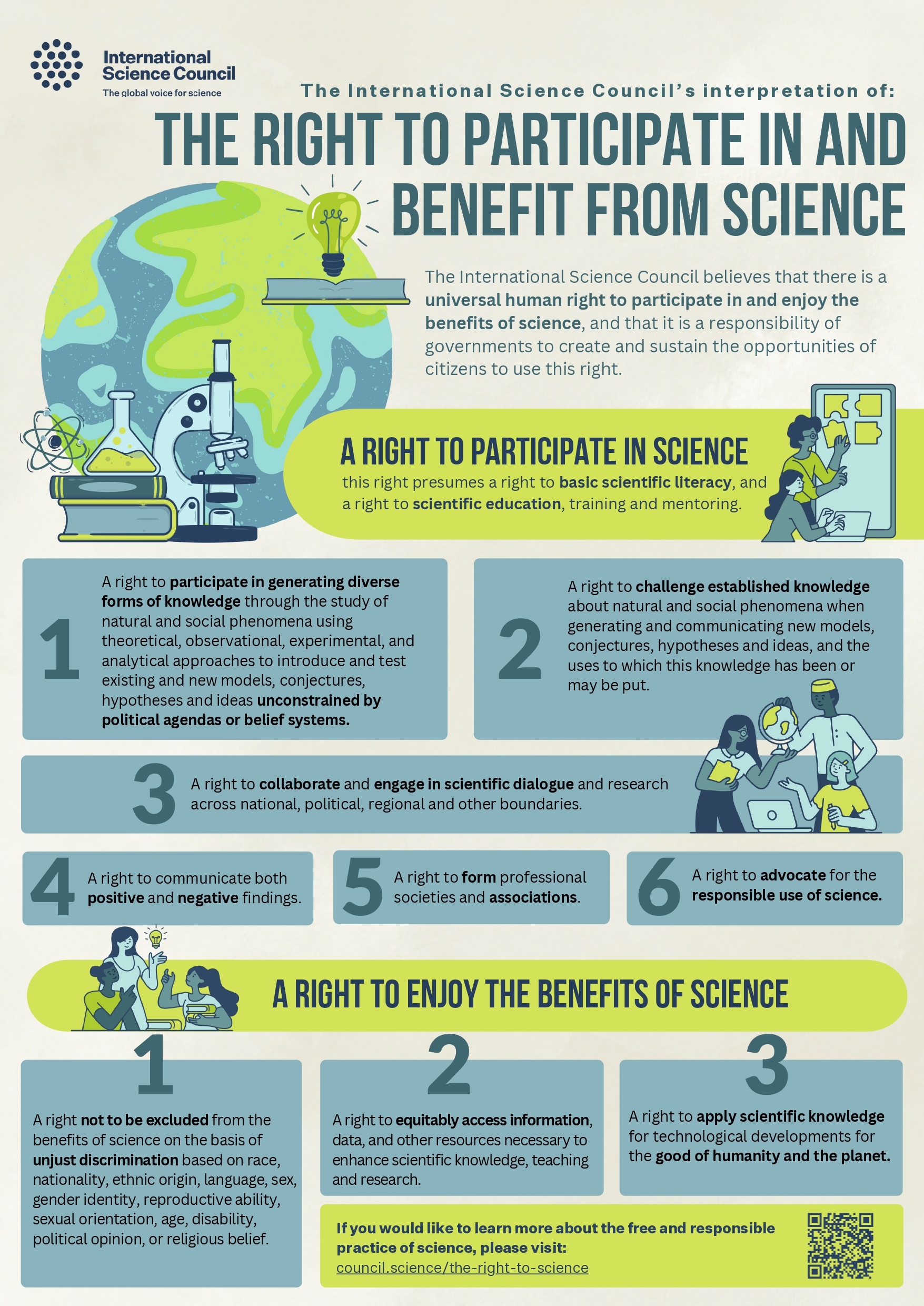
As an ISC member, the MCAA endorses the ISC's interpretation of the right to participate in and benefit from science, reinforcing its commitment to promoting the principles that underpin it.
For the MCAA, a global network of Marie Skłodowska-Curie Actions (MSCA) fellows and alumni, recognising science as a human right also requires ensuring the conditions that allow scientists to thrive. These include the freedom to ask difficult questions, institutions that support rather than drain individuals, fair and trustworthy ways of assessing work, communities able to cross disciplinary and national boundaries, and a public space in which evidence can be communicated, examined, and contested.
As global pressure on science and scientific systems increases, the MCAA will continue to support efforts to advance the right to science and advocate for conditions that enable knowledge and society to flourish together.
About the MCAA
The MCAA is a global network of researchers who have benefited from or are benefiting from the MSCA. The MCAA supports and contributes to advancing knowledge for a global, diverse, and informed society. Its primary focus is to support its members’ career development, offer networking opportunities, and contribute to shaping research and innovation policies in the EU. Currently, the MCAA has over 25,000 members from 160+ countries, at all career stages and from diverse research fields.