Reflections on the first MCAA Policy Forum

The first Marie Curie Alumni Association (MCAA) Policy Forum brought together leaders from the European Parliament, the Council of the European Union, the European Commission, and the research community to reflect on the strategic importance of the Marie Skłodowska-Curie Actions (MSCA) at a pivotal moment for Europe’s research and innovation (R&I) landscape.
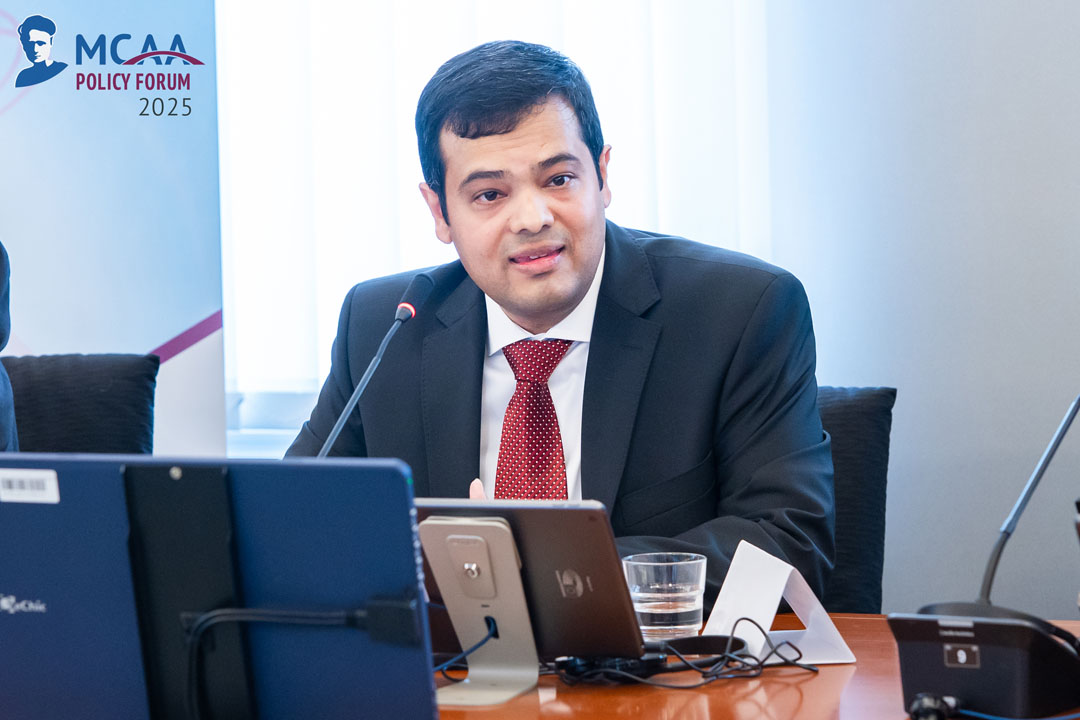
The MCAA Policy Forum 2025 took place on 4 December at the European Parliament in Brussels, Belgium, and online. The event was held under the patronage of Member of the European Parliament (MEP), Christian Ehler, who delivered a keynote address. The MCAA Policy Forum 2025 brought together representatives from key European institutions, including the European Parliament, the Council of the European Union, and the European Commission, as well as stakeholders actively engaged in the negotiations on the future Research and Innovation Framework Programme (FP10).
As part of a wider advocacy effort, the event aimed to contribute meaningfully to the ongoing discussions by presenting the MCAA’s new report "Impact of the Marie Skłodowska-Curie Actions (MSCA). Driving knowledge, innovation and EU competitiveness,” providing evidence-based insights on how the MSCA programme has shaped Europe’s research landscape since 1996, along with concrete recommendations for the future.
Opening and report presentation
The MCAA Chair, Gian Maria Greco, opened the MCAA Policy Forum 2025 with a reflection on the central role of the MSCA in shaping Europe’s research landscape over the past three decades. He stressed that researchers must be recognised as key stakeholders in decision-making, ensuring that both evidence and lived experience inform policy choices. He highlighted the MCAA’s commitment to supporting researcher mobility, career development, and science-informed policy, while situating the MCAA Policy Forum as part of the wider celebration of the MSCA’s 30th anniversary. He presented the event and the new impact report as evidence of the programme’s long-term systemic value, highlighting how sustained investment in researchers strengthens Europe’s competitiveness, innovation capacity, and strategic resilience, while mobility drives knowledge across borders, sectors, and disciplines. He concluded by framing the newly published report as a foundation for evidence-based dialogue with policymakers.
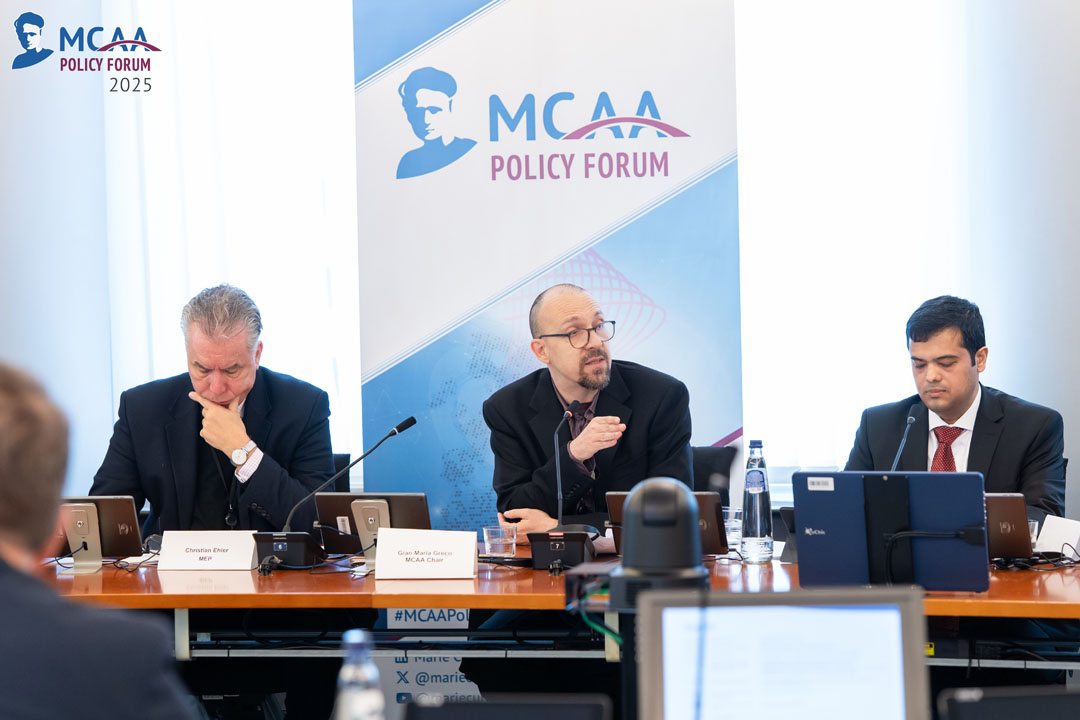
The MCAA Executive Director, Mostafa Moonir Shawrav, presented the report on the impact of the MSCA, officially published by the MCAA as an evidence-based contribution to the strategic discussion on Europe’s future R&I landscape. He explained that the report synthesises insights from major policy analyses, including those by Enrico Letta, Mario Draghi, and Manuel Heitor, alongside extensive MCAA survey data and public datasets. All these sources converge on the conclusion that Europe’s competitiveness depends fundamentally on the talent it cultivates, attracts, and retains.
The presentation emphasised that the MSCA remains Europe’s flagship mechanism for doctoral and postdoctoral training, continuing to deliver world-class scientific results, strengthening international cooperation, and contributing to Europe’s innovation capacity through widespread engagement with the non-academic sector. Drawing on the report, Shawrav also highlighted the programme’s leadership in setting standards, such as the Green Charter, improved supervision guidelines, and progressive working conditions. Among the recommendations included in the report, he listed a stronger, protected budget in the next framework programme while preserving the MSCA’s bottom-up design and maintaining excellence as the core guiding principle.
Keynote reflections
In his keynote address, MEP Christian Ehler recognised the MSCA as a central pillar of the European research landscape. He emphasised that while the European Research Council (ERC) is frequently invoked as a symbol of scientific excellence, the MSCA should receive equal visibility in institutional communication, noting that a more balanced acknowledgement of both programmes is warranted.
MEP Ehler highlighted the MSCA as one of the unique features that distinguish the European Framework Programme globally, not only for its scientific outcomes but also for the powerful alumni community that has formed around it. He welcomed the evidence presented in the MCAA’s report, particularly the programme’s significant contribution to Europe’s research capacity, gender balance, and global attractiveness.
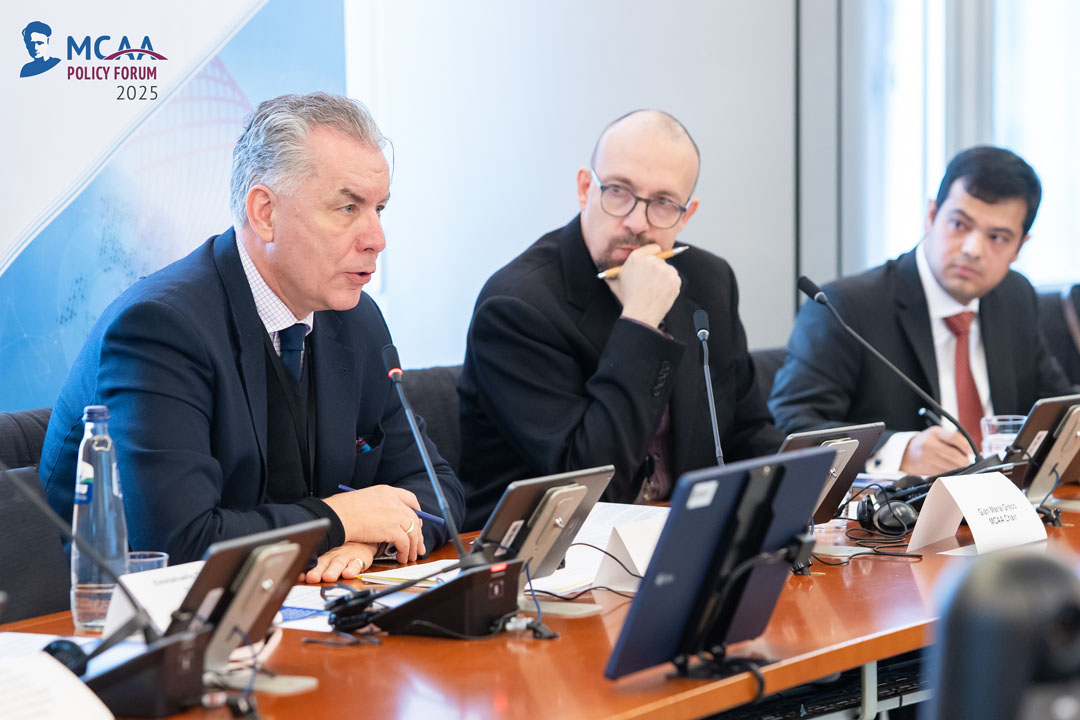
He also noted that mobility supported through the MSCA has important implications for Europe’s broader economic and societal needs.
Finally, MEP Ehler reaffirmed the European Parliament’s strong support for the MSCA within the forthcoming FP10 and acknowledged that negotiations will need to find an appropriate balance between flexibility and budgetary stability. He encouraged continued constructive dialogue between institutions and stakeholders to ensure that the MSCA remains protected and strengthened in the next funding cycle.
Policy roundtable with Members of the European Parliament
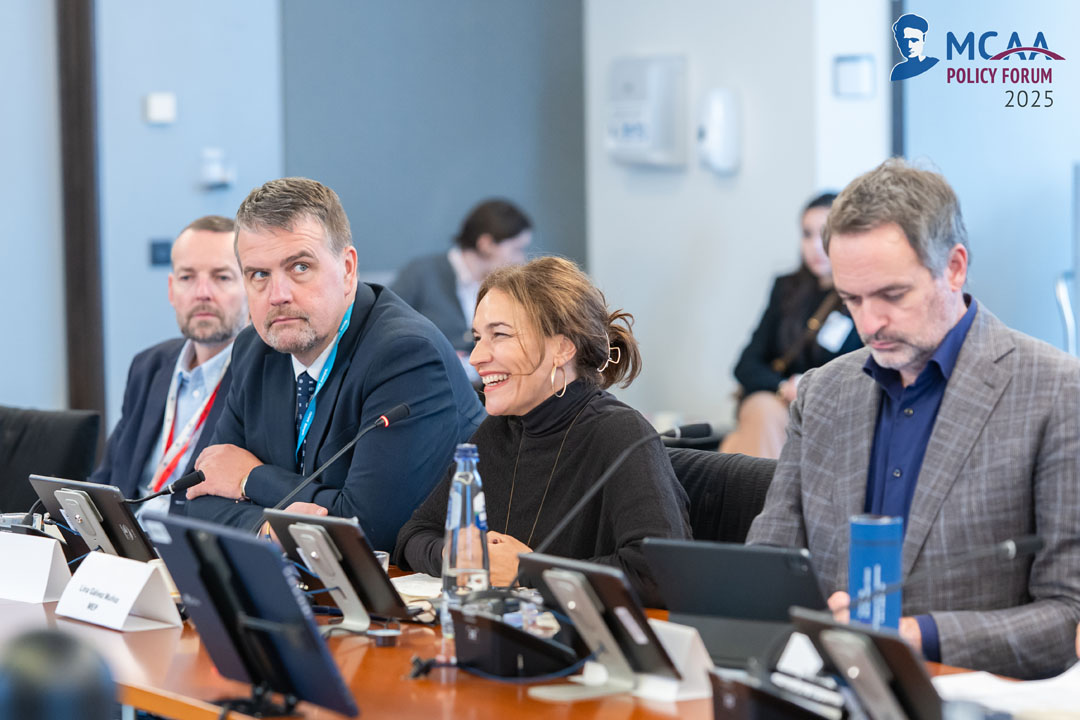
The MCAA Policy Forum 2025 featured a high-level policy roundtable with key MEPs who play an essential role in shaping Europe’s research, innovation, and competitiveness agenda. In addition to MEP Ehler, the MCAA was honoured to welcome MEPs Lina Gálvez Muñoz and Ivars Ijabs, both Shadow Rapporteurs for FP10, and René Repasi, Rapporteur for the FP10 Specific Programme. Their diverse perspectives enriched the event and contributed to a constructive and forward-looking debate on the future of the MSCA and the broader research landscape in Europe.
Equity, inclusiveness, and regional cohesion
Discussions highlighted the persistent disparities in research opportunities across Europe, between Member States and within regions. The speakers recognised the MSCA as an important tool for widening participation, but stressed that structural gaps must be addressed more effectively at both the national and European Union (EU) levels. Ensuring genuine brain circulation rather than one-directional brain drain was identified as a priority.
Working conditions and administrative burden
Speakers raised concerns about growing administrative complexity in MSCA participation, which may disproportionately affect smaller institutions or those in less-resourced regions. While improving working conditions remains essential, there is a risk that additional compliance requirements could unintentionally discourage participation. The MEPs called for a more balanced and streamlined implementation.
Synergies and the Seal of Excellence
Participants observed that synergies with other EU funds remain largely aspirational and insufficiently operationalised. They cited the Seal of Excellence as a promising mechanism, but noted that its uneven uptake across Member States limits its potential. Suggestions included ring-fencing national or regional funds for research, deepening alignment with cohesion instruments, and exploring so-called fiscal golden rules to exempt R&I investments from restrictive budget frameworks.
Budgetary stability in FP10
While the MSCA enjoys strong political backing, broader discussions on the flexibility of EU budgets and the structure of FP10 introduce uncertainty. A shared concern among speakers emerged about how to safeguard dedicated programme budgets while maintaining responsiveness to crises.
Reaction from the Council of the European Union
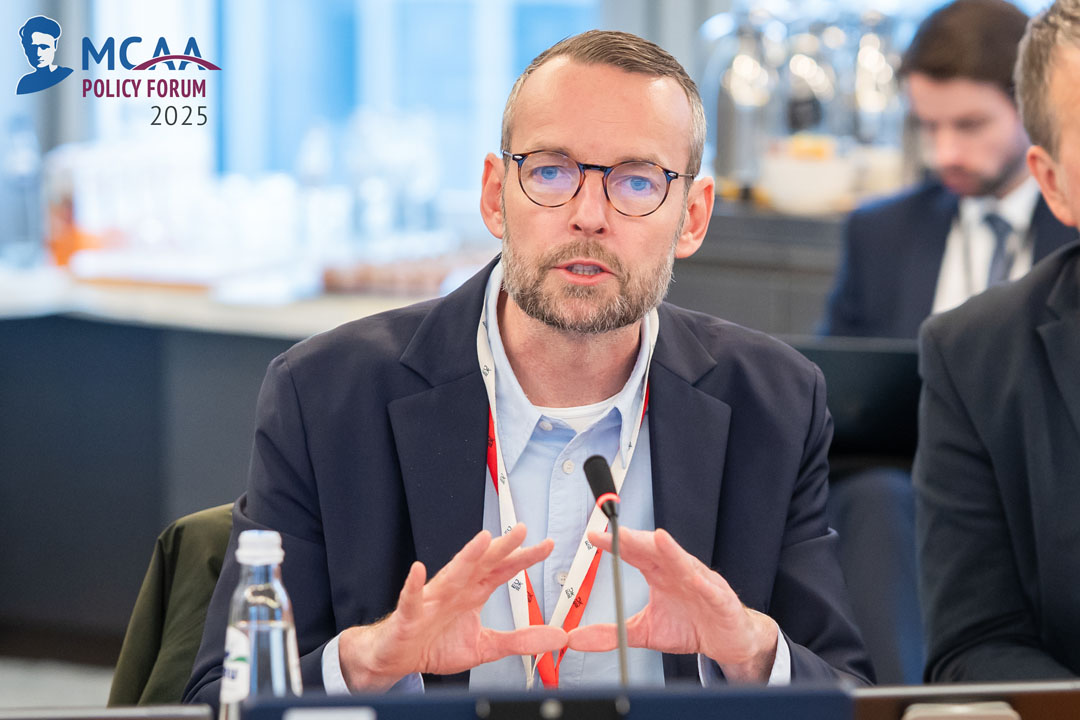
From the Council of the European Union, Jimmy Bruun Felthaus reflected on the ongoing work under the rotating presidency to define the balance between flexibility and predictability in FP10. While adaptability is important, research stakeholders require a stable and clearly defined implementation framework.
He reaffirmed strong support for the MSCA as one of the most successful and impactful components of EU research funding. At the same time, he noted that funding programmes alone cannot resolve deep structural issues in employment conditions, salary levels, or institutional capacity. Progress on synergies, particularly enabling structural funds to support Seal of Excellence projects, is an area requiring renewed commitment.
Reaction from the European Commission
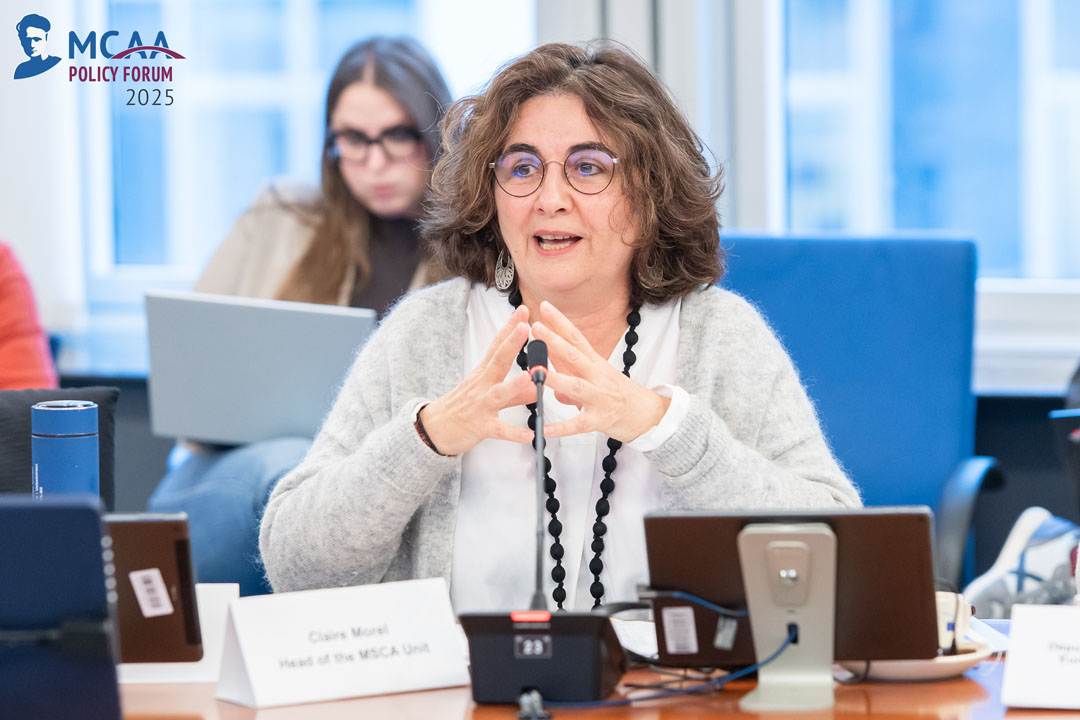
From the European Commission, Head of the MSCA Unit Claire Morel described the MSCA as a globally recognised programme that successfully attracts top talent to Europe and supports careers across sectors. She welcomed the findings of the MCAA’s new impact report as timely input to ongoing FP10 preparations. It demonstrates the structural impact of MSCA not only on researchers but also on universities and research organisations, supporting the development of strategic international partnerships.
Morel reiterated the Commission’s commitment to simplifying programme participation, especially for the non-academic sector, and to maintaining the MSCA’s excellence-based and bottom-up structure. The recently launched Choose Europe for Science pilot offering longer-term career prospects, and the upcoming 30-year anniversary are opportunities to further strengthen the programme’s visibility and impact.
Closing reflections
The concluding session reinforced shared messages emerging from the European Parliament, Council of the European Union, and the European Commission:
- The MSCA is widely viewed as a strategic asset for Europe’s competitiveness.
- Its contribution to mobility, research excellence, and long-term capacity building is well documented.
- Protecting and strengthening the programme in FP10 is essential.
Speakers concluded that the evidence presented in the MCAA’s report provides a strong basis for informed dialogue with policymakers on the future of the MSCA programme under FP10. They invited the MCAA and other participants to contribute to the development of more effective, equitable, and forward-looking research policies in Europe, drawing on such qualitative, evidence-based insights.

Acknowledgements
The MCAA extends its deepest gratitude to MEP Christian Ehler for his patronage of the first MCAA Policy Forum and for his longstanding commitment to strengthening the MSCA, both as Rapporteur for Horizon Europe and as the initiator of the ITRE Working Group on the implementation of the Framework Programmes. The MCAA also warmly thanks MEPs Lina Gálvez Muñoz, René Repasi, and Ivars Ijabs for their valuable contributions to the roundtable discussion, for their support of the MSCA, and for their continued engagement on issues that matter to Europe’s researchers. Moreover, the event would not have been possible without the tremendous support of their assistants. The MCAA particularly thanks Gosse Simon Vuijk and Sien Mertens for their exceptional assistance throughout the organisation of the event.
The MCAA’s appreciation also goes to Minister Counsellor Jimmy Bruun Felthaus for presenting the perspective of the Council of the European Union, and to Claire Morel, Head of the MSCA Unit at the European Commission, for sharing the Commission’s vision for the future of the programme. Their active participation and constructive dialogue with the research community underscore a shared commitment across institutions to ensure that Europe remains a place where talent can thrive, knowledge can flourish, and research can drive societal progress.
Last, the MCAA is grateful to the stakeholder organisations and other participants who joined the event, onsite and online. Finally, the MCAA extends its heartfelt thanks to its members, who are the reason for its continued commitment.
Looking ahead
This inaugural MCAA Policy Forum marks an important milestone for the Association. It reflects the MCAA’s commitment to building a sustained, evidence-informed dialogue between researchers and policymakers at the highest level. The strong engagement from the European Parliament, the Council of the European Union, and the European Commission demonstrates the shared interest in strengthening the MSCA and ensuring that Europe remains a global leader in R&I.
This was the first MCAA Policy Forum, but it will not be the last. The MCAA will continue this conversation in the years ahead, fostering a regular platform where researchers’ voices can meaningfully contribute to shaping Europe's research ecosystem. Together with European stakeholders, the MCAA will work to ensure that the next decades of the MSCA are even more impactful than the last.