The Benefits of co-funding – The new International Fellowship Mobility Programme for Experienced Researchers in Croatia (NEWFELPRO)
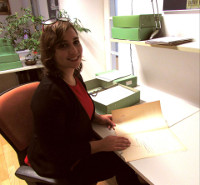
I discovered the COFUND scheme for the first time on the website of the Croatian Ministry of Science, Education and Sports in June 2013.
After Croatia got the COFUND opportunity, the country started to organise workshops in all Croatian universities and iInstitutions for scientists in different areas to promote the application. Intrigued by this new opportunity, I went to two workshops.
At that time, I was very dissatisfied with my current career path and position. I had been working for many years on a fixed-time contract in a State institution while finishing my PhD. I had the minimum salary, without scientific opportunities and advancement. Even though I was trying my best to present my scientific papers in conferences and various workshops, through scholarships and grants, my supervisors and the director of the institution didn’t offer me a permanent job.
I knew that the COFUND application was the opportunity for which I had been waiting for so long. I decided then to write a good proposal. While I was writing the application, I was unemployed. If you are not employed in a scientific institution or State institution, it is very hard to find a host institution without back-up from the return Host Institution.
By doing research on the Internet, I was able to find the best supervisor for the project – Prof Dr Sonja Ana Hoyer. Thanks to her and to my Ph.D mentor, Prof Dr Ivana Prijatelj Pavicic, I was able to present my project to the best eligible institutions. The project was presented to the dean and vice dean of Faculty of Arts (University in Ljubljana) Prof Dr Branka Kalenic Ramsak and Prof Dr Martin Germ and afterwards to the Dean of the Faculty of Humanities and Social Sciences (University in Split), Prof Dr Aleksandar Jakir.
My project ‘Comparison of Croatian and Slovenian conservators Ljubo Karaman and France Stele in the context of Vienna School of art history’ is a sequel to my Ph.D research in the field of cultural heritage, the theory and history of monument conservation in the ex Yugoslavia region.
The education of conservators Ljubo Karaman and France Stele in Vienna, their professional relationship and the comparison of their working methodologies remains unexplored, and contains crucial information regarding the history and development on conservation practices in Croatia, Slovenia, and all other ex-Yugoslav regions.
This project will systematically compare all aspects and stages of Karaman’s and Stele’s professional activities in the context of monument protection in Croatia and Slovenia, after the collapse of Austrian Hungarian Monarchy until the end of the Second World War, aiming to unify all the interdisciplinary information available on the development of conservation practices in the region, and producing high-quality informational output in multiple media formats. This will enrich existing literature on the subject and provide opportunities for enhancing the education of future generations of both Croatian and Slovenian conservators.
I am currently researching archive and photo material in various institutions in Slovenia and Austria while also lecturing at the Faculty of Fine Arts and Academy of Fine Arts.
The Host and the Return Host Institution invited me to become a member of the Organising Committee for International Conference for PhD candidates and recent PhDs, and a member of editorial board. I am also writing a book proposal on my current research, probably to be published by the Academic Publishing Division of the Faculty of Arts in Ljubljana.
The new International Fellowship Mobility Programme for Experienced Researchers in Croatia (NEWFELPRO) is a fellowship project of the Government of the Republic of Croatia and the Ministry of Science, Education and Sport (MSES).
My project is co-financed by the Marie Curie FP7-PEOPLE-2011-COFUND programme. Its total value is EUR 7 million, out of which 60% is financed from national sources. The project duration is from 2013 until 2017.
The outgoing fellowship scheme is designed for Croatian researchers who aim to improve their scientific potential by spending a period of time in top class research institutions worldwide. The incoming fellowship scheme and the reintegration fellowship scheme are directed at researchers who are presently working abroad and wish to work with scientists at public scientific institutes and universities in Croatia.
Thanks to this co-funding, you have the opportunity to stop drain brain in your country, by finishing the last year of your project in the country of your origin and thus enriching the scientific community there. The option to apply as an unemployed scientist is a huge benefit. You really feel like an equal staff member within your host institution, which opens up opportunities for better career possibilities later on. You are mostly recognised within the scientific community. For example, after a year and a half of research, I was selected as Scientist of the Week on the Facebook page of the Marie Curie Actions and received several questions about possible collaborations.
Nevertheless, with this co-funding, you have to be prepared to arrange moving and your whole social infrastructure by yourself. In my case I didn’t have the right legal information before moving and I consequently wasted time and money finding an apartment. The funding I am now receiving is not enough for standard living expenses. If your Host Institution cannot provide you with an apartment free of charge or with a reduced rent, it can be very difficult.
After the end of the project, there is no guarantee that your country of origin will help you find a permanent job, which they should do in theory if they are committed to stopping brain drain.
But the COFUND also increased my determination to disseminate knowledge. I am very much engaged in the Marie Curie Community and try to be as active as possible. I am currently the president of the Croatian Marie Curie Alumni Group.
On 10 and 11 December 2015 I attended the ‘COFUND – synergies to fuel researchers' careers’ conference in Luxembourg. The programme covered management issues and challenges for COFUND under FP7, COFUND experiences and challenges and new elements under COFUND H2020. In the workshop Career pathways and histories: Excellence in context’, I was selected to give a presentation entitled “From unemployment to a promising career”.
The main conclusion to be taken from the conference is that the COFUND scheme has become the most popular and visible form of MSCA Actions and that, as such, needs to continue being as inclusive as possible to support researchers’ careers. The new financial elements introduced under Horizon 2020 enable synergies with the structural funds, which should further broaden the impact of COFUND schemes on a European level.
If you plan to submit a COFUND application, never let anyone tell you that you cannot succeed, take your time to write a good project proposal. Attend the workshops that could help you in the writing process, find out about tax in the country of your host institution and thoroughly research your host institution – for example the infrastructure and where you can ask for help during your stay.
Think ‘outside the box’ – apply for a project where you can lead your research in collaboration with a non-academic sector – then you will have a higher chance of being selected.
Never give up because being a part of the Marie Curie Alumni Association is a very honourable moment for the scientist in you.
IVANA NINA UNKOVIĆ
NEWFELPRO Marie Curie Fellow/Researcher and Lecturer
University of Ljubljana
Faculty of Arts
Department of Art History