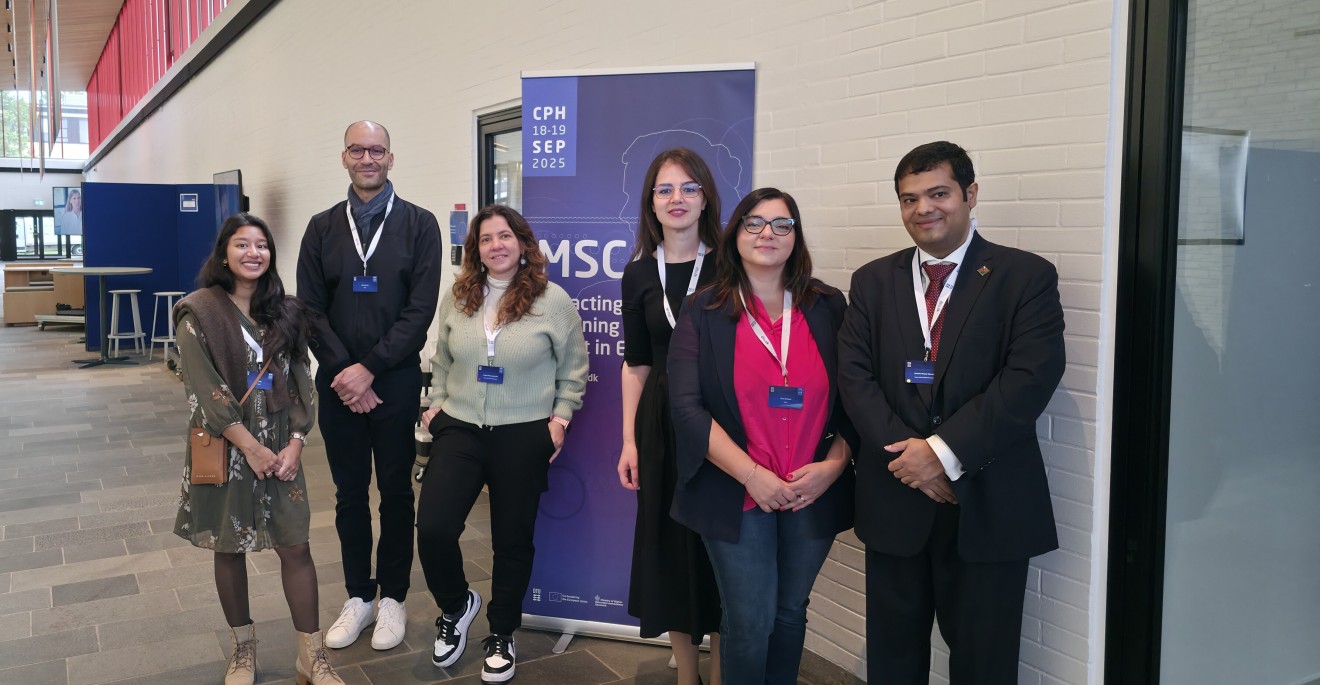
On 18–19 September 2025, the MSCA Presidency Conference was hosted by the Technical University of Denmark (DTU) in Lyngby, under the Danish Presidency of the Council of the European Union (EU). The event gathered early-career researchers, policymakers, university leaders, and industry representatives to discuss how European universities can remain magnets for excellence in a rapidly evolving global research landscape. The 2025 conference focused on the human-centred aspects of academic careers, leadership, and institutional culture, offering inspiration for the future of the MSCA programme and beyond.
Purpose-driven universities
One of the keynote speakers, Professor Debie Haski Leventhal, made a compelling case for universities to redefine success. She called for a shift in mindset from being the “best in the world” to being the “best for the world.” Introducing the TIP model (talent, impact, passion) she outlined a pathway to purpose-driven education that empowers universities to use their resources, knowledge, and people to create positive social impact. She also reminded participants that change starts with meaningful connections, encouraging leaders and researchers alike to embrace collaborative purpose.
Building safer and inclusive workplaces
A second keynote by Marcela Linková, a leading expert on research policy and gender equality, spotlighted the urgent need for safer workplace cultures in academia. She introduced the concept of institutional courage, a commitment by institutions to protect those who depend on them and to act morally even in the face of risk. Drawing on alarming research, she revealed that 62% of academics have experienced at least one form of workplace violence, with even higher prevalence among women, LGBTQ+ individuals, and ethnic minorities. Linková contrasted institutional courage with institutional betrayal, which deepens harm when institutions fail to address abuse. She recommended clear vision, transparent communication, adequate resources, and proactive approaches as essential steps for creating safer, more inclusive research environments.
The MCAA's contributions to the discussions
The Marie Curie Alumni Association (MCAA) played an active role throughout the conference and contributed to key sessions reflecting its mission to advocate for researchers and ensure that the voices of early-career researchers (ECRs) are heard at the highest policy levels.
-
Mostafa Moonir Shawrav, MCAA Executive Director, moderated a high-level panel on new trends in research evaluation, with MCAA Policy Officer Tereza Szybisty as one of the speakers. The discussion highlighted that research assessment must be tailored to disciplinary, institutional, and national contexts. Panellists agreed that “one size does not fit all” and warned against excluding valuable contributions. The Coalition for Advancing Research Assessment (CoARA) was recognised as an important driver of reform, offering coherence while respecting diversity. Participants stressed that reforming assessment is a long-term cultural and systemic process, requiring experimentation, sharing of experiences, and co-creation among funders, institutions, and researchers.
-
Ornela Bardhi, MCAA Board Member, contributed to the panel on academic talent programmes and their role in attracting and retaining Europe’s best minds.
-
Irene Castellano Pellicena, MCAA Board Member, presented the MCAA’s initiatives on early-career researcher well-being and diversity, equity, and inclusion (DEI) during the plenary session, placing these themes at the heart of conversations on academic careers.
-
Gian Maria Greco, MCAA Chair, delivered concluding recommendations for the future of the MSCA programme during the closing roundtable, ensuring that alumni perspectives and lessons from the MCAA community were reflected in the conference's outcomes.
Looking ahead
The 2025 MSCA Presidency Conference reaffirmed the importance of human-centred approaches to academic careers and the need for institutions to demonstrate both courage and purpose in supporting researchers.
As Europe strives to remain a global leader in science, the MCAA will continue to advocate for inclusive, supportive, and impactful research environments where excellence is defined not only by publications and rankings but by the ability to make a positive difference in the world.