A year in review: key highlights from the MCAA in 2025
In 2025, the Marie Curie Alumni Association (MCAA) entered a new era, guided by the motto “Bridging minds, building futures,” with the launch of a new brand and website. Key highlights from the year include the first-ever MCAA Policy Forum held at the European Parliament and the publication of a new report on the impact of the Marie Skłodowska-Curie Actions (MSCA).
As 2025 draws to a close, it is time to look back at a remarkable year for the MCAA. Through our key pillars of activity—networking, career development, and science policy—we have made progress in our mission to bring together the MSCA community, support the professional development of fellows and alumni of the programme, and give them a voice in European research and innovation (R&I) policy. Here are our key highlights from the past 12 months.
We connected the MSCA community
This year, we provided our community with numerous opportunities to come together, exchange ideas, and foster collaboration.
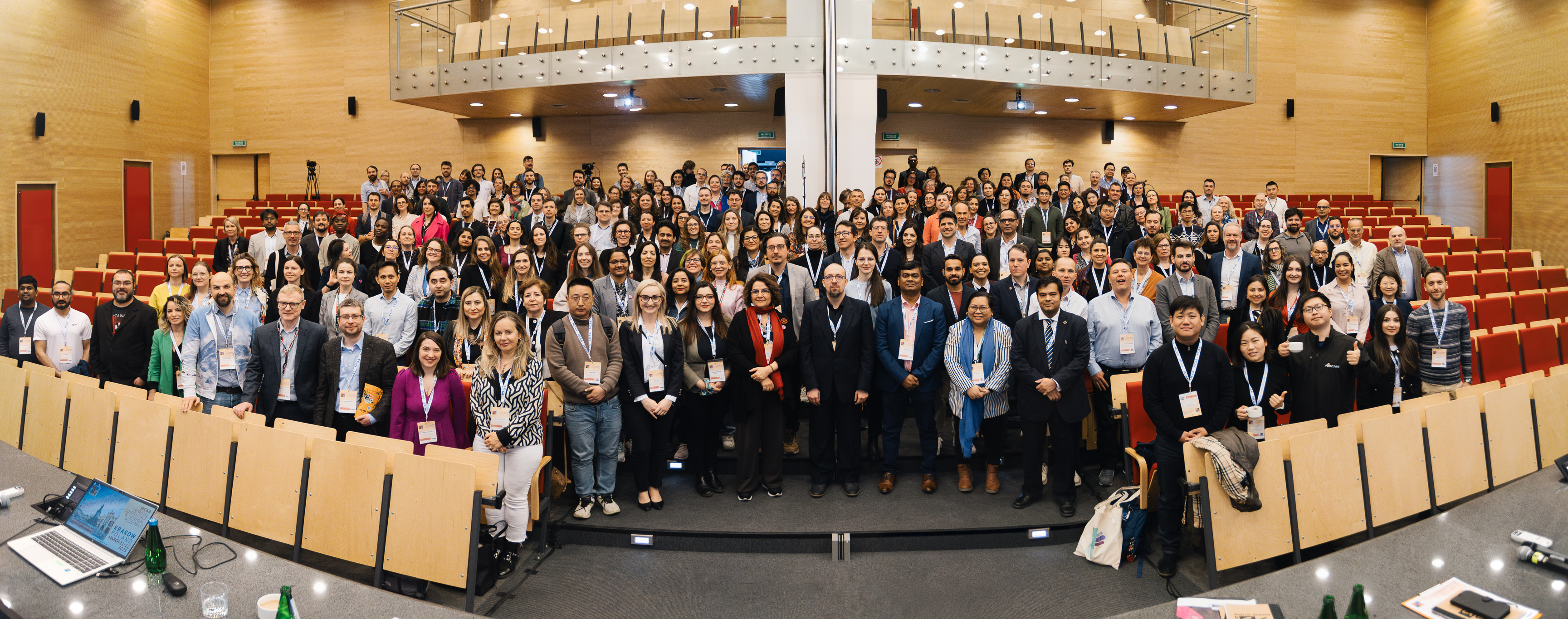
The 2025 edition of our Annual Conference and General Assembly, themed “Research and innovation in a rapidly evolving world,” took place on 21–22 March in Krakow, Poland. Over 530 participants joined us at the AGH University of Krakow and online to discuss topics ranging from science policy and researcher mental health to industry-academia collaboration and artificial intelligence (AI) in science. Five satellite events were held before the conference on 19–20 March.
Along with fostering interdisciplinary exchange and networking, the conference provided a platform for celebrating excellence within our community by rewarding members for their contributions to the R&I landscape. The winners across various categories of the MCAA Awards 2024 were announced during our flagship event.
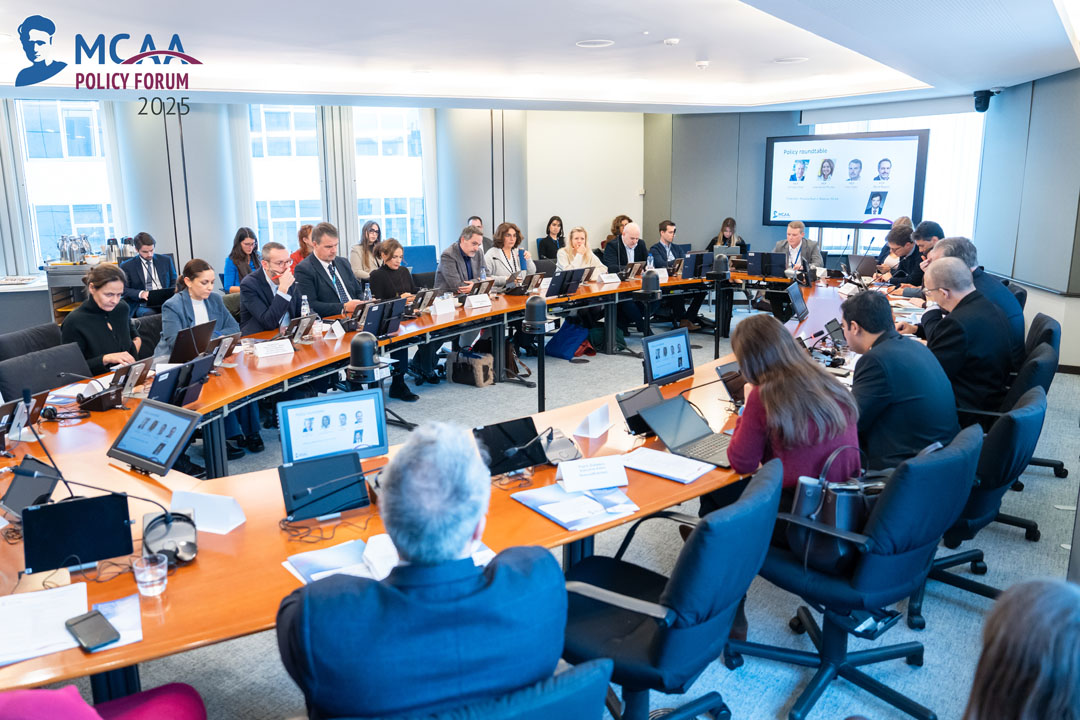
This year, we strengthened our efforts to build bridges between researchers and policymakers by hosting the first-ever MCAA Policy Forum 2025 at the European Parliament in Brussels, Belgium, and online. During the event, held on 4 December under the patronage of Member of the European Parliament (MEP) Christian Ehler, we presented our new report “Impact of the Marie Skłodowska-Curie Actions (MSCA). Driving knowledge, innovation and EU competitiveness.” The report, published as the MCAA’s official book, highlights the transformative impact that the MSCA has had on European academia, society, technology, and the economy.
The event opened with an introductory speech by our Chair, Gian Maria Greco, followed by a presentation of the report by our Executive Director, Mostafa Moonir Shawrav, and a keynote address by MEP Christian Ehler. Attendees had the chance to hear from high-level speakers, including MEP Lina Gálvez Muñoz, Member of the Committee on Industry, Research, and Energy, MEP Ivars Ijabs, Member of the Committee on Industry, Research, and Energy, MEP René Repasi, Member of the Committee on Economic and Monetary Affairs, Jimmy Bruun Felthaus, Minister Counsellor, Permanent Representation of Denmark to the EU, and Claire Morel, Head of the MSCA Unit.

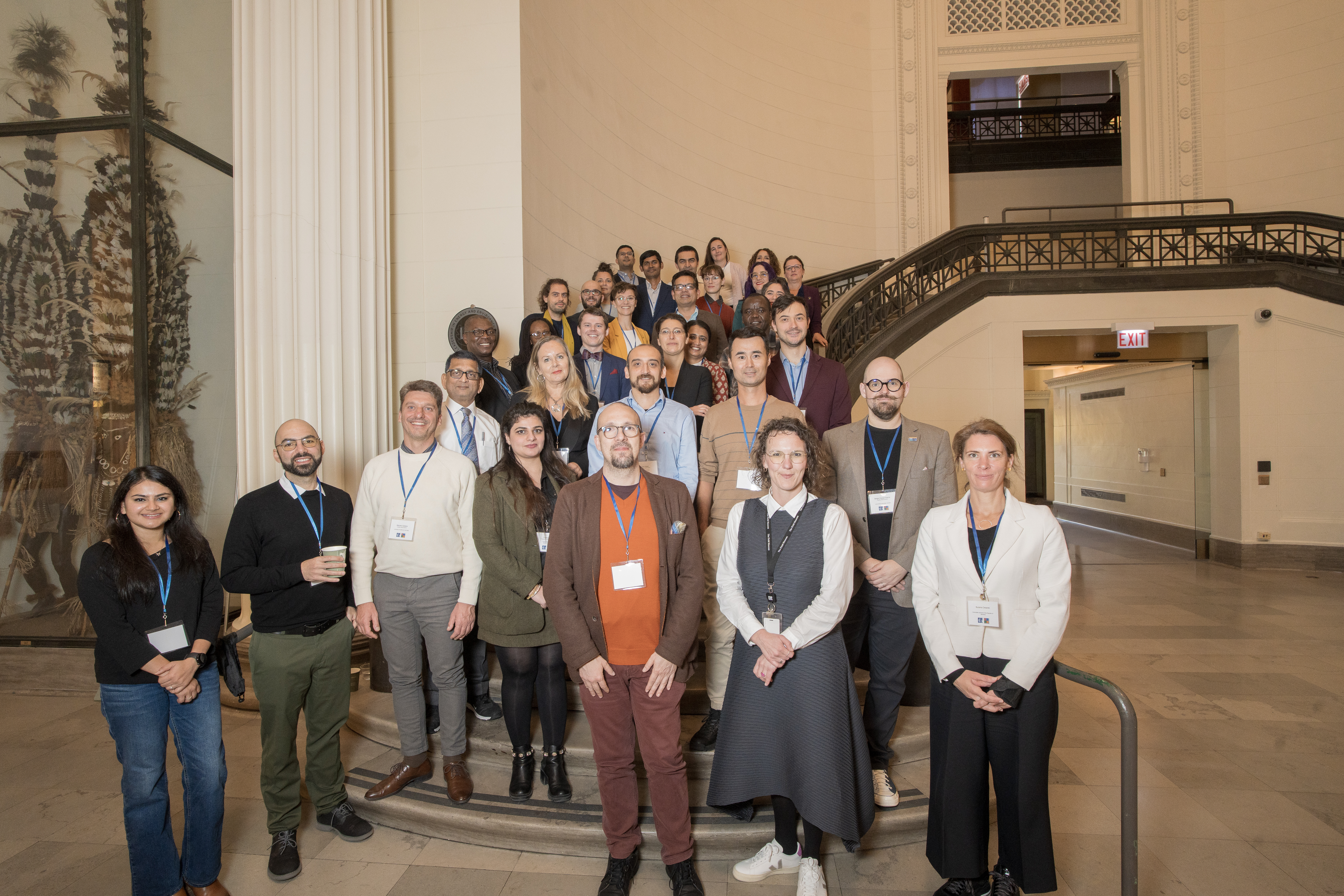
Moreover, on 17 December, we hosted a side event at the second European Science Diplomacy Conference in Copenhagen, Denmark, in collaboration with the European Cooperation in Science and Technology (COST), the Guild of European Research-Intensive Universities, and Université Côte d'Azur. Titled “From research to relation: international scientific networks, the quiet diplomats,” the event aimed to explore the vital role that international scientific networks and research collaborations play in advancing science diplomacy.
2025 was also marked by an active participation of our Board and Secretariat in external events organised by stakeholders across the R&I ecosystem in Europe and beyond. We strengthened connections with the wider R&I community and enhanced the Association’s visibility on the global stage by participating in the:
- Muscat Global Knowledge Dialogue and the Third International Science Council General Assembly in January in Oman;
- Initiative for Science in Europe Policy Discussion and General Assembly in March in Belgium;
- Scientific Advice Mechanism Conference in May in Austria;
- Conference on Freedom of Scientific Research by UNESCO and the European Commission in December in Belgium.
We also joined the MSCA Presidency Conference in September and the AI in Science Summit in November in Denmark, held under the auspices of the Danish Presidency of the Council of the EU.
Our Chapters and Working Groups played a crucial role in increasing engagement and raising awareness of the MCAA and the MSCA at national and regional levels. Of note are the regional events—MCAA Central European Meeting in September in Poland, the MCAA LatAm Forum in October in Mexico, and the MCAA North America Meeting in November in the United States of America (USA)— and the third edition of the MCAA AsiaConnect, which aimed to promote dialogue and enhance collaboration within the R&I community across borders.
The passion, energy, and commitment of our members have led to fruitful collaborations between Chapters and Working Groups and over 100 initiatives, including workshops (e.g. Elevate Your Identity—The Art of Personal Branding and Science Diplomacy Workshop), webinars (e.g. Around the World webinar series), contests (e.g. Research Beyond Words), and meetups (e.g. Café with Marie), organised throughout the year.
We supported our members' career development
We continued to offer our members professional development opportunities through online courses and peer mentoring. We also provided financial support in the form of microgrants to enable participation in activities and events that contribute to their career development.
Through the MCAA Learning Programme, our members receive complimentary three-month access to the online learning platform Coursera via licenses allocated on a rotating basis. This year, the MCAA Coursera licenses recorded 2,023 total enrolments, 770 course completions, and 6,128 total learning hours.
We also helped our members explore career pathways through the MCAA Academy, a programme that fosters mentoring, networking, and engagement within our global network. Over 170 new members have joined the platform, bringing the total number of registered users to 533 this year.
As part of the MCAA Academy, we launched a six-month pilot Mentoring Programme on Careers in the Public Sector in May. It aimed to empower participants to navigate transitions, enhance their skills, and build resilience by providing guidance tailored to the unique challenges and opportunities of public sector careers. This programme paired 11 mentors and mentees and was the first in a series of thematic mentoring initiatives planned for our community.
The Peer Exchange Platform for Narrative-style CVs (PEP-CV) celebrated its one-year anniversary in March. PEP-CV is a free resource for the R&I community to engage in peer mentoring and collaboratively create narrative-style CVs. The platform is an initiative managed by the MCAA and supported by the Young Academy of Europe, as well as six funding agencies: the Luxembourg National Research Fund, UK Research and Innovation, the Dutch Research Council, Taighde Éireann – Research Ireland, the Swiss National Science Foundation, and the Wellcome Trust.
Since its launch last year, PEP-CV has grown into a community of 1,503 members who support each other in strengthening their career pathways worldwide. In 2025, PEP-CV reached another significant milestone by signing a collaboration agreement with ORCID, allowing mentors and mentees to receive validated recognition for their mentorship contributions.
We advocated for researchers' interests
Building on our policy and advocacy efforts over the years, we continued to make significant strides in amplifying the voices of current and former fellows and shaping science policy in Europe, with a focus on enhancing the MSCA within the upcoming 10th EU Framework Programme for Research and Innovation (FP10).
Surveys are one of our most important tools for representing the voice of the MSCA community. In 2025, we conducted a survey on research assessment to gather direct evidence on how research and researchers are assessed within the MSCA. Stay tuned for the results. Additionally, we launched a survey on AI, aimed at understanding awareness, perceptions, literacy, and the use of AI in science. MSCA fellows and alumni are invited to complete the survey by 31 January 2026.
As part of our commitment to advocating for policies that empower researchers and foster a fair and inclusive research environment, we issued three statements:
We also co-signed four statements on crucial topics such as the MSCA Work Programme and the European Research Area (ERA) Act, submitted responses to open feedback consultations, and joined over 80 organisations in a call to increase investment and strengthen R&I in Europe as part of the Research Matters campaign.
In June, the MCAA became a member of the Young Academies Science Advice Structure (YASAS), an independent network of young academies across Europe. YASAS aims to deepen the exchange between European young academies to strengthen the voice of young researchers in the science policy and science advice ecosystem. We also continued to play an active role in the ERA Forum, particularly within Stakeholder Group 4, contributing to building a stronger voice for early- and mid-career researchers.
We remain committed to supporting the Coalition for Advancing Research Assessment (CoARA) and promoting research assessment reform. In addition to having a representative on the CoARA Steering Board, our members are actively engaged across several CoARA Working Groups. As a partner in the Strengthening CoARA and Enabling Systemic Reform of Research Assessment - A Booster (CoARA Boost) project, the MCAA is co-leading the work to support and strengthen the functioning of these groups.
Building a thriving Association
2025 marked the beginning of a new era for the MCAA. In November, we launched our new brand and website, a visual evolution that not only embodies our values and aspirations but also strengthens our connection to the MSCA, is increasingly accessible, and ensures a more inclusive user experience.
Our global community continued to grow throughout the year, and in December, we surpassed 24,000 members from over 155 countries.
We established three new Chapters—in Finland, Canada, and Oceania—, expanding the MCAA and the MSCA’s reach and impact. We also opened the call for elections for the Chair and Vice-Chair positions in selected Chapters. Our AI General Interest Group evolved into a Working Group, and the North America Chapter was renamed to the USA Chapter.
In 2025, two new projects began their journeys: the MSCA Global Cooperation: Policy Enhancement and Strategic Promotion (MSCA-GLOPOL) project, which aims to enhance the reach and engagement in the MSCA across 26 targeted geographical areas, and the Sustainable Careers for Researcher Empowerment 2 (SECURE2) project, which, building on the pilot results of its predecessor, aims to further improve career progression and mobility for researchers.
Looking forward to 2026
2025 has been a year of growth and success. None of this would have been possible without the commitment and support of our members, collaborators, partners, funders, and other stakeholders.
Thank you for being a part of our journey. We wish you a joyous holiday season and look forward to more collaboration and impact in 2026!