Looking back, building forward
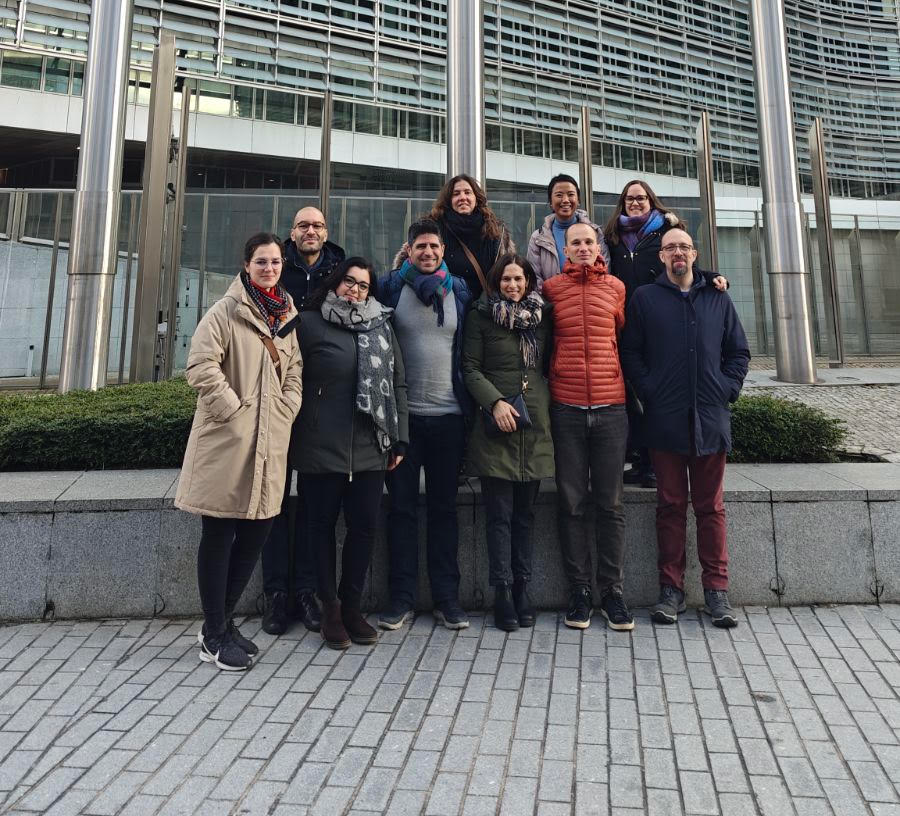
Every MCAA Board begins its mandate with ambitions, fresh ideas, and a commitment to serve the Association. Two years later, those ambitions have been tested by reality, shaped by unexpected opportunities, and transformed into valuable lessons. As the 2024–2026 Board reflects on its term, one thing becomes clear: while individual portfolios differed, all Board members shared a common goal to leave the MCAA stronger than they found it.
Towards strong foundations
The 2024-2026 MCAA Board members are most proud not of a single project, but of the foundations they helped build for the future. Over the past two years, the Association has undergone significant changes: a new visual identity and website, improvements to governance and internal processes, strengthened data protection, enhanced financial stability, and the continued professionalisation of the Secretariat.
Pavlo Bazilinskyy, the previous Treasurer, worked hard to achieve stability and order in financial processes: “I learned that diversifying funding sources, not just managing one grant well, is what actually protects the MCAA long-term. The Association’s current financial health is proof of what our Board and Secretariat can build together.”
Others highlight the importance of continuity and collective effort in supporting an organisation that continues to expand its activities, raise its visibility, and strengthen its role within the European research landscape. “What surprised me most was the extraordinary opportunity to collaborate with researchers, policymakers and international organisations across Europe and beyond. Representing the MCAA in international policy and scientific events reinforced our visibility and strengthened our role as a trusted voice for the MSCA community,” says Virginia Helena Albarracin
The Board's work extended well beyond internal governance. Many members highlight initiatives that directly benefit the community: launching the first mentoring programme, strengthening collaboration between Chapters and Working Groups, improving engagement with members, supporting researchers pursuing careers beyond academia, and embedding gender equality, diversity and inclusion into the Association's long-term strategy.
Highlighting the complex nature of the community the Association serves, previous Chair Gian Maria Greco observes: “Diversity in an organisation of researchers is not only demographic; it is structural. Researchers differ by discipline, career stage, sector, contract, institutional and national system, resources, mobility history, and professional stability.”
Bridging these varied backgrounds into shared action was a key focus for the Board. Maria Romano comments, “The most rewarding moment was seeing discussions and ideas shared during Board meetings and Annual Conferences become concrete initiatives that eventually created real value for the community, especially considering the MCAA’s increasing impact in the European research ecosystem.” Several also emphasise the importance of strengthening relationships with European institutions, National Contact Points, and other stakeholders, helping ensure that the voice of the MSCA community is heard in discussions about the future of research and innovation in Europe.
But as Virginia adds, “The MCAA's greatest strength is its people.” We should not forget the individuals. “Supporting diverse career paths will remain a central commitment, reflecting Europe's growing demand for talent across sectors. By strengthening both our governance and external partnerships, I hope to help ensure the MCAA remains a trusted, forward-looking organisation for researchers at every stage of their careers,” continues Ornela Bardhi.
Plans, reality, and professional growth
Looking back at the promises they made at the beginning of their mandate, the Board members agree that leadership rarely follows the original plan. Priorities shifted as the Association evolved, new challenges emerged, and volunteer responsibilities had to be balanced with demanding professional careers. Rather than seeing unfinished objectives as failures, they describe the experience as one of continuous learning.
“I now better understand a two-year volunteer mandate as a learning journey from the inside. My guiding principle has remained kaizen, continuous improvement, staying engaged and contributing step by step,” shares Hakim Ferria.
Pavlo confirms the personal growth: “Serving alongside colleagues from very different research and professional backgrounds sharpened how I lead my own group at the university: more delegation, clearer documentation, more transparency.”
Other members reflect that serving on the Board taught them to better align ambition with capacity and organisational priorities. The overall message is clear: progress is rarely linear, but every step contributes to building a stronger organisation.
The invisible work of leadership
"Building strong foundations may not always be the most visible work, but it enables the MCAA to better serve its members and grow sustainably," explains Ornela.
One of the strongest recurring themes throughout the reflections is the amount of work that happens behind the scenes. Many admit they were surprised by the complexity of running an international association powered largely by volunteers. Strategic decisions require extensive coordination, consultation, and diplomacy, while implementing even small initiatives often depends on collaboration between Board members, the Secretariat, Chapters, Working Groups, and external partners.
Gian Maria echoes this behind-the-scenes reality of Board work: “A Chair is visible, but the work is often invisible. It lies in the conditions under which other members can act. Creating conditions is neither passive nor always harmonious: processes sometimes have to be defended. The Chair’s task is to help the association develop the relationships, procedures and confidence through which it can steer itself.”
“Serving on a Board of 11 members plus the Secretariat teaches you a lot about collective leadership: listening carefully, understanding different perspectives, and practising diplomacy,” elucidates Hakim. And Corinne Portioli continues, “What surprised me most was how much leadership is about building trust, empowering people, and creating systems that enable others to succeed.”
Representing a diverse membership also requires bridging different institutional domains. As Gian Maria reflects: “Leadership at the MCAA involves translating researchers’ experiences into institutional conversations, and institutional processes back into something meaningful to researchers.”
Others highlight the importance of diplomacy and communication when working with colleagues from diverse backgrounds and cultures. Maria Romano is suggesting: “Listen actively, encourage shared ownership, and build from the foundations already created, using continuity as a starting point to further develop and strengthen future initiatives.”
Although the Board's work is often challenging, it has also been deeply rewarding. Members describe representing the MCAA at international conferences and policy events, seeing new mentoring initiatives come to life, receiving positive feedback from members, and witnessing discussions around the Board table become real projects that benefit the wider community. For many, the greatest reward has simply been working alongside passionate colleagues united by a common purpose: supporting researchers across disciplines, countries, and career stages.
Message to the next Board and the MCAA community
When asked what advice they would give the incoming Board, the answers converge around a few simple principles. Plan carefully, but remain flexible. “Time flies, and in order to ensure things get done, you need to define realistic timelines and clearly identify responsible people to lead the actions,” adds Joaquin Capablo
“Build on what previous Boards have achieved while remaining open to change,” suggests Corinne.
This idea of ongoing institutional development is shared by Gian Maria, who stresses: “A representative organisation does not become representative once and remain so. It has to keep creating the conditions under which representation is possible, including the conditions under which it can be challenged by the people it claims to represent.”
Others add that it is important to trust the Secretariat, strengthen collaboration with the Chapters and Working Groups, communicate openly, and never lose sight of the community the Association exists to serve.
Ultimately, sustaining the Association relies on ongoing effort from the entire membership, as Gian Maria concludes: “None of this can be guaranteed by a Board or a strategic document. It depends on practices that the organisation as a whole must renew.”
Altogether, the Board members thank the community for their trust, enthusiasm and willingness to voluntarily give back.
“The MCAA is much more than a network; it is indeed a community built by people who choose to contribute. Stay involved, share your expertise, and don't hesitate to step forward,” Corinne encourages the MCAA members.
“The Board is here to support you, but the Association's success depends on all of us,” summarises Ornela.
“Let’s keep connecting, sharing, and building it together," concludes Hakim.
We thank the MCAA Board members 2024-2026 for contributing to this article.