5 reasons why KU Leuven is the place to be in 2018
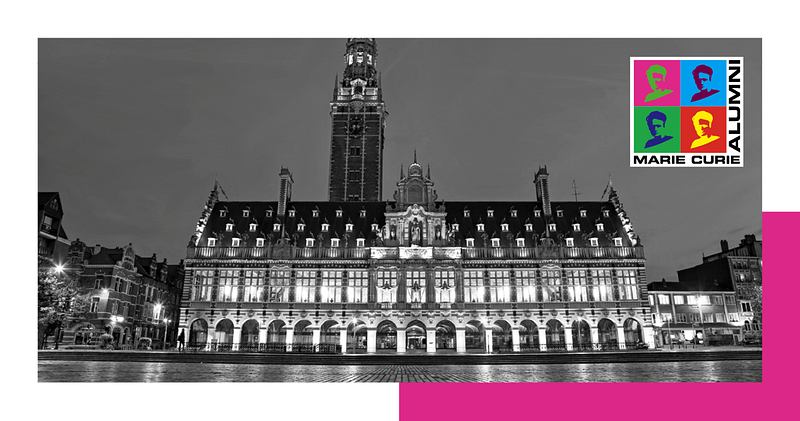
It’s nearly here! The next MCAA General Assembly (GA) will take place from 2 to 3 February 2018 at the Catholic University of Leuven (KU Leuven). If you’re still wondering whether you should come or not, here are some good reasons why you should definitely consider KU Leuven as an exciting destination. Let MCAA Board Member Bala Attili and Isabelle François, Intellectual Property Officer at KU Leuven Research and Development and future panellist at the GA, convince you!
A few words about Isabelle François
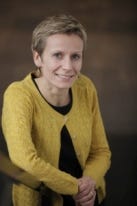
As an Intellectual Property Officer Isabelle writes patents and handles their development. In addition, she negotiates agreements between KU Leuven and third parties such as other academic institutions and companies, while identifying opportunities for valorisation within KU Leuven.
A few words about Bala Attili
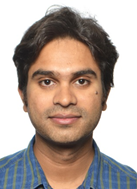
Bala is an MCAA Board Member and is currently working at KU Leuven. From the outset he has been involved in the preparations of the General Assembly with the help of Dr An Jansen, Head of the KU Leuven International Funds Unit, as well as his mentor Prof. Guy Bormans, who is Head of Laboratory for Radiopharmaceutical Research, KUL.
They all agreed on 5 reasons why you should come to KU Leuven!
- Inspiring environment
Isabelle says: “KU Leuven Research & Development is an inspiring environment to work in as I’m confronted every day with the new and exciting technologies and medical devices that are being developed at KU Leuven.” She adds: “To be a part of such a world class university is, in my opinion, truly an honour.”
This sentiment was echoed by Bala when we had the pleasure of meeting him during an interview for the MCAA newsletter.
2. On the top innovative universities
KU Leuven ranks fifth in the Reuters world ranking of most innovative universities, which was published on 26 September 2017. Reuters describes KU Leuven as:
What’s more, KU Leuven is the highest ranked non-American institution on the list. Isabelle seconds this when she says, “KU Leuven is a renowned university with top researchers.” To Bala, KU Leuven’s innovative spirit relies on “an entrepreneurial culture among researchers that knows how to commercialise research outcomes.”
3. One of the oldest European Universities
KU Leuven was founded in 1425 by Pope Martin V, who modelled it on the universities of Paris, Cologne, and Vienna. According to both our interviewees it is one of the oldest Catholic universities in the world.
What’s more, the humanist Desiderius Erasmus lectured here, where he founded the Collegium Trilingue in 1517 for the study of Hebrew, Latin, and Greek — the first of its kind.
4. Multiculturalism
The multicultural environment of KU Leuven has helped to shape its reputation. “KU Leuven is also known for its international character and collaborations with other renowned institutes and companies around the world, as well as being a fascinating and stimulating environment in which to conduct research. In fact, there are 9000 international students, representing more than 150 different nationalities,’’ claims Isabelle.
5. Great quality of life
Last but not least, KU Leuven offers a great quality of life. “Leuven is a small town, with lots of nice places to visit not only for cultural events such as Groot Begijnhof (beguinage), but also for its bars and nice restaurants and it is definitely a lively place to live,” Isabelle concludes.
Are you convinced and willing to take a sneak preview of KU Leuven?
Don’t miss the opportunity to attend high-quality sessions about:
- Innovation (Chaired by Marco Masia, Vice-Chair of the MCAA, Ebrahim Mohamed, specialist educator in the field of entrepreneurship education and currently Director of Education at Climate-KIC, Dirk Hudig and Kathinka Best, Senior Expert Strategy at Arvato SCM Solutions).
- Career choices and career development (Chaired by Adel Pastor, Chair of the MCAA Career Development Working Group, David Finger, Marie Curie Fellow working in the Life Sciences at the University of Sheffield, Sarah Glück, social scientist working at the Zeppelin University in Friedrichshafen and Katia Levecque, Assistant Professor of Industrial Relations at the Department of Personnel Management, Work and Organizational Psychology of Ghent University).
- Careers in science communication (Chaired by Calum MacKichan, Chair of the MCAA Communication Working Group and Publications Officer at the European Plant Science Organisation).
- Writing a successful IF and ERC application (Chaired by Maria Antonietta Buccheri, Secretary General of the MCAA and professor of Genetics at the University of Catania, Italy).
- Future leaderships programmes in industries: fast track career paths for PhD and post-docs/writing your CV (Chaired by Kiran Kumar Chereddy, Treasurer of the MCAA and Manager in Strategy and Project Management Office at Novartis Pharma AG, Basel, Switzerland, Berenice Kimpe, Facilitator for the international cooperation at the Branch office Association Bernard Gregory, Franco-German University).
- Protecting Intellectual Property (Chaired by Isabelle François, Intellectual Property Officer at KU Leuven, Rudi Cuyvers, head of the Spin-off & Innovation Unit at KU Leuven Research & Development).
- Perspective of Humanities and Social Sciences Researchers (Chaired by Nina Diaz Fernandez, expert in conservation and Eastern Europe art history, Gabriella Lombardo expert in global research funding, research and education policies, and international Higher Education, Silvana Colleala, Justine Seran, early stage researcher in English Literature, Dario Pelizzon, head of the Research Area of Ca’ Foscari University).
- Mentoring Session (Chaired by Matthew di Franco, MCAA Board member)
- Balancing professional and personal life in research career development (Chaired by Giovanna Avellis senior researcher in ICT at InnovaPuglia SpA, Valenzano, Bari and project manager in a number of European projects in Software Engineering and Mobile Telecommunication).
- Open Science (Chaired by Gareth O’Neill doctoral candidate in linguistics at Leiden University and is president of the European Council of Doctoral Candidates and Junior Researchers (Eurodoc), and Maja Mise expert in the Classical and Hellenistic pottery and ancient Mediterranean trade and cultural connections).
More information here
Follow us on Medium
This post was written by Aurélia Chaise
Have any comments on this story? Make sure you share them, using the comment form below.


