5 tips on how to successfully move from academia to your dream job

Until recently, leaving the world of academia was seen as an exception in the career of a researcher. But times are changing and cross-sectoral mobility is becoming a trend among academic workers. We spoke to four MCAA members, Zoran Anđelić, Natalia Balcazar, Calum MacKichan and Danilo Maddalo who gave us some tips on how to manage the transition as smoothly as possible.
From academia to their own start-up: meet Zoran Anđelić and Natalia Balcazar
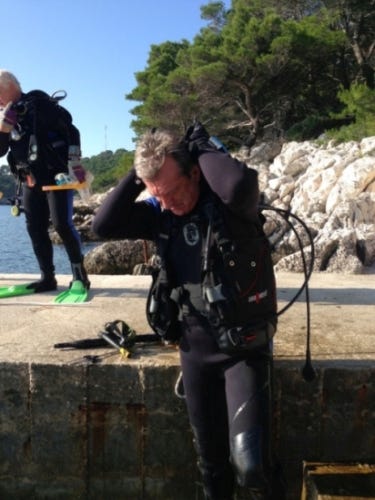
Born in what was then Yugoslavia (now Croatia), Zoran Anđelić began his academic career at the Faculty of Electrical Engineering at the University of Sarajevo (today in Bosnia and Herzegovina). He received a Marie Curie Grant in 1983 and had the opportunity to conduct research in Munich (Germany) to develop new algorithms for the optimisation of High Voltage devices. He came back to Sarajevo in 1989 to work as a full professor at his original. The year 1992 marked a turning point in his career, as he decided to return to Germany to work as a researcher in the industrial sector. He’s currently the lucky owner of the start-up POLOPT Technologies in Switzerland!
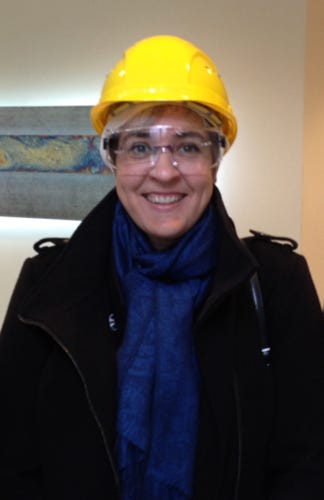
Originally from Spain, Natalia Balcazar conducted research in the field of Geological Science (her PhD was about the environmental management of steel slags). In 2001, she left academia and worked for a firm of ecological consultants. She took a further step in 2005, when she decided to become her own boss in the area of energy efficiency and resource saving. The name of her company is ENVIROpro — European Environmental Project Management.
From academia to communication: meet Calum MacKichan
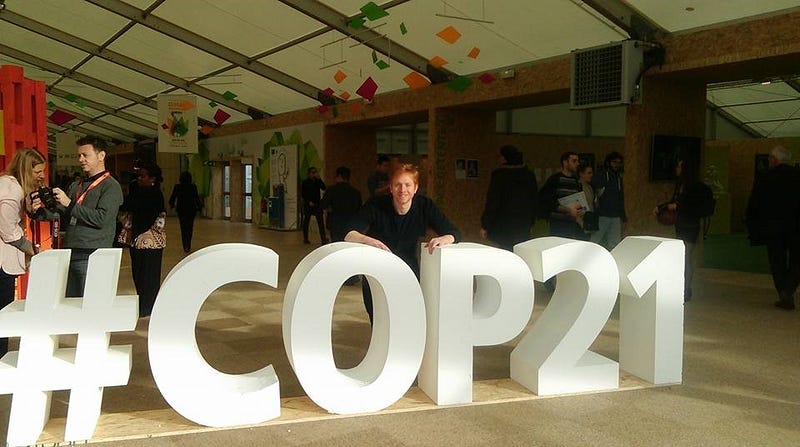
Calum MacKichan is a biologist from Scotland. He completed his undergraduate study in biochemistry at the University of Glasgow and the University of Queensland in Australia, before moving to France with the Marie Curie programme. He currently works for the European Plant Science Organisation as a Publications Officer. He manages the organisation’s website and social media, however his main activity is keeping the members informed about European funding and policy. He is also a Global Co-ordinator for the Fascination of Plants Day, a global outreach event organised by the plant science community. Over 50 countries joined last year, so if you’re a plant biologist you’re strongly encouraged to communicate your research on 18 May 2018!
From academia to industry: meet Danilo Maddalo
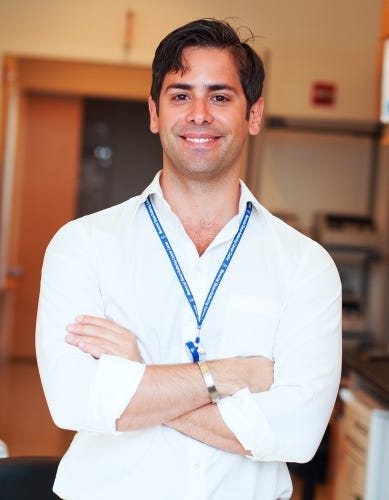
Originally from Italy, Danilo Maddalo graduated in Medicinal Chemistry. He completed his PhD under the Marie Curie Project CANCURE at the Karlsruhe Institute of Technology (KIT) in Germany in the field of oncology, biochemistry and molecular biology. He is currently a lab head in the department of Oncology at the health care company Novartis and is based in Basel, Switzerland.
Deciding to leave academia is a decision that must be carefully taught. Even though this decision came naturally to Calum “I knew quite early in my PhD that I wouldn’t continue in academia. I absolutely loved being at the forefront of human understanding of biology and learning about and discussing the subject, but I was not a talented at conducting experiments.” A specific event encouraged him to take action “After about a year and a half I attended the Euroscience Open Forum (ESOF) 2010 in Turin and was intrigued by the mixture of scientists, policy-makers, journalists, and the general public, and so I was delighted when the opportunity arose to work in that field.” Calum then settled in Brussels and discovered a new world. “I find Brussels is a very different environment in terms of how arguments are presented. The objective method of reasoning you learn as a scientist can be quite different to the political pressures and various ideologies of a policy environment,” he muses.
To Zoran, the worlds of academia and industry appear to have different goals:
“In industry, the research is strongly focused on the expected payback through the new design, new products, new profitable ideas! At the academic level, the research is more ‘relaxed’, and does not necessarily have to result in some expected payback or similar.”
Be prepared therefore to change completely your way of working and thinking!
Knowing yourself is the key to ensuring a successful transition. To Natalia, identifying her strengths and weaknesses was something that she had to learn “The main important challenge was to identify want I really wanted to do and what I could do. This is something that most of the younger people don’t think enough about, in my opinion. There is often a tendency to see which offers are available and how at least one of them is suitable. I have learned that you have to take a look around you.” How did she overcome this challenge? Natalia obtained the support of a friend who works as an independent coach to help her identify those aspects of her work that she most enjoyed and to look for jobs that match these aspects of her personality.
Danilo had to learn to work with a different mindset when he started at Novartis “I was approached by Novartis at a conference. Surely one of the biggest challenges has been the transition from the academic to the corporate-like mindset where everything is more formal, structured and organised.” To him networking appears the most important thing for ensuring the transition from academia to the field of your dreams.
He advises:
Zoran decided to leave the academia for two reasons: “Firstly, I got an interesting offer from ABB CRC in Heidelberg, Germany and I decided to go for it. But, I must say, besides the offer, probably the main factor for my decision was my desire to carry out new and more challenging research in a working environment other than an academic one.” He recognises that taking a risk is an important aspect to take into account: “If I can summarise my experiences, I can only say trust in yourself. After academia industrial experience almost always offers some new challenging opportunities; remember taking a risk is always a part of any success!”
Always keep in mind that one day you may wish to go back to your original work environment, which could happen for several reasons. You might miss for example a particular aspect of academic research.Calum recalls: “My PhD involved florescence microscopy, a technique that reveals the secrets of cell biology by using fluorescent markers and proteins to illuminate various parts of the cell. It was a privilege to be able to see the inner working of microbial cells under the microscope.” To Natalia, the aspects she misses most from academia are twofold: the contact with young people and the possibility to work without taking into account the profitability of the project. Zoran says: “If you want to go back to academia, the experience you have gained in industry can only help towards your successful return!”
Follow us on Medium
This post was written by Aurélia Chaise
Have any comments on this story? Make sure you share them, using the comment form below.