Beyond audio: What your podcasts needs to “speak” to a diverse audience — and a call for action for a book project
Audio for podcasting is like the voice for a singing career. It is the core of the product, but by no means it is sufficient. A podcast does not live in the void: when it is released in the world, it must be accompanied by a number of other elements that are part of the podcast and make it your podcast. I am talking about the graphic design, the style, the visual impact, the setting in which it appears, how it integrates with your social media communication, and — the subject of this article — show notes and other accessories. Do you think that Elton John, Lady Gaga, or Alice Cooper would be the artists they are without the whole package? The voice is not separate from the image, the style. For podcasts it is the same.
So, what are the accessories that go with a podcast? This is what I have learned producing my first podcast, Technoculture since 2018.
A website. By no means you need a website, but it is nice to have a place to direct your audience where they can find all the information about you and your podcast. You can keep it simple and only have a single-page website. I elaborated it a bit more, but I made sure the content is available right there on the main page. Like I said, the podcast per se is the core of what you do, so it should stand out.
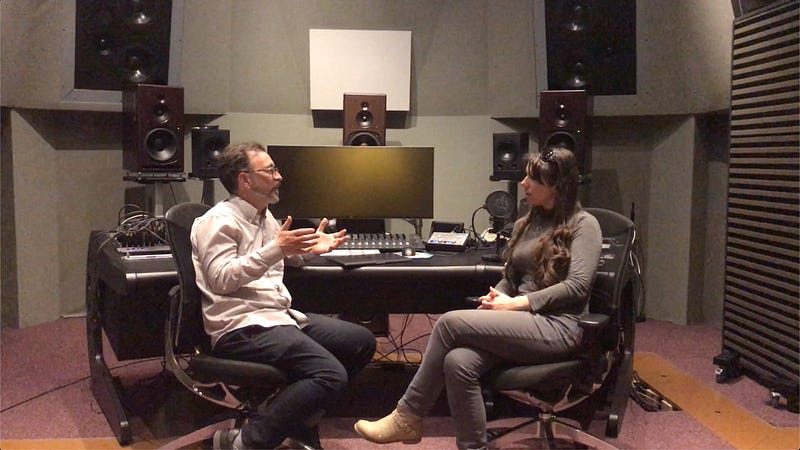
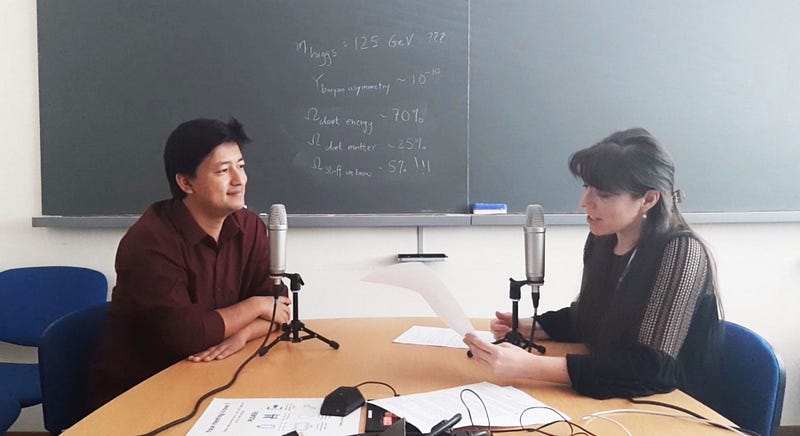
Visuals. There is a lot you can do to give your podcast a visual impact, but still images would be the entry-level. You may say that podcasts are a little bit like radio programs, and there’s nothing to see on the radio. True, but your podcast will mostly be accessed on devices that have a screen. Give people something to see. It helps attention and it brings more information. You can see some examples in the images used in this article.
Introductory video. Optional, but very appealing especially if your podcast is an audio-only podcast. If your show is new, how will people know what it is about? Video is social media friendly, and it speaks to people like nothing else. Again, you don’t need this, but for me, it was an investment worth making. If you go for it, keep it short. Here you can see the introductory video to my podcast: https://youtu.be/M9Cz2sswcbs
Audiograms. Think of them as quotes. Highlights from your episodes. However, technically not regular videos. Subs are normally embedded, and with free tools like Headliner.app you can easily add fancy effects like a dancing waveform. Here an example with a dancing waveform (https://fb.watch/3ZYEDr3N9g/) and one without it (https://fb.watch/3ZXxygoUBE/).
Animated GIFs. This is a trade-off between still images and video. Easy to make, they provide motion to your page and are dense with information. Examples:
Video summary for each episode. Optional. I shortly explored this solution in my transition from audio to video. It’s a lot of work, but it’s worth it. Of course, given that you have the footage. See what you think of these examples:
List of people, places, products, and organizations mentioned in the podcast. This requires that you listen to your episode and annotate this info by hand. It will boost the exposure of your episodes if you are willing to sacrifice hours of your life tagging everything and everybody on every social media platform!
Example (scroll down): http://podcast.federicabressan.com/robert-margouleff.php
Highlights. These are quotes from the episode (your guest said a spectacular sentence worth isolating) or a sort of paraphrased transcript, like a table of contents to navigate the episode. Here’s an example.
Wordclouds. Why not? It looks so cute and tools like http://voyant-tools.org make it so easy. If you monitor wordclouds over the course of our podcast, they can reveal whether your episodes are about what you mean them to be. Think of the potential!
Example (scroll down): http://podcast.federicabressan.com/richard-romaniello.php
Full transcript. The final monster. Transcripts are a lot of work. But they are a goldmine of content. Luckily, you don’t have to start from scratch. There are speech-to-text services that will give you a machine-generated transcript you only need to “clean up.” It is still a lot of work, depending on the duration of your episodes. But I set myself the goal of editing a book with a selection of interviews. It is an ambitious project, and transcripts are the only thing that has been holding me back. I have worked on my transcripts for weeks and weeks, and it’s just beyond the effort of one person. I have had someone help me, but there are still several episodes missing.
CALL TO ACTION. Browsing the examples above, have you spotted an episode that tickled your interest? Would you like to participate in the book project and be credited for your work? On average, a transcript takes between one and two hours. It can be a great way to get familiar with the behind-the-scenes of a podcast and to discover (seriously) the potential of the content locked in a waveform. It will change the way you see podcasts, and hopefully, inform the design of the podcast that is inside of you and is waiting to come out!
Get in touch at [email protected]
For examples of transcripts, see the bottom of this page (http://podcast.federicabressan.com/zoltan-istvan.php) or this PDF.
Available episodes, with topics:
Episode 2: European Year of Cultural Heritage
Episode 4: Audiovisual heritage
Episode 5: Digital forensics: A detective in the archive
Episode 6: Scientia vincere tenebras: The man behind the robot orchestra
Episode 7: A long term affair with science: Happy birthday Marie Curie
Episode 8: Speech and language technology: People are not dictionaries
Episode 10: A lifelong engagement with sound recording and audio tape restoration
Episode 12: Slow VR: Welcome to Dr. Baker’s Magic Garden
Episode 14: The Endangered Guitar: An interactive hybrid between a guitar and a computer
Episode 15: Redefining death: The neurosciences understanding of human consciousness
Episode 16: From litography to digital imaging: Meaningful enterpreneurship
Episode 17: Installation or performance: The art of art making
Episode 19: Playful Interactive Environments
Episode 21: Podcast preservation
Episode 22: Digitality and its consequences
Episode 23: Ferociously interactive media
Episode 24: Film archiving and restoration
Episode 25: Authorship attribution
Episode 27: Ubiquitous music
Episode 28: Digital Humanities
Episode 29: Charting culture
Episode 31: The future of work: Will robots steal our jobs?
Episode 33: Mixed reality and spatial computing
Federica Bressan is a science communicator, multimedia journalist, and podcaster. An academic researcher between 2010 and 2020–and proud Marie Curie and Fulbright alumna,–she started podcasting in 2018 with the Technoculture project. She has interviewed experts at NASA, CERN, the US Dept. of State, the New York Public Library, Hollywood, European and American universities, among others. She has collaborated with scientific publishers and international organizations, producing video interviews collected on her YouTube channel. She produces independent interviews on science communication, technology and society. And she podcasts on, with two new projects for the 4i-mag.com and computermagazine.it.
Website: http://technoculture-podcast.com
Like Technoculture on Facebook: http://facebook.com/technoculturepodcast
Follow me on Twitter: http://twitter.com/donnadifiume
YouTube channel: http://youtube.com/c/wyfiwyg/


