The Creative side of science: The European Researchers’ Night 2019 in Barcelona
Тhe European Researchers’ Night (ERN) is a major event that simultaneously takes place in about 300 cities all over Europe on the last Friday of September with the aim of bringing science, research and technology closer to the public. Participants have the opportunity to discover what researchers really do and why it matters in their day-to-day life. In Barcelona, under the motto ‘Who is Who in European Science’ several research centres (incl. Centre for Genomic Regulation — CRG, Institute of Photonic Sciences — ICFO, Institute of Chemical Research of Catalonia — ICIQ, Institute of Marine Sciences — ICM-CSIC) and the Marie Curie Alumni Association (MCAA) have been invited to the FabCafe Barcelona for a diverse programme of events.

In 2016, several project managers of Innovative Training Networks (ITNs) in Barcelona established an open working group across institutes borders to share experiences, good practices and join forces to co-organise courses and dissemination events. One of the fruits of this collaboration has been their contribution to the ERN, which they have organised for the second time, together with the researchers who work on the projects, under the motto ‘Who is Who in European Science.’
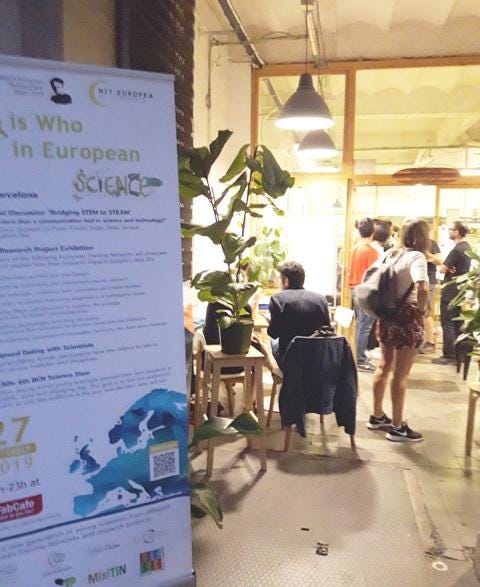
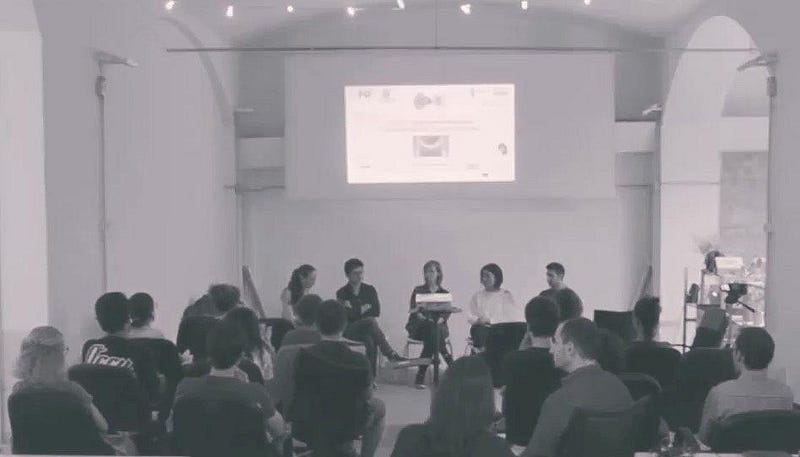
The 2019 edition also engaged the Marie Curie Alumni Association (MCAA) and took place at the FabCafe Barcelona, a meeting point for creative people to use and disseminate 3D printing technology while enjoying a coffee. This was a perfect venue for this year’s European Researchers’ Night and the event opened with a panel discussion on ‘Bridging STEM to STEAM: Why art can be more than a communication tool in science and technology?’
The two artists in residence, Carolin Vogler (fashion designer) and Reiko Yamada (composer/ sound artist), are currently collaborating with the Centre for Genomic Regulation (CRG) and The Institute of Photonic Sciences (ICFO) in Barcelona. Together with the two scientists Luciano Di Croce (CRG) and Giuseppe Lo Presti (ICFO) discussed their experiences of working on interdisciplinary research projects and how art can contribute more to science by collaborating from the outset — resulting in unexpected outcomes.
“It was my first experience of attending a meeting that combines art with science and it made me realise how much these two fields have in common and how mutually supportive they are , although at first sight they appear unrelated.” Hrant Hovhannisyan, MSCA-ITN PhD Fellow
The discussion was followed by a project exhibition, in which the Fellows of 7 ITNs showcased the research they are working on:
CHROMDESIGN — Chromatin architecture and Design (https://www.chromdesign.eu)
MIXITIN — Bringing the paradigm for marine pelagic production into the 21st century: incorporating mixotrophy into mainstream marine research (www.mixotroph.org)
NOAH — Network of Functional Molecular Containers with Controlled Switchable Abilities (www.noah-itn.eu)
OPATHY — From Omics to Patient: Improving Diagnostics of Pathogenic Yeasts (www.opathy.eu)
SINGEK — Promoting SINgle cell GEnomics to explore the ecology and evolution of hidden microeukaryotes (www.singek.eu)
VIROFLOW — Enabling Technologies and Drug Discovery: Continuous Flow Processes to Discover Novel Antiviral Inhibitors (www.viro-flow.eu)
ELCOREL — Electrochemical Conversion of Renewable Electricity into Fuels and Chemicals (www.elcorel.org)
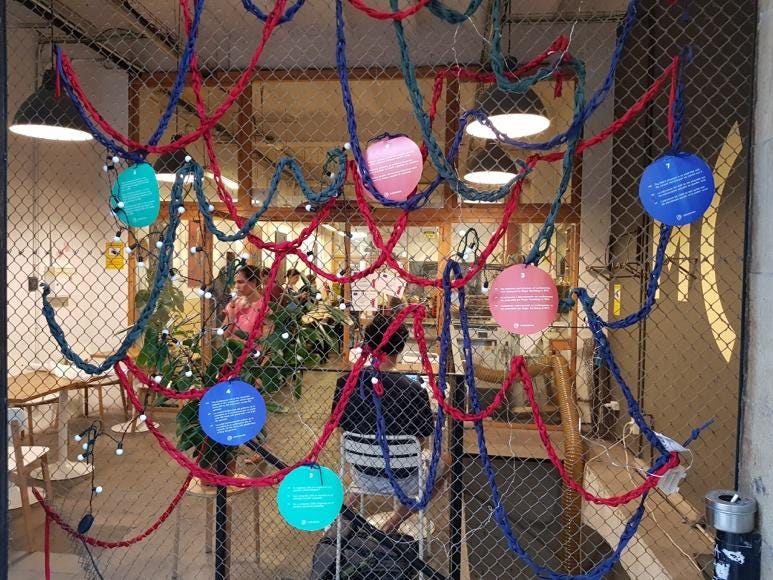
Wool and light chains representing chromatin, augmented reality supported card games to illustrate the diversity of marine microbes, and fungi of dozens of different shapes and colours growing on plates are among the ways participants received highly visual insights into the research fields presented.
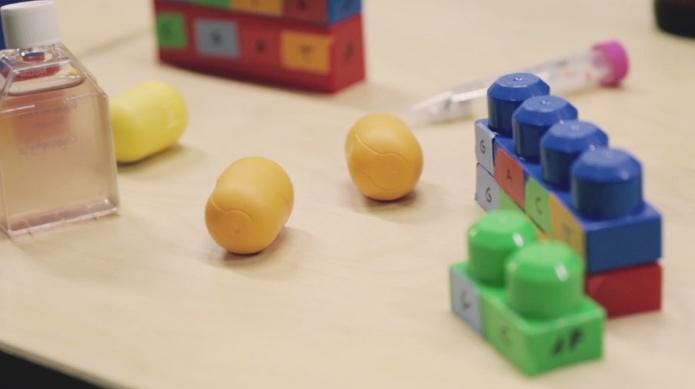
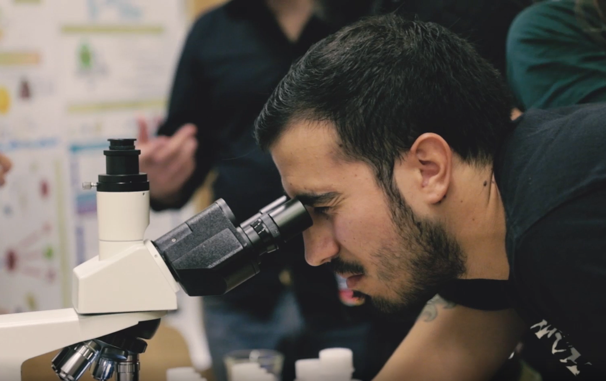
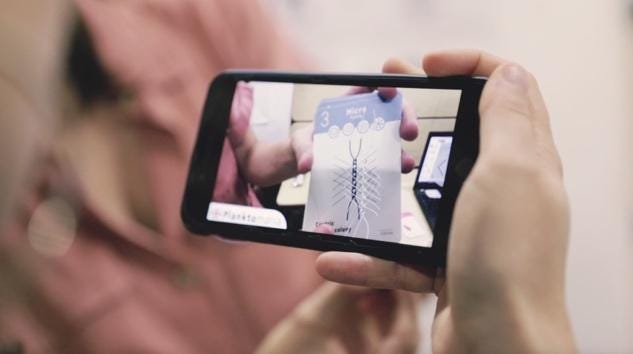
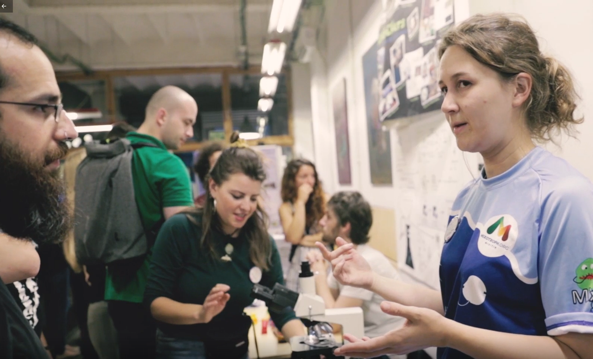
In parallel to the project exhibition, scientists did their best to explain what their research was about by using a typical speed dating format and setting themselves the challenge of employing easy-to-understand language. They also wanted to show that researchers are normal human beings, and not (always) the crazy people with wild hair that are typically depicted in popular culture.
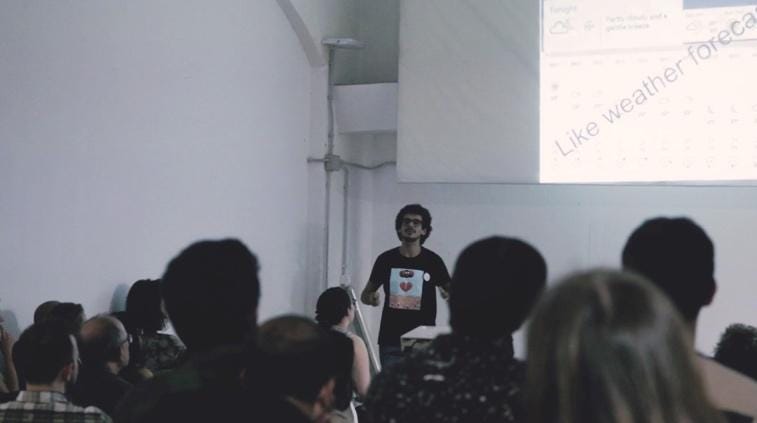
The entertaining evening activity ended with the 6th edition of the BCN Science slam: a science communication competition, during which young scientists present their own research in a comprehensible, vivid and engaging way. The goal is to win the hearts and minds of the audience, who act as a jury and decide who will win. Six slammers were on stage, covering a wide range of research topics from corporate law, femtosecond lasers, sex evolution to interactive installations and biodiversity. In this edition, Federico Datilla, MSCA-ITN Fellow at the Institute of Chemical Research of Catalonia (ICIQ) convinced the audience the most with his entertaining slam about his research on energy storage and its parallels to a triangle love relationship.
The European Researchers Night is a great opportunity to bring the public and scientists closer together and make the public curious about the latest scientific developments and recent research questions. But it can also be enriching for scientists, by leaving their comfort zone and trying to find an easily understandable language to explain their work. As Einstein said: “If you can’t explain it simply, you don’t understand it well enough.”
Link to video: https://www.youtube.com/watch?v=QU9AlF3Rz3M&t=85s
About the author
Jonas Krebs, PhD, is a molecular biologist by training and manages European collaboration projects at the Centre for Genomic Regulation — CRG in Barcelona. He is a passionate organiser of outreach and public engagement activities with and for researchers. Follow him on twitter.
Follow us on Medium
Have any comments on this story? Make sure you share them, using the comment form below.