Europe as a Knowledge Project
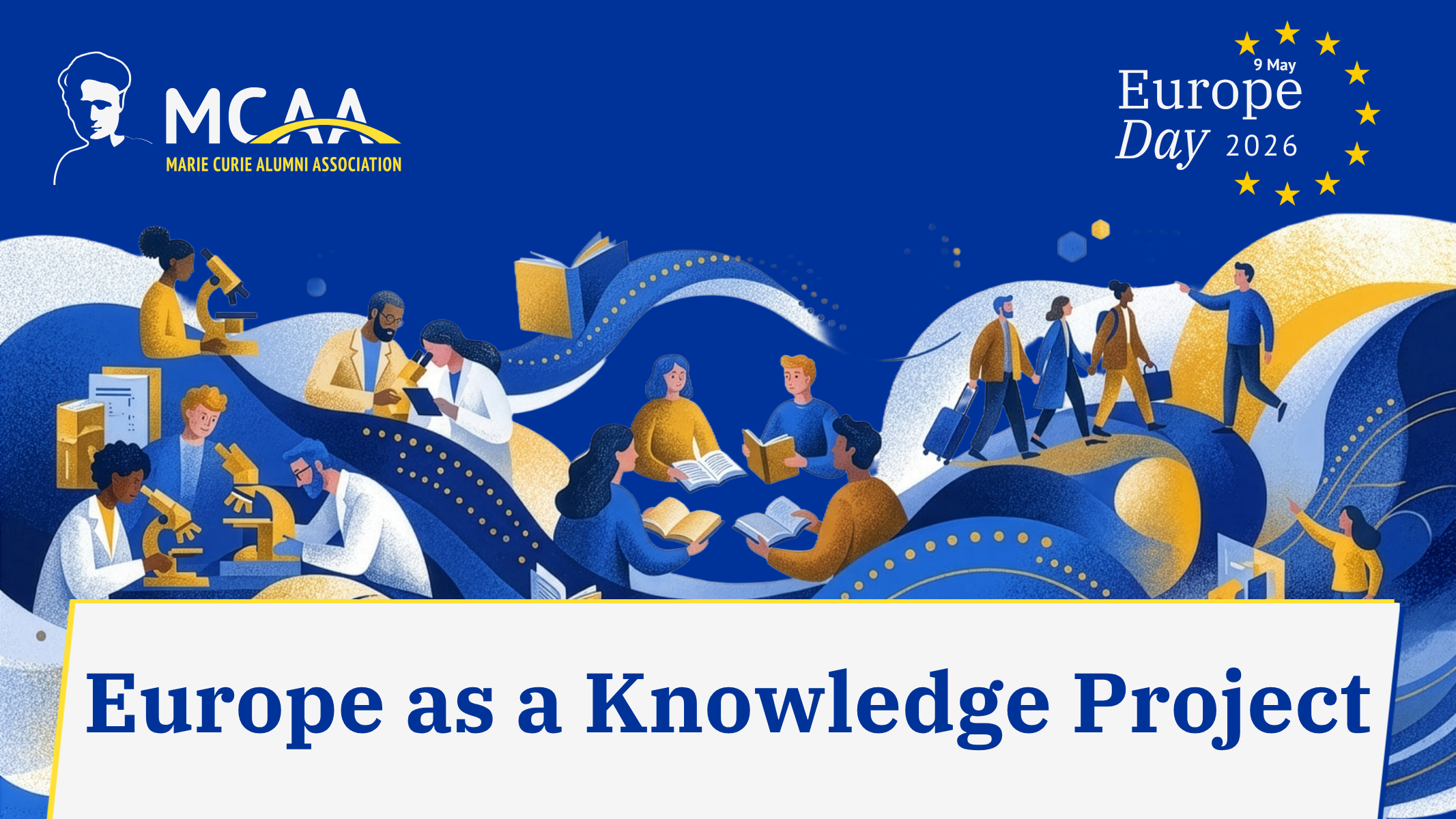
The human foundations of European integration
A well-known passage from the Declaration presented by Robert Schuman on 9 May 1950 reads: "Europe will not be made all at once, or according to a single plan. It will be built through concrete achievements which first create a de facto solidarity" (Schuman 1950).
Schuman was referring to the idea that European unity would not happen suddenly, nor through a master plan imposed from above. It would be built gradually, by addressing real problems together. Those practical projects and activities would create bonds between individuals and, through them, between countries. Over time, those bonds would make deeper political unity possible.
Commenting on Schuman's words, Jean Monnet wrote that this was "the fundamental choice of a method for continual material and psychological integration. It seems slow and unspectacular, yet it does work without a break [...], and no one has been able to suggest any other way of making the Community progress" (Monnet 1978, 300).
But this gradual method was never meant to be passive. In another reflection, he asked: "Does this mean that we must await the slow growth of de facto solidarity and simply rely on it to develop automatically? Certainly not. The everyday realities will make it possible to form the political union. The idea is clear: political Europe will be created by human efforts when the time comes, on the basis of reality" (Monnet 1978, 431).
In a note dated Brussels, 30 June 1953, Monnet also wrote: "The greatest danger facing Europe is the deterioration of the individual, unable to bring to everyday life and its needs the benefits that progress allows. If that is not possible, it is because the conditions in which we live, the conditions in which the countries of Europe live, prohibit" (Monnet 2024, 62-63).
Taken together, these three reflections point to something essential. Europe was never only an economic project or only a political project. From its very roots, Europe was also and above all a human project: a project concerned with the conditions that allow individuals to act, to contribute, to grow, and to bring the benefits of progress into everyday life.
On Europe Day, these words invite us to reflect not only on the origins of European integration, but also on the many concrete achievements through which Europe continues to be built today. Those achievements do not happen by themselves. They are created by human effort, by individuals, by communities, and by institutions capable of turning shared challenges into shared action. Among those achievements, research cooperation occupies a special place.
The European imperative of knowledge
If Europe is to remain faithful to that original ambition, it must also become, ever more clearly, a knowledge project. A Europe built through knowledge is a Europe that recognises the role of researchers as essential to its future. Researchers are among those individuals through whom Europe's concrete achievements become possible. They generate knowledge, test ideas, cross borders, connect disciplines, build institutions, inform policy, and help societies understand and address the challenges before them.
For this to happen, the conditions matter. Europe must create and defend the conditions in which researchers can thrive. It must protect freedom of research. It must support researchers' ability to identify research questions, choose appropriate methodologies, pursue curiosity-driven inquiry, collaborate across borders and sectors, and contribute knowledge in service of society.
Marie Skłodowska-Curie understood this very clearly. Her words still sound compelling today:
"In 1906, when I succeeded my husband at the Sorbonne, I had only a provisional laboratory with little space and most limited equipment. A few scientists and students had already been admitted to work there with my husband and me. With their help, I was able to continue the course of research with good success. In 1907, I received a precious mark of sympathy from Mr. Andrew Carnegie, who donated to my laboratory an annual income for research fellowships which enabled some advanced students or scientists to devote their whole time to investigation. Such foundations are very encouraging to those whose inclinations and talents are such as to warrant their entire devotion to research work. They ought to be multiplied in the interest of science" (Curie 1923, 197).
I would draw attention to her wording: not simply fellowships, but research fellowships. That qualification matters. This is why programmes such as the Marie Skłodowska-Curie Actions (MSCA) matter so deeply. The MSCA is not merely a mobility programme, and it should not be treated simply as a training programme either. Mobility matters, training matters. They are essential parts of the MSCA, but they are tools used by the programme in a specific way and for a specific purpose: to enable and carry out research. That is why the way we speak about the MSCA matters so much. When we reduce it to mobility alone, or to training alone, we risk opening the door to problematic interpretations or policy directions that could distort what the programme is for: a bottom-up, researcher-led, research-driven programme.
That is precisely why Marie Skłodowska-Curie's words still sound so compelling today. They bring us back to the essence of the programme. They remind us what is truly at stake. In this sense, defending the MSCA means defending a particular idea of Europe: a Europe that invests in individuals, that trusts researchers, that values freedom of inquiry, and that understands knowledge as part of its democratic, social, economic and strategic strength.
The MSCA at a critical juncture
Marie Skłodowska-Curie's words were important then and they carry even greater weight now. We are living through a moment in which very concrete decisions are being discussed. Budget discussions ultimately mean deciding how and how many research fellowships will be funded. The way in which the discussions on the MSCA budget are conducted may still influence how those fellowships will be funded. This is the moment to take a stand.
Questions about where the MSCA will be placed within the next Framework Programme, how it will be positioned, what level of support, including financial support, it will receive, and what is and should be the place and role of the MSCA in Europe's research landscape, are not abstract questions. They are among the key questions being discussed right now.
Yet, 76 years since the Schuman Declaration and 30 years since the launch of the MSCA programme, one question remains central: are we fully recognising this value?
If we take the evidence seriously, the MSCA is not a marginal programme. It is critical infrastructure for Europe's future. The researchers it supports are not just beneficiaries. They are multipliers. They go on to lead laboratories, build companies, inform policy, and contribute to solving challenges we have yet to fully understand. In a world where competition for talent is intensifying, Europe's ability to attract, support, and retain researchers will define its future in very concrete ways. This is not only a matter of research policy. It is a matter of long-term strategic positioning.
The MCAA in Europe’s research community
The Marie Curie Alumni Association (MCAA), much like the Marie Skłodowska-Curie Actions themselves, is both European and global. The MSCA welcomes researchers from all over the world, and it enables researchers to go all over the world. It is international in its reach, ambition, impact, as supported by MCAA's recently published report (Marie Curie Alumni Association 2025).
The MCAA mirrors that spirit. We are a global community: open, diverse, mobile, and connected across sectors, across disciplines, and across countries. Like the MSCA programme itself, and because of the MSCA programme, we also have a firm point of reference in Europe and in the idea of Europe.
Today, we bring together more than 24,000 researchers across over 155 countries, spanning disciplines, sectors, and career stages. What connects us goes beyond a shared experience of the MSCA. It is a shared commitment to advancing knowledge in service of society, and to supporting one another in that mission.
The MCAA embodies something very concrete about Europe as a knowledge project. It brings together individuals whose work, mobility, collaborations and commitments help create precisely the kind of de facto solidarity that Schuman described: not an abstract solidarity, but one built through shared work, shared problems, shared knowledge, and shared responsibility.
Over the past years, this commitment has been translated into action in many different ways: through the strengthening of our global network, the expansion of opportunities for career development, an increasingly active and structured role in science policy.
The MCAA as a mature policy actor
It is within this broader journey of growth and consolidation that the first MCAA Policy Forum must be understood. Held at the European Parliament, it was a defining moment in this journey. When we first conceived it, the idea was simple: to create a space where researchers and policymakers could engage in a structured, evidence-based dialogue on the future of research in Europe.
That moment captured something essential. It showed that the MCAA is not only a network, but a mature actor capable of contributing meaningfully to the dialogue between research and policy. That event is not an isolated achievement. It is the natural extension of the path we have been building over these years, and of a broader process of growth, consolidation, and increasing maturity within the Association.
What made that moment particularly meaningful was not only the setting, but what it represented. It reflected how far the Association has come. The Policy Forum sits at the intersection of these efforts. It represents our ambition not only to be a community, but to be a voice, and a constructive partner, in shaping the future of research.
Our presence in these discussions matters. The message that emerges from our 2026 Annual Conference, our MSCA Impact Report, our policy and advocacy activities, and our collective experience is clear: investing in researchers is investing in Europe's strategic strength. The MSCA does not simply fund projects. It builds a research ecosystem that is connected, mobile, interdisciplinary, and diverse. The MSCA creates the conditions for knowledge to circulate, for ideas to grow, and for innovation to take root across borders and sectors.
If there is one message to leave on Europe Day, it is this: investing in researchers is not optional. It is essential. Europe will not be made all at once. It will continue to be built through concrete achievements: through the circulation of knowledge, through research fellowships, through the mobility of people and ideas, through communities that connect countries, disciplines, sectors, and generations.
The MCAA is a community that still has much more to do, much more to say, and much more to contribute.
A Europe that invests in researchers is a Europe that invests in the individual, in freedom, in progress, and in the capacity to address real problems together. It is a Europe that prevents the deterioration of the individual, in Monnet's sense, not through rhetoric, but by creating the conditions in which individuals can think, discover, collaborate and contribute.
This is the Europe that the MSCA has helped to build. This is the Europe that the MCAA community continues to serve. This is the Europe we should reaffirm on Europe Day: a peace project, a political project, a human project, and increasingly, a knowledge project.
Note: This text draws on the opening speech and closing remarks I delivered at the first MCAA Policy Forum, held on 4 December 2025 at the European Parliament in Brussels, and on the opening speech and closing remarks I delivered at the MCAA Annual Conference at the Université libre de Bruxelles, on 22 and 24 April 2026, respectively.
References
Curie, Marie. 1923. Pierre Curie. New York: The Macmillan Company.
Marie Curie Alumni Association. 2025. Impact of the Marie Skłodowska-Curie Actions (MSCA): Driving Knowledge, Innovation, and EU Competitiveness. Brussels: Marie Curie Alumni Association. https://doi.org/10.56647/HWZO5676
Monnet, Jean. 1978. Memoirs. London: Collins.
Monnet, Jean. Jean Monnet on Action, Unity and Europe. Paris: Institut Jean Monnet, 2024.
Schuman, Robert. 1950. The Schuman Declaration. May 9, 1950. https://european-union.europa.eu/principles-countries-history/history-eu/1945-59/schuman-declaration-may-1950_en