On giants’ shoulders: Dr Vera Rubin and research integrity
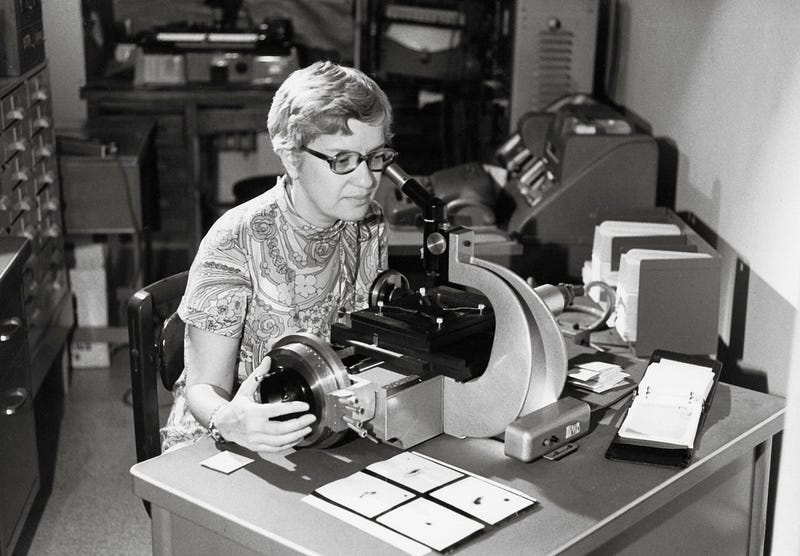
Dr Vera Rubin, the American astronomer famous for her pioneering research which provided evidence for the existence of dark matter, once said:
But in research, the competitive and demanding environment can often drive out the space for imagination and uplift. And with the phrase ‘publish or perish’ dancing over the heads of scientists, the integrity of scientific work has undoubtedly suffered as a result.
The MCAA recently offered me the opportunity to do an online course on research integrity (provided by Epigeum) and around the same time I came across some articles on the life and work of Dr Rubin. Together, these got me thinking about a life in science and how one can continue to practise research with integrity over the course of a long career.
Often, rather than reading policy documents (though this too is recommended) insights from a scientist whose career you respect can provide the most valuable guidance for researchers trying to navigate a career grounded in integrity. And so, I have compiled some of the many words of wisdom from Dr Rubin, hoping they might help some scientists struggling in a competitive, aggressive, and demanding research environment.
Do good
A simple idea, but complicated when scientists from all over the world are inevitably working with different ideas of ethical research and making scientific choices based upon different sets of moral codes. Once, when asked about her religion and its impact on her research Dr Rubin replied,
Although she aimed to separate her religion from her work, her background in Judaism clearly influenced her sense of what is moral. Scientists will each have their own ideas concerning morality, but the ultimate aim of doing good can override those differences.
This requires researchers to think deeply about the role their research plays in the world and in society. It is easy to get so caught up in work and the pressure to publish and get funding that we don’t take that step back to look at the larger picture and consider the impact we are making in the world.
No matter what your background is, this careful consideration of your work and whether it is moral, according to your own beliefs, is vital for research integrity.
Forge your own path

In 1996, Dr Rubin gave a rousing speech filled with wisdom and wit to the graduating class of Berkeley. A trailblazer herself, she emphasised the value of defining your own research, rather than staying within the mainstream:
This was a clever move on her part, allowing her the freedom of more time and less pressure while studying areas with great potential for discovery. This is not a possibility for all researchers, but it is a valuable piece of advice for those intent on finding a work environment that fosters research integrity.
Know your motivation, and don’t allow it to be glory
Dr Rubin had an unwavering interest in astronomy, which provided her with all the motivation she needed to pursue her research;
Although, she did once point out that her interest may have faltered if galaxies had not been so beautiful! Finding a field that one finds fascinating, and perhaps beautiful too, can provide all the incentive needed for a scientific career. A motivation for glory was never a driving force for Dr Rubin, the lure of discovery was enough;
When one’s motivation shifts from knowledge and discovery to publications and prizes, the temptation for scientific misconduct can grow. Dr Rubin was clear-eyed about her aims, and consistently focused on discovery over acknowledgement.
Be open to interpretations of your work
In a blog post for Scientific American, Richard Panek recounts conversations with Dr Rubin about her work. Although she has been widely credited with discovering dark matter, she disputed that in these conversations and would argue that she had discovered evidence that dark matter existed, but that did not imply that dark matter actually exists. She was open to different interpretations of her observations and never allowed pride to get in the way of her scientific integrity. She was, in my opinion, the model of an ethical scientist.
Enjoy it!

This final quote from Dr Rubin demonstrates how she always encouraged enjoyment of science;
Reading through transcripts and quotes from Dr Rubin, it is clear that although she faced struggles throughout her career, the joy she got from astronomy never faded. Perhaps that is the secret to success…
About the author
Catherine Gilmore has just been awarded her PhD from University of Bristol, where her research focused on the role of the placenta in pregnancy and fetal health.
Follow us on Medium
Have any comments on this story? Make sure you share them, using the comment form below.