How to deal with reviewer 2: A step-by-step guide
by Srishti Goyal
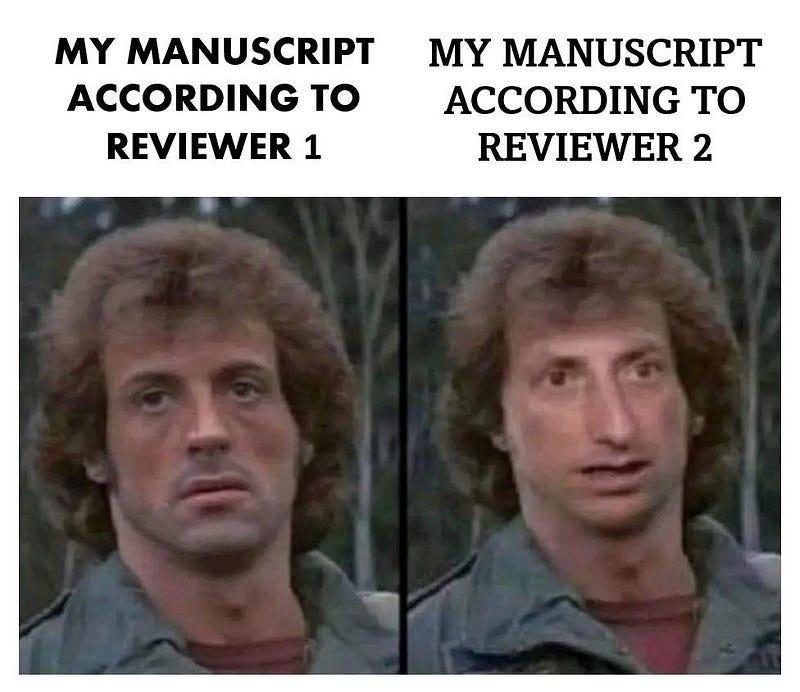
Let’s be honest, if you’ve ever submitted a paper for peer review, you’ve likely encountered the infamous ‘Reviewer 2’. In academic circles, this figure has become synonymous with overly critical, frustrating, and often unreasonable feedback. Reviewer 2 doesn’t just have a reputation for being harsh. Sometimes, you sit there wondering if they even read your abstract. They’re also frequently accused of missing the point entirely, offering superficial critiques, and, when they do engage with your arguments, raising objections that are poorly thought out. To top it off, their revision demands can be so excessive that they feel more like hurdles than constructive suggestions.
For many researchers, Reviewer 2 is the final and most unpredictable barrier before publication. Their approval, or at least non-objection, is usually essential to get your work accepted.
But here’s the good news: You can survive Reviewer 2. With a thoughtful approach, you can navigate their critiques effectively and emerge with a stronger paper and perhaps a thicker skin.
Step one: Don’t take it personally
Before diving into revisions, it’s important to manage the emotional impact of the critique. The first time I got a harsh review, I was mid-lunch and completely lost my appetite. Receiving tough reviews can feel demoralising, especially when you’ve invested months, or even years, into your work.
Remind yourself that encountering criticism is a universal experience in academia. Even the most accomplished researchers have had papers rejected or extensively revised. Marie Curie and Einstein, for instance, faced significant skepticism and dismissal before their work gained recognition.
Step two: Find the constructive criticism
Once the emotional fog begins to lift, it’s time to roll up your sleeves. Read through the comments more than once. The first read is for processing. The second is for clarity. And the third? That is where the real work begins.
Have you ever found yourself re-reading a review just to check if they really said that? You’re not alone. Here’s how I’ve learned to handle it:
● Highlight the points that are constructive, even if they’re framed harshly.
● Separate the vague, irrelevant, or poorly grounded critiques from those worth considering.
● Focus your revision efforts on the actionable points. This will help you avoid being bogged down by unnecessary frustration.
For valid critiques, respond thoughtfully. If they point out a gap in your methodology, ask for additional references, or flag a misinterpretation, take the opportunity to revise. Acknowledge their input in your response letter, using language that conveys professionalism and collaboration. For instance, phrases like ‘We appreciate Reviewer 2’s suggestion to…’ can set a constructive tone and show that you value the peer-review process.
Even if their comments sting, addressing them seriously signals your commitment to improving the quality of the work.
Step three: Stand your ground (respectfully)
Some Reviewer 2 comments may ask for more than is reasonable, such as a new dataset, an extra year of analysis, or a completely different theoretical lens. When this happens, it’s okay to push back.
One of the most useful lessons my supervisor shared with me is that you can disagree, but you must do so with clarity, respect, and justification. That mindset has served me well in many rounds of peer review.
If a request is not feasible, you should explain why in your response. For example, you might write, ‘While we understand the reviewer’s concern, conducting additional experiments is beyond the scope of this study due to time and resource constraints.’
Backing up your decisions with sound reasoning shows that you have seriously considered the feedback, even if you ultimately choose a different path.
Step four: Talk it out
After submission, talk it out! Seriously. Sharing your Reviewer 2 experience with your peers or mentors is a time-honoured ritual. Chances are, they will nod, laugh, and top your story with something even more outrageous.
Everyone has a Reviewer 2 story. Some of the most established researchers in my field — the ones with books, multiple grants, and years of experience — still recall the time their paper was called unclear, their methods weak, or their argument unconvincing. They often remember the exact words.
Sometimes, all it takes is someone saying, ‘Mine was worse,’ to make the whole thing feel manageable. Talking it through helps you put things in perspective and shift your focus to what really matters: improving your paper and growing as a researcher.
Reviewer 2 might actually help you
In many ways, dealing with Reviewer 2 is an opportunity for growth. While their critiques may seem like obstacles, they often force you to think more critically about your work. By anticipating potential objections and addressing them in advance, you can sharpen your arguments and improve clarity.
Over time, this process strengthens not only your research but also your resilience. Each round of peer review becomes a chance to refine your skills in responding to feedback, communicating your ideas effectively, and navigating the complex realities of academic publishing.
Reviewer 2 might not be your favourite part of the research process, but they don’t have to be your nemesis either. With some patience, peer support, and a clear response strategy, you can turn even the most difficult feedback into a step forward.
And when you get the chance to review someone else’s work?