How the Marie Curie Alumni Association shaped my career
by Ruben Riosa
The Marie Curie Alumni Association (MCAA) is celebrating 10 years since its founding — what an achievement!
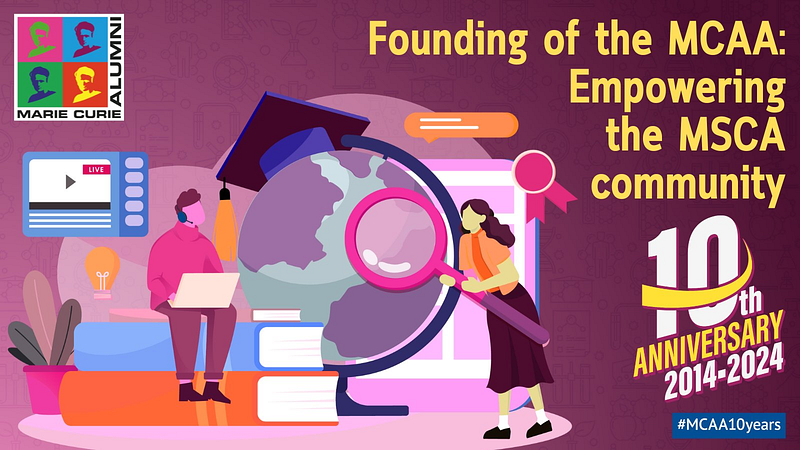
On the 7th of February 2014, the MCAA was founded to connect, give a voice to, and support researchers who benefit or have benefited from Marie Skłodowska-Curie Actions (MSCA). Since that day, the Association has kept growing, creating a network of more than 22,000 members at different stages of their careers, coming from and residing in 155 different countries.
I am one of these members and couldn’t be more proud of it, since the MCAA really helped me shape my career. You might be asking yourself, “How is it possible? How can an Association so big help a single individual?”
Let me briefly explain.
The beginnings
Back in 2018, I was starting my PhD in an Innovative Training Networks (ITN) funded by the MSCA. Right at the beginning of the project, our supervisors underlined the importance of communication within the project and the need to spread our results and activities to the wider community, represented both by a specialist audience and the general public. Our network was thus looking for an early stage researcher who could lead these activities, and I thought it could be a fantastic opportunity to expand my soft skills beyond the scientific ones. However, I had no idea what the needs were and how to implement a communication strategy into our projects — not only that, I literally didn’t know what a communication strategy was.
The MCAA saved me!
Once I started researching on the internet to find some support and help, I ended up finding the MCAA, which seemed like the perfect place to have some questions answered, because it had what I thought I was looking for:
(Spoiler alert: In reality, I found out the MCAA had many more things to offer than just the above-mentioned ones. It allowed me free access to LinkedIn Learning and Coursera to follow specific training on communications, plenty of informative webinars I could attend for free, micro-grants to attend specific conferences, and much more.)
Without any doubts, I submitted my request to join the Association and once approved, I immediately joined the Communication WG. I quickly became a very active volunteer of the WG and got to work as an editor of the MCAA Blog (yes, the one I am now writing for), the Newsletter, and the IRRADIUM magazine. Soon after, I was already in touch with multiple people in the MCAA and outside of it and organising webinars on a huge variety of topics, from science communication to policy, and career development, allowing me to meet many people with different experiences.
Needless to say, I was able to transfer all the knowledge I was gaining from the MCAA to my own PhD project as well as into my ITN network.
The epiphany: “I kind of like communications”
A couple of years into my PhD, and after becoming first Vice-Chair and then Chair of the Communication WG, I realised that I didn’t want to pursue my career in research, but maybe switch and focus on communications.
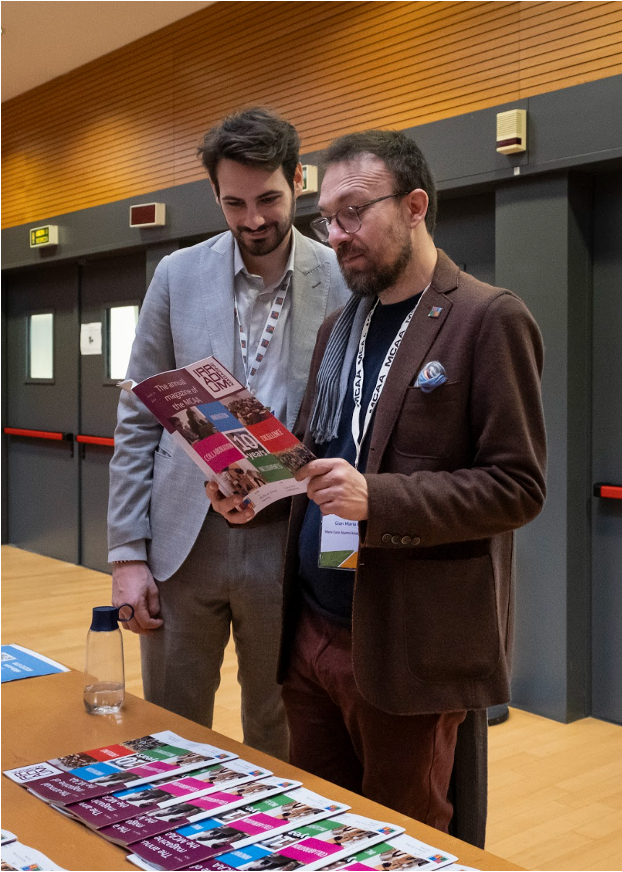
All the extra work I did as a volunteer really helped me realise how much I loved communicating science and engaging with people. The work I did with the Communication WG was really rewarding, and it permitted me to meet plenty of incredible and dedicated people who supported me and helped me realise that communications was something I truly liked, not only as a volunteer job but something that could become my career.
Where am I now?
All the work I did and the experience I gained in communications helped me to obtain a job for a medical communications agency, where I currently help develop strategy and communications for clients in the global pharmaceutical industry. Moreover, I am still involved within the MCAA as its Communications Manager, a role that I am very proud to still cover and that has allowed me to meet other amazing professionals in the field who are now also supporting the Association in becoming even better in communicating all its strengths to the world.
In a nutshell, how did the MCAA help me?
- The membership provided me access to a great variety of services, such as LinkedIn Learning, and Coursera, the possibility of applying for and receiving micro-grants, attending and organising webinars, and training — and all of this for free!
- I’ve had the opportunity to meet many people who’ve enriched my career. The bonds I’ve created with some of them are so strong that I can consider them friends rather than colleagues.
- The possibility of creating activities without the fear of failing and bringing in new ideas to support members have been probably the things I have loved the most. I have always been supported and it has been nice to see many new ideas become reality.
I have told you how the MCAA shaped my career, but what is your story?
Together with many more readers, I am curious to know and would love to hear more insights on how the MCAA helped shape the careers of its more than 22,000 members in the past 10 years!
Share your experiences on the MCAA Blog by reaching out to [email protected] or posting your best memories on social media using the hashtag #MCAA10years.