Implementation of 3D printing technologies in orthopedics
by Pancho Dachkinov
The following Blog has been developed by one of the participant of the recent MCAA ECS Satellite event on Science Communication.
During the workshop, participants were invited to work on a scientific blog and submit their final piece to be published on the MCAA Blog.
The piece has been revised by a task-force of the MCAA Communication Working Group. Members of the team included: Maria Montefinese, Luisa Merz, Ashish Avasthi, Pradeep Eranti, Nicoleta Spînu, and Ruben Riosa.
Enjoy the piece!
Did you know that according to World Health Organization (WHO) within the next 30 years the population of people older than 60 will double? This will inevitably lead to a considerable increase in rehabilitation demands. And did you know that more than 50% of people in low- and middle-income countries do not receive the rehabilitation care they need? How about those 2.4 billion people worldwide who live with a health condition that could improve with rehabilitation?
What is rehabilitation?
Rehabilitation focuses on reaching functional independence in participating in daily activities. Furthermore, rehabilitation is a highly patient-centered process, and individuals need special attention and solutions based on their own specific condition, lifestyle, age, gender, etc.
This is where 3D printing shines for the creation of complex and unique models, which makes it a highly suitable technology for the fabrication of assistive orthotic devices. Here are some of the benefits of such 3D printed devices:
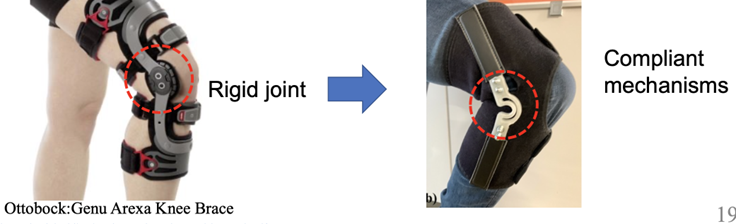
If you go through an injury or trauma, you might be feeling frustrated, anxious, in pain, or do no t think you are part of the society as you were before the accident. That must come to an end. You deserve better and must be treated better. Talk to your healthcare provider. Commercially available solutions are not always customized and are hardly affordable. Ask for a complimentary solution for your diagnosis, such as custom-made 3D printed orthotics. Your condition can and will definitely improve in the near future. By using a customized solution, you will reduce the risk of reinjury, and return to normal daily activities. The process is easy — your limb is scanned with a 3D scanner, and after that, a personalized support device is created based on your specific needs. During the healing process, this device can be replaced with another one that better reflects your new improved condition — a flexible and adjustable solution in real time.
And all that without robbing the bank! The rehabilitation process is slow, it requires patience, but it does not have to be risky or painful. Don’t wait, do! Become part of personalized physical rehabilitation by implementing new additive technologies.
If you did benefit from it, raise awareness and help others experience their old life again.


