Life after PhD — where do we go now?

In a field where the motto “publish or perish” has turn into “publish and perish anyway”, most PhDs feel discouraged about pursuing a career in academia. But does having a PhD mean we must stay in academia?
Getting a PhD is, without a doubt, an accomplishment that most people would feel proud about. However, it feels as if getting a PhD is a sentence to force you to continue in academia, no matter what. Or as an alternative, find a job at the bench in industry.
It seems like quitting hardcore science after getting a PhD is a failure and should not even be considered as an option. But does it have to be like this? Is getting a PhD an obligation to follow a pathway that may not fit into your life? Why do most of PhDs pursue a job in academia despite the fact that there are not enough faculty jobs for everyone (see figures)?
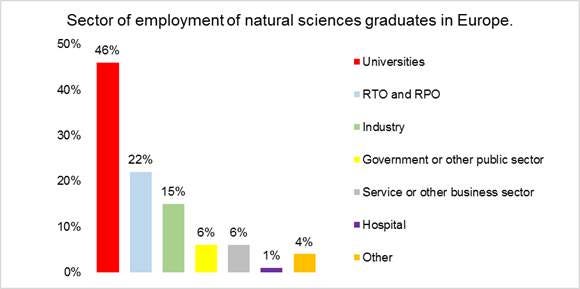
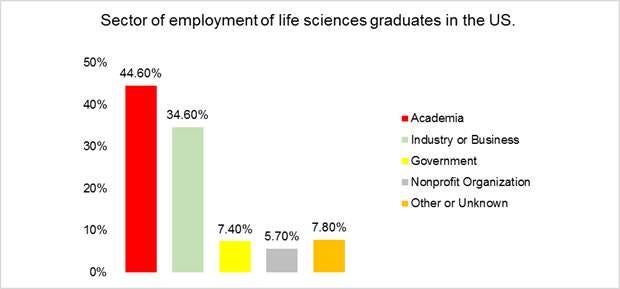
I got my PhD as part of a neuroscience programme, called SyMBaD, an international collaboration between six European universities, funded by Marie Curie ITN (Initial Training Network). Like most people who get a PhD in biological sciences, I am still working at the bench as a post-doc, and if you ask me — yes, I want to stay in academia.
In SyMBaD, twenty-three students (including myself) carried out their PhDs in different universities around Europe. Did they all successfully complete their doctorates? Yes. Have they all stayed in academia? No. Because with a PhD you can go pretty much anywhere in your career and not even necessarily stay in a science-related field.
A PhD gives you a set of skills that other types of education will not provide you with and although doctorate degrees are sometimes seen as a prolonged education rather than work experience by some employers, this is not true. And we, the PhD holders are the first who need to realise this.

Some of my former fellow students in the SyMBaD programme have not followed the traditional post-doc pathway after getting their doctorates. I was curious to know what their reasons were behind this bold decision. What some people may consider “giving up” turns out to be a wise choice, and at least for them, a definitely happier way.
Leaving the lab
I talked to Dr Maria Szlapczynska, Dr Vera Pinheiro and Dr Fernando Josa Prado, three of the former SyMBaD students who decided to move beyond the bench. Although they may be considered “overly qualified” to do any job other than research, they have found their way and applied the skills they acquired during their PhD in other environments.
Maria and Vera left jobs in the lab after completing their PhDs and now dedicate their time to unrelated areas such as education, consulting, and science advocacy. Do they miss conducting science at the bench? Sure they do, but they don’t regret their decisions. They did not quit science because they felt they could not succeed in such a field, but because they were not willing to take “the rest of the package”, as Vera put it.
Fernando, although he’s still working as a post-doc, is exploring new options as he feels that a career change might be in order, so he’s just embarked on Business School to broaden his horizons. What he hopes to gain from this new experience is to be prepared for when “an academic pathway is no longer an option”. He finds himself at in a situation that many post-docs would be familiar with. Does he really want to chase the dream of becoming a PI (Principal Investigator)? Fernando finds “suffocating thinking (of) a scenario where (…) life consists solely in reading papers about [one] topic and being in the lab doing experiments”.
Maria’s case is slightly different, as she knew it was unlikely that she would pursue a career as a researcher, yet she wanted to give it a try. “I chose to do a PhD because I was fascinated by the brain and wanted to learn more about it”, she says. But continuing in the field was no longer an option when she realized how challenging it was to separate life from work, or to deal with the pressure to get published and funded.
Take your PhD elsewhere
Vera has recently started a job position in Nordic Innovators, a private consulting company for innovation and research in Denmark, after spending some time teaching and empowering youth through social innovation programmes. Having been part of an international PhD programme made her understand the power of international collaboration and partnership between private and public institutions.
After her PhD, Maria went on to work at Eurodesk, a network that strives to raise awareness about learning mobility opportunities for young people. Her PhD taught her to be an analytical and critical thinker, skills that she applied in her new job.
In the case of Fernando, he feels that his PhD helped him to comprehend the sense of international collaboration, group dynamics and diplomacy. These skills pushed him to be involved with several associations that base their efforts on collaboration between scientists: Spanish Researchers in the UK association (SRUK), founding the Southwest England Constituency, and the Association of Returned Researchers to Spain (Asociación de Científicos Retornados a España, CRE). As you can see, all completely unrelated to neuroscience, but benefiting from the experience of a PhD education.
What Vera, Maria and Fernando have in common, besides their deep knowledge of neurobiology, is the sense of international collaboration, the set of skills they acquired during their doctorates, and the ability to endure whatever was thrown at them, all of which led them to achieve new goals.
They are the living proof that you can take your PhD anywhere.
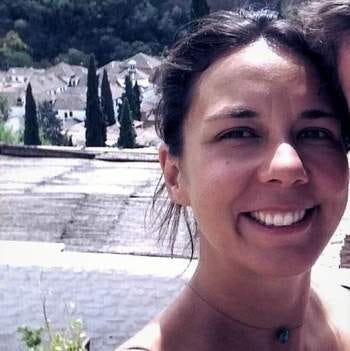
Dr Vera Pinheiro is from Portugal, where she did her Bachelor’s in Molecular and Cellular Biology at the University of Lisbon. She got her Master’s in the University of Coimbra and University of Trieste. Her SyMBaD project was carried out in the University of Bordeaux. She speaks Portuguese, Spanish, French, English and Italian. She has education experience in science museums, associations and high schools. She moved to Denmark last September and found a job in Nordic Innovators, a private consulting company.
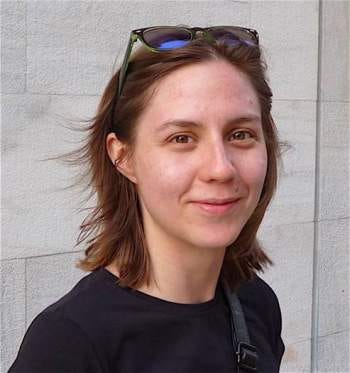
Dr Maria Szlapczynska is originally from Poland. She received a MA in Psychology from the University of St Andrews and a MSc from the University of Edinburgh at Richard Morris’ lab. She carried out her PhD at the University of Bordeaux under Andreas Frick’s supervision. She is now in a professional hiatus.
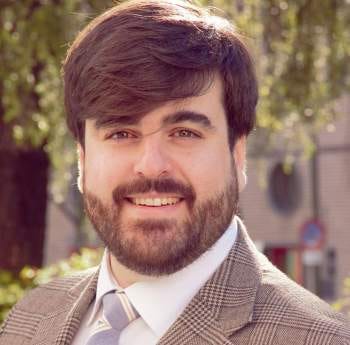
Dr Fernando Josa Prado is from Spain. He did his undergrad in Biology at the Universidad Autónoma de Madrid (UAM). He spent a year in the University of Leeds with an Erasmus scholarship. He received a Master’s degree in Psychotherapy and Ericksonian Hypnosis. He did his PhD at the University of Bristol. Now in Spain, he works as a post-doc and associate professor in the Universidad Alfonso X el Sabio, while he carries on his studies in Business School and serves as president of CRE.
About the author
Dr Elena Blanco-Suarez is a neuroscientist at the Salk Institute in San Diego, CA. She did her undergrad between Spain and Greece and her master’s degree in Spain. She got her PhD in biochemistry in the UK, before moving to California for her post-doc. She is involved in the organization of different science communication workshops like ComSciCon San Diego and Share Your Science and contributes to different scientific blogs. Her work has been featured in Nature jobs, PLOS neuro community, Psychology Today, and NeuWriteSD. She also collaborates in several education outreach projects, aiming at increasing inclusivity in science.
Follow us on Medium
Have any comments on this story? Make sure you share them, using the comment form below.


