Living to investigate or investigating to live?
Is the human being investigating to survive? Why are we never satisfied with what we know? A list of 10 life-changing discoveries try to answer these questions.
I was lying on the sofa in my flat after a long day while surfing the internet looking for interesting articles to read, when I finally saw something that I was interested in. The article was about climate change and the duties that we, humans, have to pursue in order to stop it. In the story there was a reference to a quote by Desmond Morris (an English zoologist, ethologist and a popular author in human sociobiology):
After reading this article/quote, I started thinking about the importance of discovering new things that can improve our lives and, hopefully, our world. However, why are we so obsessed with discovering new things? Do we really need them to survive? I’ll try to answer these questions in this piece, by leading you through 10 life-changing discoveries (knowing that the list could be much longer) that can be used as milestones of mankind’s story.
1. The wheel and the spoked wheel
Can you imagine a world without the wheel?
It was invented as far back as 4500 BC, but at the beginning it was exclusively used as a potter’s wheel. This was certainly a good achievement, but it could have been better, impacting human life in a more meaningful way than ceramic storage. In fact, around the 2200–1550 BC, the Middle Bronze age inhabitants discovered (or created at this point) the spoked wheel: a true revolution! It finally permitted them to create wagons and transport things much more quickly and comfortably than before. Needless to say, even now we can’t live without the wheel, and probably, after some further development in the materials used to make it, there isn’t much room for improvement on this invention!
2. Paper
Since the invention of writing, people had been trying to come up with something easier to write on than papyrus or parchment, but also cheaper to produce. It took quite a lot of time (almost 3,000 years), but finally, in 105 AD, it was invented. Chinese official Cai Lun is said to have invented the paper using mulberry and other fibres along with fishnets, old rags and hemp waste. What else is there to say? We still need paper and we still use it, sometimes too much, if we consider the environmental impact of the paper industry…
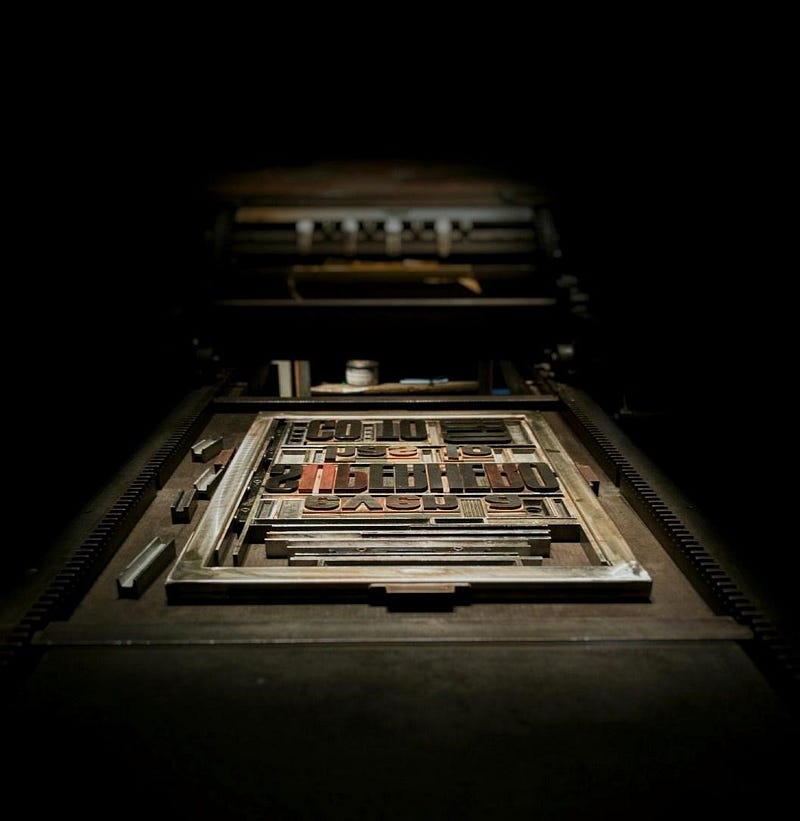
3. Printing Press
In 1455 a German typographer named Johannes Gutenberg developed a printing method that made use of movable type-set. This was the beginning of the printing press which influenced the Reformation and spread education throughout Europe and, later, the world. Nowadays, the printing process of course is different, but thanks to Gutenberg we are now able to read newspapers, leaf through books we like, and cry over scientific books when we are seized by an incurable sadness because we can’t pass an exam on that subject (e.g. for the biology sector researchers: I’m thinking of “Lehninger’s Principles of Biochemistry”).
4. The Copernican System
“No, Earth, you’re not the centre of the solar system, I’m sorry.”
Not sure if Nicholas Copernicus in 1543 said these exact words to our planet, however, he was the first to publish the theory that the Sun is a ‘motionless’ body (of course we now know it isn’t) at the centre of the solar system with the planets revolving around it. The theory was not ‘rapidly’ accepted; indeed, the treatise has been referred to as one of the forbidden books by the Church. However, in the end, thanks also to Giordano Bruno, Galileo Galilei, Giovanni Keplero and Isaac Newton, the theory was finalised and accepted. This discovery has to be included in this list because it drastically changed the status quo that existed at the time, and probably is one of the most important historical moments in which human beings understood that maybe things are not always as they are told, but they could be different — there was the need to prove them (e.g. The scientific method).
5. Electricity
Well, I’m writing this article on my laptop, connected to a socket, in a lighted room, with my phone charging in the corner, and much more. This is possible thanks to Michael Faraday (but actually also thanks to other people working in this sector, like Thomas Edison, Joseph Wilson Swan, Nikola Tesla, Hans Christian Ørsted, and many others). Faraday is on top of my list because he made two big discoveries. The former, in 1821, led to the development of an electric motor; and the latter, in 1831, permitted him to produce an electric current by moving a wire in a magnetic field, creating basically the first ever generator — the forerunner of ours nowadays, which has permitted me to write this post on something other than an old-school typewriter!
6. Louis Pasteur
A name that says everything. Before his research activities on bacteria in the 1860s, people didn’t know the majority of causes for disease. Thanks to him, we know that diseases can come from microorganisms, but, most importantly, he realised that bacteria could be killed by heat and disinfectant. This meant that doctors started to wash their hands and sterilise their instruments, which saved millions of lives. Today, hygiene procedures and sterilisation processes are still very important in the medical sector and biomedical research, not to mention how they have also improved our food processing standards (e.g. pasteurisation).
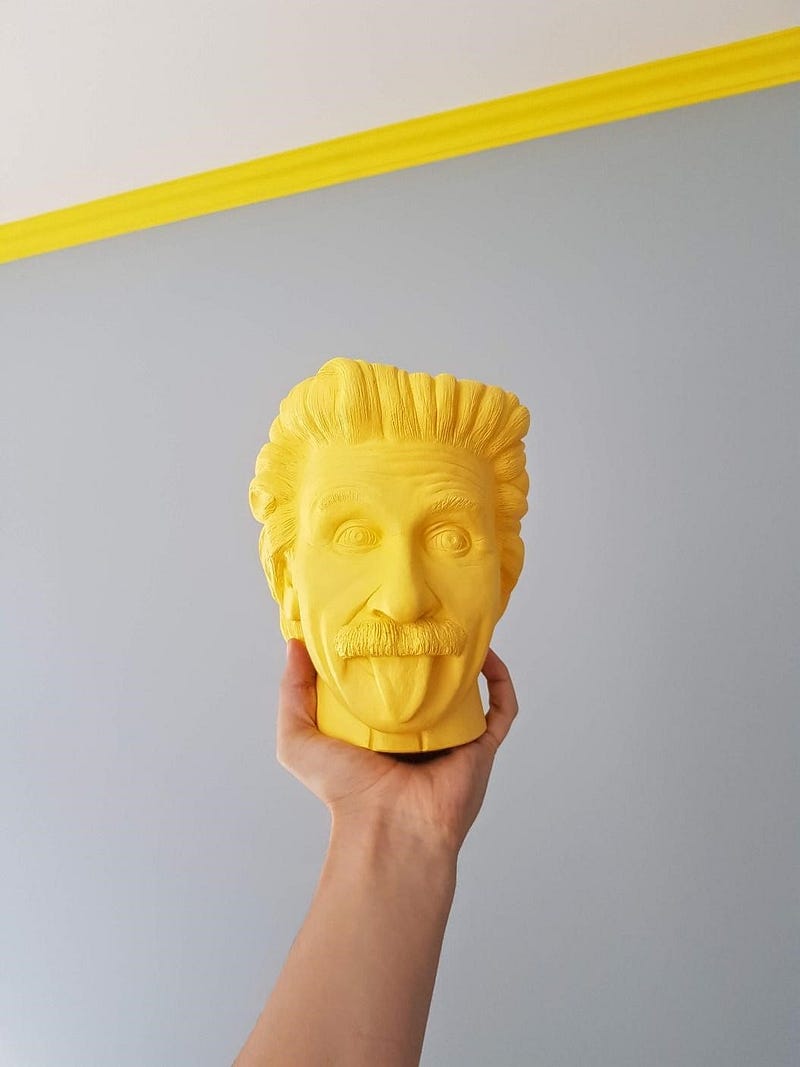
7. Theory of Relativity
It’s 1905, and Albert Einstein’s theory of special relativity has just been published. In it, he explains the relationships between speed, time and distance. Basically (I’m not a physicist, so, please, expert-readers, forgive me), it states that the speed of light always remains constant (300,000 km/second) regardless of how fast someone or something is moving toward or away from it. This theory opened the door to a completely different approach and became the foundation for the majority of modern scientific theories, such as the development of space exploration, that have led to the development of the satellites, which are also used today in our modern GPS systems. At the same time, this theory was the forerunner of new studies in the so called ‘infinitesimal world’ that investigate atoms and subatomic particles — one of the most important recent discoveries involves gravitational waves, which were hypothesised by Einstein.
8. Penicillin
Nowadays, we are fighting against antibiotic-resistance, however, in 1928, Alexander Fleming discovered the first antibiotic: penicillin. Antibiotics are powerful drugs that kill the dangerous bacteria that make us sick, and with them we can fight a good number of infections that could be potentially lethal. This was an important step in modern medicine: it changed our approaches to treating infections and we were able to save lives. However, we should never forget the above mentioned risk in using them inconsiderately; overprescription of antibiotics has contributed to ‘super-microbes’ that are resistant to treatment — note for readers: keep this point in mind for the ‘we are never satisfied’ question, it is a valuable example of my theory that a discovery always leads to further questions in order to make it better: you’ll learn more in a couple of paragraphs!
9. DNA
February 28, 1953. James Watson and Francis Crick, build on the X-Ray diffraction research of Rosalind Franklin to make one of the greatest scientific discoveries in history, did I have to tell you what it is? Probably not, but just to play ultra-safe: they discovered and described the double-helix structure of DNA: DNA is made up of two strands that twist around each other and have a huge variety of chemical patterns that create instructions for the human body. Genes are made up of DNA and they determine everything: do you have blonde hair? DNA’s fault; do you have blue eyes? DNA’s fault; colour of your skin? Mm… Yes, it’s again DNA’s fault. This discovery has helped doctors and researchers to understand diseases, gene functions and of course it is also the precursor of the modern study of genes and their effects on our (but also animals’) metabolism.
10. Computer (but also internet)
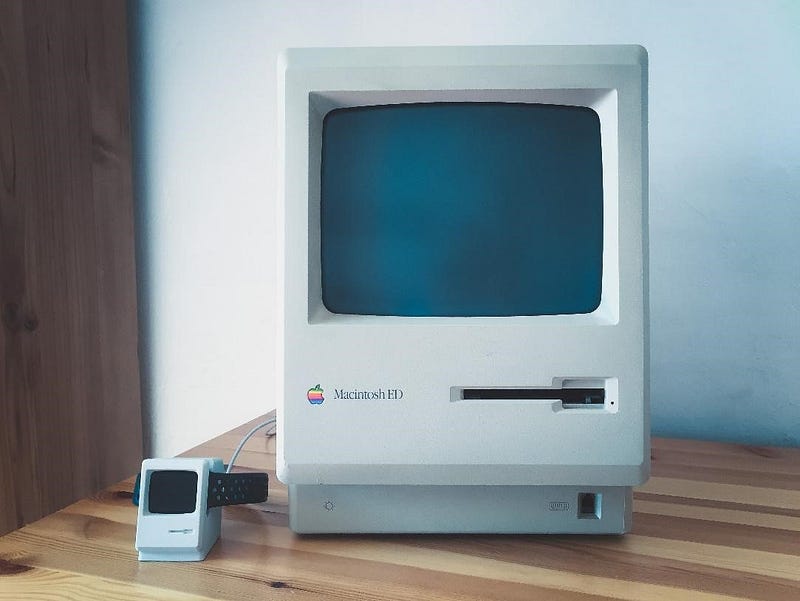
Many other discoveries and turning points in science have existed throughout history, but would it be possible to end this ranking with anything other than the computer? The invention of the computer, to be more precise the personal computer, and the advent of the Internet has surely changed our lives. In 1975, Ed Roberts coined the term ‘personal computer’, when he introduced the Altair 8800 (actually, there is an open debate about who has the record, but it’s not the major point of this blog post). The important thing in the story is that the introduction of the PC led to an upheaval of our world: IBM, Microsoft and Apple are some of the companies to led the way into the computer era.
Some years later, in 1991, the internet became accessible to the wider public, and from that moment it began to rapidly expand. Computers were connected to the internet, information became more and more accessible, and communication became much easier. This was, is and will remain, one of the most important milestones of our story — now we need to use the internet properly and enhance its qualities, such as the ease of finding information about anything and everything, or the possibilities in connecting science and researchers from all around the world… And yes, you can also watch Netflix if you like!
Final thoughts
You read about the 10 life-changing discoveries, and you’re about to say: and, so what? Well, you might have noticed I’ve randomly chosen 10 discoveries that do not relate to each other, in fact, I could have chosen other 10 life-changing discoveries for each of the topics (e.g. from the Copernican system, to the discovery of new planets, the discovery of new stars, new satellites, black holes — this year scientists obtained the first photograph of a black hole, it could be a long story!).
But why did I pick discoveries that ranged over all scientific principles? Simple: I wanted to underline that each discovery is only a starting point, what was needed after each finding, most of the time, was an application. After the application probably comes the optimisation — which basically means “how can we use it in the best way?”
This process is incessant, it’s an ongoing business. Moreover, new discoveries or better applications in one research field usually lead to other new applications in different fields, and this creates a never-ending chain. Isn’t that fantastic?
To conclude, is the human being investigating to survive? Somehow yes, because we want to improve our lives — actually, we need to improve them. Quite simply, when we discover a cure for a disease, we save lives. I began by citing climate change; well, this is a clear example: we have the technologies and we have the possibilities to improve our world, we have to change things if we want to survive as a species — we need to discover new systems and applications to stop the climate change.
Why are we never satisfied with what we know? We are curious. We need answers and we look for them! We do research because we want to solve all the mysteries of our world. We don’t like the unknown, it somehow upsets us. We want to have solutions to improve our lives.
The next question would be: will we be able, one day, to understand everything around us and close the circle? Who knows, perhaps we will?
About the author
Ruben Riosa is an animal nutritionist currently working as a PhD student at the University of Bonn and at the University of Glasgow, where he is part of the MSCA ITN project MANNA (European Joint Doctorate in Molecular Animal Nutrition). His project focuses on dairy cow’s nutrition and physiology. In the MANNA network he is also the scientific copywriter. He is deeply interested in science communication and loves to write.
LinkedIn: https://www.linkedin.com/in/rubenriosa/
Medium: https://medium.com/@rriosa
Follow us on Medium
Have any comments on this story? Make sure you share them, using the comment form below.


