MCAA Around the World Webinar Series #13 — Sustainable Development Goals Agenda 2030
by Joaquin Capablo
The 13th Episode of the MCAA Around the World Webinar Series, co-organized by the Spain-Portugal MCAA Chapter, took place on 13 January 2023, with the Sustainable Development Goals (SDGs) of Agenda 2030 as a main topic. The recording is available on the MCAA YouTube channel.
Why to bring the SDGs to this episode?
Personally, I have the impression that these days you can find them everywhere, for example, in press notes or at the evaluation of the impact of the research activities. “To which SDGs is this activity contributing?” is a recurrent question when disseminating the activities of any EU funded project.
So, first of all, let us start with an internal reflection: Could you remember how many SDGs were defined? Who established them and when? What SDGs could you enumerate by heart? Please, take a minute to do this exercise. How many did you manage to remember? You could also spread the word and ask your colleagues/friends about them. Any of you were able to correctly mention all of them?
Our objective from the Spain-Portugal Chapter with this webinar was to offer the opportunity to learn a bit more about the SDGs, how, why, and where they were set, and how their actual implementation from international to local scale is being developed, with special focus on the citizen engagement on Science and Policy as a tool to achieve them.
For that, Fermín Serrano, the current Commissioner for the Agenda 2030 of the Government of Aragon (since 2018) in Spain, kindly accepted our invitation to be the speaker at this webinar in order to help us better understand them and to discover how he is coordinating all regional policies towards the Sustainable Development Goals (SDGs).
Furthermore, from his previous roles at the confluence of science, policy, society, innovation, and arts (with an extensive career in music, please check https://ferminserrano.bandcamp.com/ if you have interest in listening to some of his great songs), he was in the position to shed also some light on the domain of social engagement (citizen science).
And taking advantage of his artistic side, Fermín could also explain his perspective of bringing Art and Science together (as you probably already know, a topic of high interest for the Spain-Portugal MCAA Chapter, at the view of the Art & Science challenges organized by the Chapter in the last years — e.g. photography, short poetry, master-cooking, and anecdotes contests in 2022-please stay tuned to our communication channels for the 2023 challenges: @SpainPortugalMCAA, https://www.mariecuriealumni.eu/groups/spain-portugal-chapter).
What are the SDGs of Agenda 2030?
Unsurprisingly, as a recognized musician, Fermín initiated the talk with the words of a song by John Lennon: How can I go forward when I don’t know which way I’m facing? So, a poetic question, don’t you think?
In other words, how can we manage the unknown future? What we are already aware of are the multiple challenges and risks we are nowadays facing in terms of climate change, social confrontation, economic crisis or resource depletion.
Having in mind the goal of living more and better in a sustainable way, our speaker explained the approach of the United Nations in 2015, when they managed to agree with all the countries in the assembly the 17 Sustainable Development Goals, a common framework for everybody to work with and adapt to their own reality. Here a memory exercise is proposed: Please try to write them all down now (including symbols would not be mandatory, but recommended as a good mnemotechnic rule) and once again when you end reading this article.
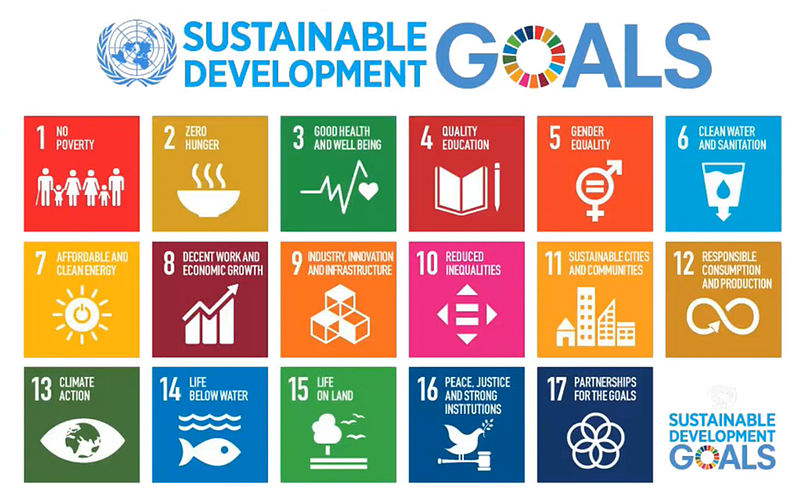
The SDGs then constitute a universal call to action to reduce as much as possible the present world inequalities, that is, they would act as a compass giving us the direction of our activities to tackle these future challenges. Even if the degree of achievement of the SDGs will probably not be complete, Fermín highlights the importance of having all of us within the same framework in both hemispheres, in both rich and poor countries, in both the public and private sectors.
In Europe, all policies are currently addressed toward the SDGs, especially through the strategy called the European Green Deal, demonstrating the strong commitment of the EU to SDGs in order to play a major role in leading by example in how we understand economic development and social cohesion.
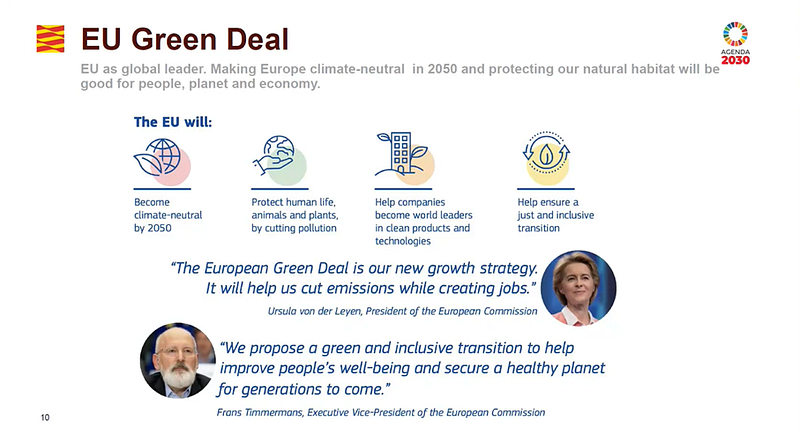
In the domain of science (in fact, in any domain), the actual obtention of any European funding implies playing European rules, with all the funding mechanisms, all the public policies and regulations going towards the SDGs.
This European Green Deal initiative is also reinforced by the Next Generation funds, 750.000 M€ agreed during the pandemic crisis, to make UE economies greener, more digital and more resilient, consisting of reforms with long-term effects and investments (projects) for structural change, based on principles for sustainable growth.
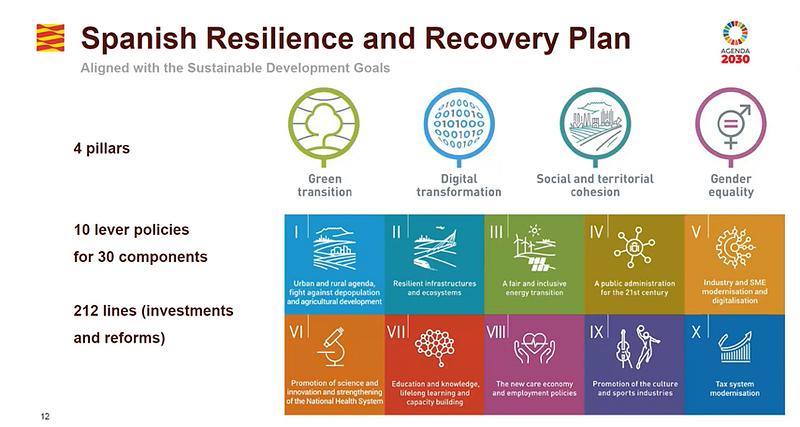
At a national level, the Spanish Resilience and Recovery Plan is certainly aligned with the SDGs, with its four pillars being the green transition, the digital transformation, the social and territorial cohesion and the gender equality.
Implementation of SDGs in the Spanish region of Aragón
Aragon, a region of Northern Spain, was recently chosen as one of the most attractive regions in Europe to invest due to its quality of life, lower living costs than average Spain, and high competitiveness in terms of people, location, and infrastructures (e.g., high rate of renewable energy).
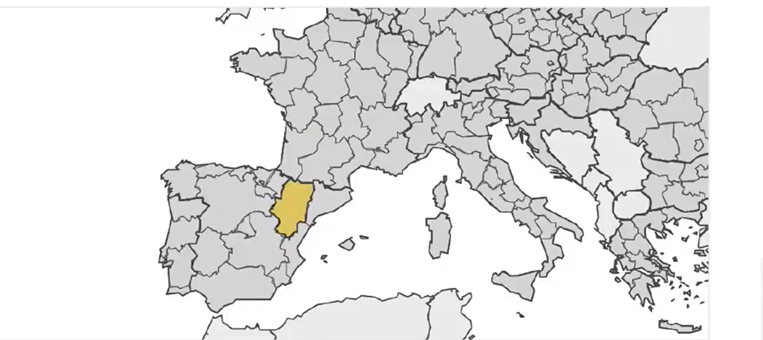
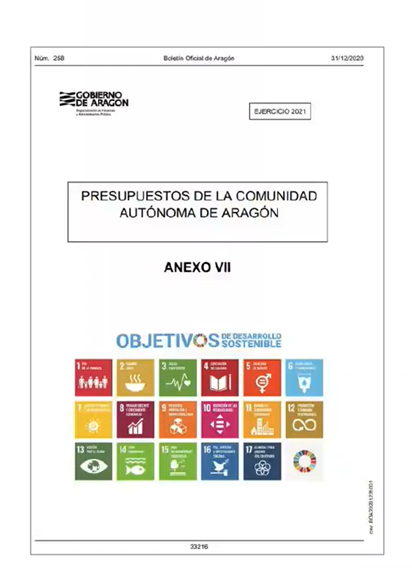
As the current Commissioner for Agenda 2030 of the Aragon Government, Fermín confirms the high regional commitment in Aragon moving from vision to action in the implementation of the SDGs of Agenda 2030, as it can be seen in its alignment in the regional budgets:
In fact, the President of the Government of Aragón, Javier Lambán, clearly associates the SDGs as the main drivers of a green, digital and social transformation to increase sustainable competitiveness in the region.
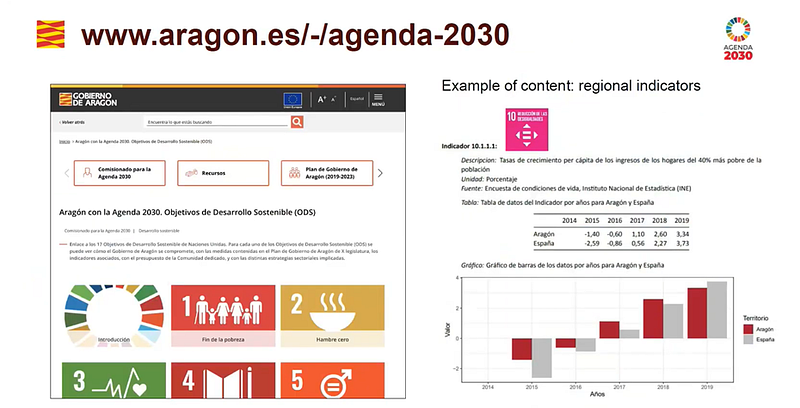
The approach of Aragón towards the SDGs is not only to understand sustainability as a responsibility for the regeneration, but also as an opportunity for action, with a high interest in attracting more talent and more investments. And the results until now are outstanding, as Aragon has been the first autonomous Community to overpass the GDP level before the pandemic with the lowest ratio of unemployment in history.
One of the online tools developed by the Aragon Government, replicated later by other regions, has been a visual SDGs tool as a landmark for transparency where the different SDGs are shown for all departments and policies, it being possible to browse anything about the budget or the level of accomplishment of the different implied strategies for different sectors (mobility, energy, agro-food, water or ICT).
In Aragon, the implementation of the SDGs is present in all regional strategies. At a local level, Fermín recommends a transversal approach to consider what is important for you in order to adapt your strategy to your own requirements and to prepare training and evaluation methods to know what is going on and how to maximize the impacts.
In Aragon, our speaker explains the strategy of going together, something also denominated as quadruple helix, bringing together the main stakeholders of the region whenever it is possible: public administrations, academia and research centers, private sector and general society.
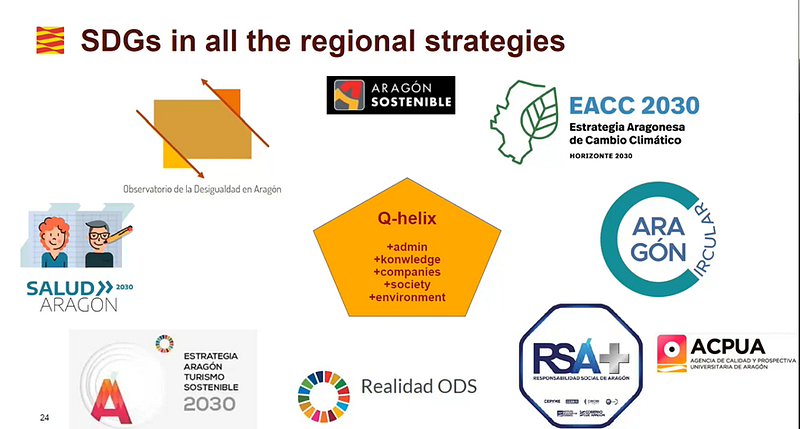
Among all regional strategies, Fermín highlighted two of them. Firstly, the dissemination and communication of the SDGs through the regional television (Aragón Sostenible in Aragon TV), through a portal with SDGs contents.
Second, a pioneering initiative for the evaluation of universities and research centers by the Regional Agency for Aragon Quality, ACPUA (Agencia de Calidad y Prospectiva Universitaria de Aragón), using SDG criteria.
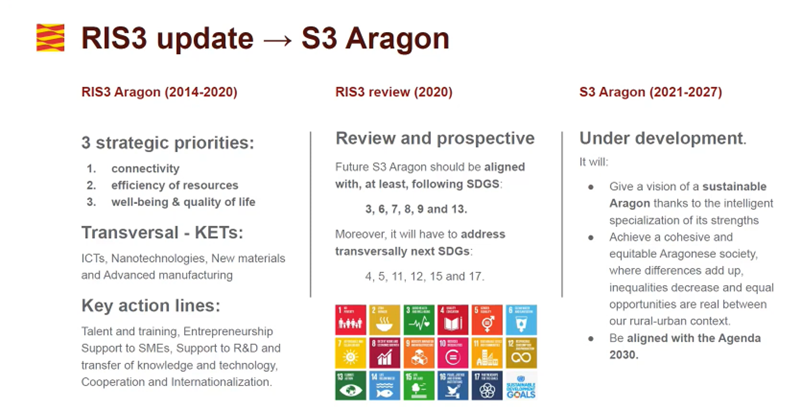
Moreover, the regional strategy of Aragón in innovation and research 2021–27, called S3 from the Smart Specialization Strategy, has also been adapted and specifically aligned with the SDGs.
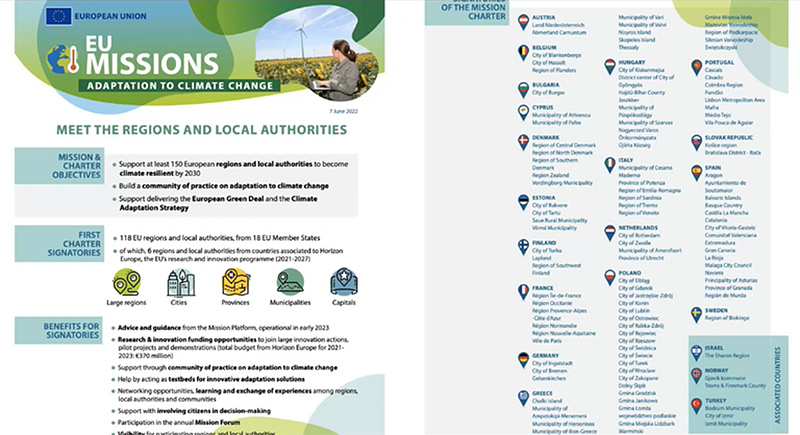
Furthermore, Aragón is proud to be part of an EU initiative, EU Missions Adaptation to climate change, in which a selected number of regions share their best practices and policies towards the adaptation to climate change.
Citizen science
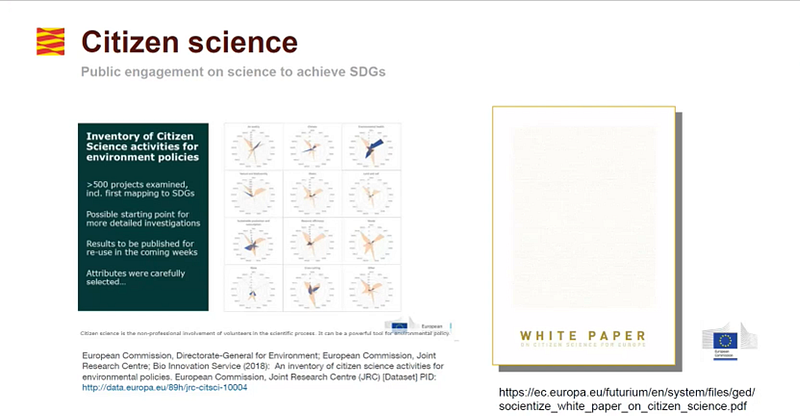
The achievement of the SDGs both at an international and local level needs the public participation in science, that is, Citizen Science, as a key role in making the policies more relevant to the people and to getting a better understanding of Science and Technology systems. So public engagement is understood as a major role for these European initiatives, as for example, in the EU funded research project called Agora to support the regions to engage people in science and society and policies towards the adaptation of climate change.
Another way of supporting the EU comes from the “White paper on citizen science“, which describes the best practices in order to reach this collective approach.
White Paper on Citizen Science - FUTURIUM - European Commission
The SOCIENTIZE project has mapped ongoing activities, institutions, funding programs and initiatives on citizen…ec.europa.eu
According to Fermín, the usual lack of time and limited resources in public administrations when tackling some problems make sense of the approach of going together rather than going alone, even more, because people are usually willing to contribute. A clear example of that is the case of the information (photos) shared by ornithologists, very helpful for biodiversity sciences.
Open-minded volunteers from different domains are important for citizen science, especially highlighting the role of arts and humanism, because artists frequently have a complementary set of skills that researchers typically do not have (or do not normally use).
For that, Aragón took the decision that artists had to play a major role in innovation systems, and started to place them in R&D departments to make innovation more sustainable, more humanist, and more relevant for the future.
The final words of the talk were dedicated to the fact that at the European level, as Horizon Europe, or creative Europe, or any other EU funding mechanisms, the assessment process is already evaluating your contribution to the SDGs and how you deal with public inclusion and engagement. And for that citizen science is a key strategy.
From the audience questions, some key messages could be extracted:
An individual approach to leading a more sustainable lifestyle in your everyday life is very important, the cost of not doing is higher than the cost of doing things, even if sometimes large problems are totally out of an individual scope and they need global approaches.
Please try to make use of life easier for the audience when you try to engage them, sometimes a Google questionnaire could be enough.
Any dialogue depends on your own message and the receivers; ask people to come to your place or, even better, go where people are and spend some time making magic happen.
The “problem” with art and science as a researcher is that you can get addicted to it very easily!! On the other hand, it’s becoming more and more as a part of your own scientific project.
Many guidelines with recommendations for funding mechanisms to embrace art and science are available, with a good ecosystem of art and science projects too:
-Arts at CERN in Geneva: https://arts.cern/
-Bozar in Brussels: https://www.bozar.be/en
-Ars Electronica in Austria: https://ars.electronica.art/news/en/
-Sonar in Barcelona: https://sonar.es/
-Medialab in Madrid: https://www.medialab-matadero.es/
-Starts (Science-Technology Arts) initiative: https://starts.eu/
-New European Bauhaus: https://new-european-bauhaus.europa.eu/index_en
As a final reflection, let’s go together to achieve the sustainable development goals (now it is the perfect time to write them all down again!), taking the needed time to reflect about how to change our future, always having in mind the importance of citizen engagement and of bringing art and science together.


