The MCAA: Sharing my experience in a network for research success
by Angela Bellia
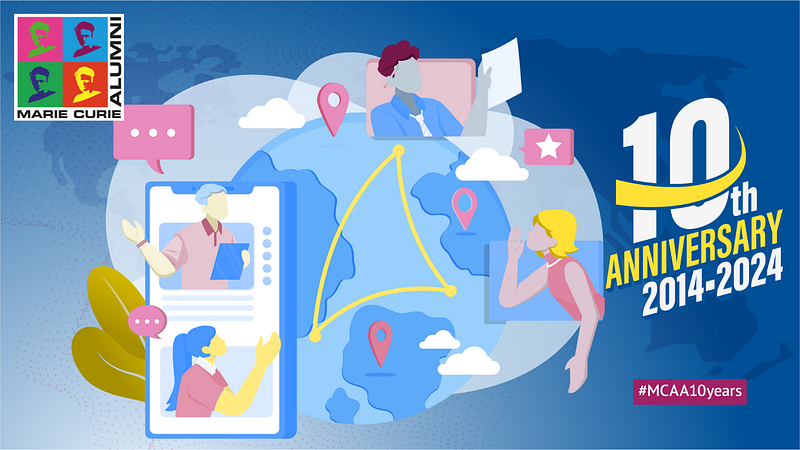
The Marie Curie Alumni Association (MCAA) is a global network, open to all past and present researchers who have received support from the Marie Skłodowska-Curie Actions (MSCA). The MSCA is one of the European Union’s flagship initiatives, providing grants to researchers across all career stages and disciplines. It is inspiring to see the MCAA celebrating an incredible milestone — 10 years since its founding on 7th February 2014!
While Europe has consistently supported my research journey, enabling me to make significant contributions to my field, my active membership in the MCAA has been instrumental in this success, providing opportunities to develop new skills and expand my network.
The MCAA has been highly valuable to my professional growth. It has provided me with opportunities to connect with researchers from diverse fields, fostering collaborations, knowledge exchange, and a robust support network. The MCAA actively promotes professional development through a wide range of workshops, seminars, and conferences on topics like proposal writing, science communication, and career management. These have been crucial in equipping me with essential skills for my career advancement.
Growing as a professional by leveraging new skills and networking opportunities
Furthermore, serving as Chair of both the Events and Networking Working Group and the Italy Chapter was incredibly enriching. Guiding the Working Group and Chapter allowed me to refine my leadership abilities and leverage the networking expertise I gained within the MCAA to establish new scientific networks in my area of focus. For instance, as the Chair of the Events and Networking Working Group, I was responsible for organising events to raise the profile of the MCAA and its members, facilitating collaboration between researchers and institutions, and creating networking opportunities for Marie Curie fellows. I also worked to increase member participation in international events like the European Researchers’ Night and the EuroScience Open Forum (ESOF). And, as the Chair of the Italy Chapter, I coordinated activities at the national level, promoting collaboration among members and organising events to disseminate the opportunities offered by the Marie Skłodowska-Curie Actions.
For example, the vibrant city of Rome provided the backdrop for an event we organised in 2017 titled “Celebrating Marie Curie’s Birthday”. This wasn’t just another event; it was a chance to honour a scientific icon and champion the future of research. The idea for the “Marie Skłodowska-Curie Researcher Award in Italy” took root, blossoming into a collaboration with the Italian Ministry of Education, Universities and Research. It was a proud moment, a testament to the power of the MCAA to foster excellence and collaboration. The event laid the groundwork for an important path for the future of Marie Curie fellows in Italy.
Moreover, as an active MCAA member, I am committed to promoting policies that support the career development of Marie Curie researchers. I have engaged with the previously mentioned Italian Ministry of Education, Universities and Research to advocate for initiatives like the Seal of Excellence (SoE) and Ministerial Decree (DM 963), which enables the direct recruitment of Marie Curie fellows for tenure-track professorships. This serves as a model for other European countries seeking to provide stable career paths for researchers.
This commitment to fostering the careers of Marie Curie researchers earned me the MCAA Outstanding Contributor Award in 2021.
A stepping stone to the international stage
My involvement with the MCAA has also opened doors to international platforms. The dynamic atmosphere of ESOF in Toulouse in 2018 was a pivotal moment in my career. As an invited speaker for the plenary panel discussion “Horizon Europe: The Future European Framework for Research and Innovation,” I felt a surge of adrenaline. Sharing my insights with high-level representatives from the European Commission, research institutions, and the MCAA was exhilarating. This experience catapulted me onto the international stage, solidifying my role as a thought leader in the research community.
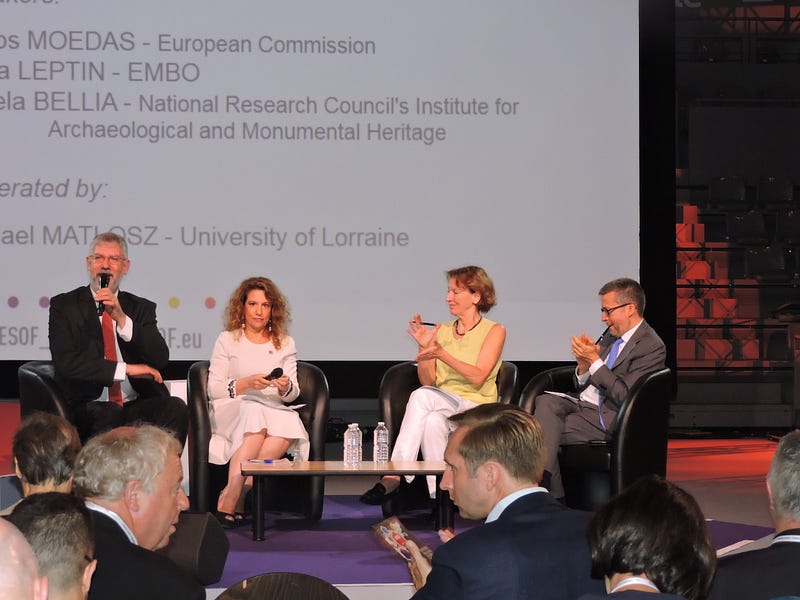
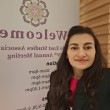
It was through the MCAA that my commitment to supporting researchers expanded beyond Europe. I had the privilege of serving as a mentor in the Joint European Mentoring Initiative (JEMI), a pilot programme connecting mobile researchers with experienced professionals. This role culminated in an invitation to speak at the fourth Annual Meeting of the European Scientific Diasporas in North America, held at the Embassy of Austria in Washington, D.C. Sharing my experiences in the MCAA and the outcomes of the JEMI project with an international audience underscored the importance of mentorship and cross-continental collaboration in fostering research excellence.
Each of these events, like stepping stones across a flowing river, has guided my path. They’ve not only shaped my career but have also illuminated the vital role of the MCAA in fostering collaboration, supporting researchers, and driving the advancement of knowledge across Europe and beyond.
In conclusion, the MCAA plays a vital role in supporting researchers, advocating for their needs, and promoting a thriving European Research Area. My experience with the Association has been transformative, providing me with invaluable skills, networks, and opportunities that have significantly shaped my career trajectory and empowered me to become a leader in my research field.