MSCA at 30: Three decades of research mobility and building bridges across Europe
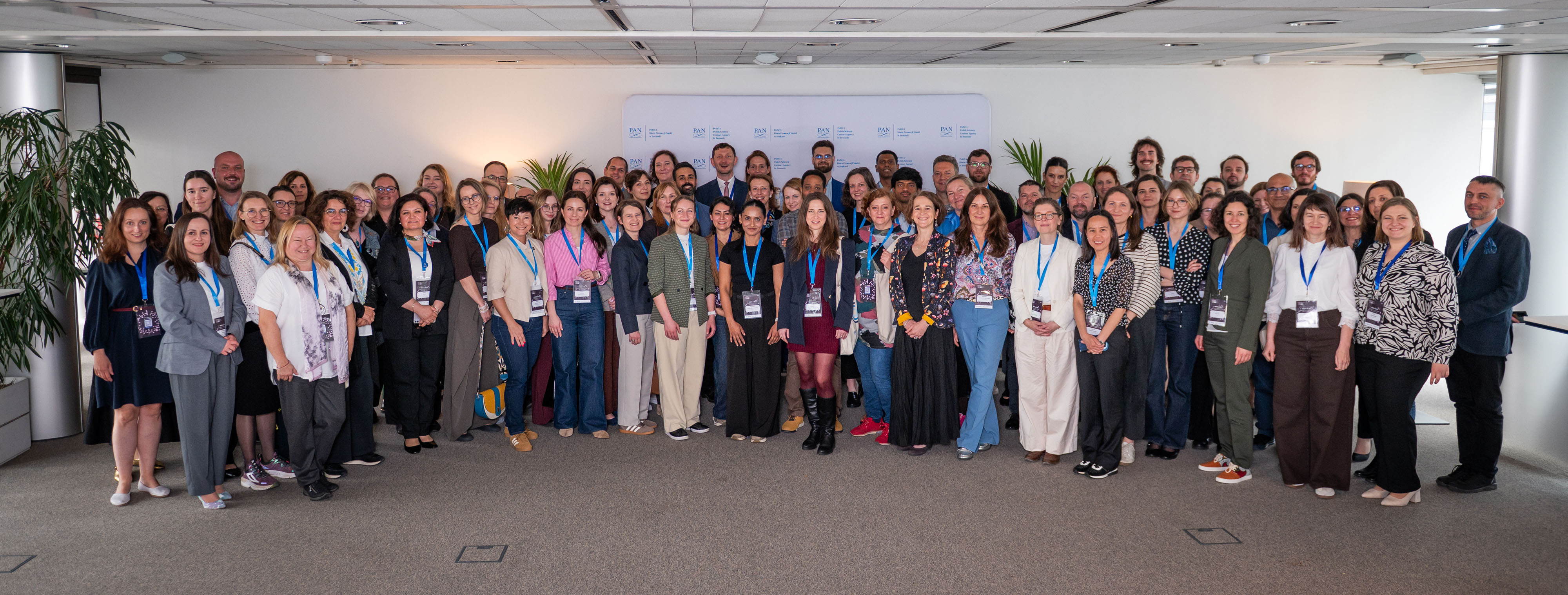
After 30 years of the Marie Skłodowska-Curie Actions (MSCA), there is enough material on the table to foster reflections on what worked and what could be improved for the future, involving all actors across and beyond Europe. More than 100 researchers, policymakers and research managers gathered in Brussels in May to celebrate 30 years of the MSCA. The discussions looked beyond the anniversary, exploring how the MSCA can strengthen research careers, transdisciplinary exchanges and collaboration in the next European Union Framework Programme for Research and Innovation (FP10).
Reflections and future directions for European research mobility
On 21 May 2026, Brussels hosted a milestone event marking three decades of the MSCA, co-organised by the Polish Academy of Sciences’ PolSCA Office in Brussels and the PAS Office for Science Excellence in Warsaw, in cooperation with the Marie Curie Alumni Association (MCAA), particularly its Poland, Hungary and Benelux Chapters, as well as three Informal Group of R&I Liaison Offices (IGLO) partners from Germany, the Netherlands and Hungary: KoWi, Neth-ER and NRDIO. The gathering brought together over 100 participants from 20 countries, including researchers, research managers, university representatives, European Union (EU) programme experts, and officials from the European Commission and the Council of the EU.
While the anniversary offered an opportunity to celebrate the MSCA's achievements, participants also looked ahead. Discussions focused on how the programme can continue supporting researchers and institutions under FP10.
The MCAA played a key role throughout the event with its members describing their experiences of researchers moving across countries and sectors, career development and international collaboration, helping connect policy discussions with the realities of research careers.
From mobility to a stable research and innovation ecosystem
A recurring theme throughout the day was the evolution of the MSCA's identity. Participants agreed that the MSCA is not just about mobility, but rather a lot more, a programme that supports durable collaboration networks, knowledge exchange across borders and sectors, and institutional development in research organisations throughout Europe and beyond. The consensus was clear: the MSCA has become a strategic component of Pillar I “Excellent Science” of Horizon Europe and a cornerstone of the European Research Area.
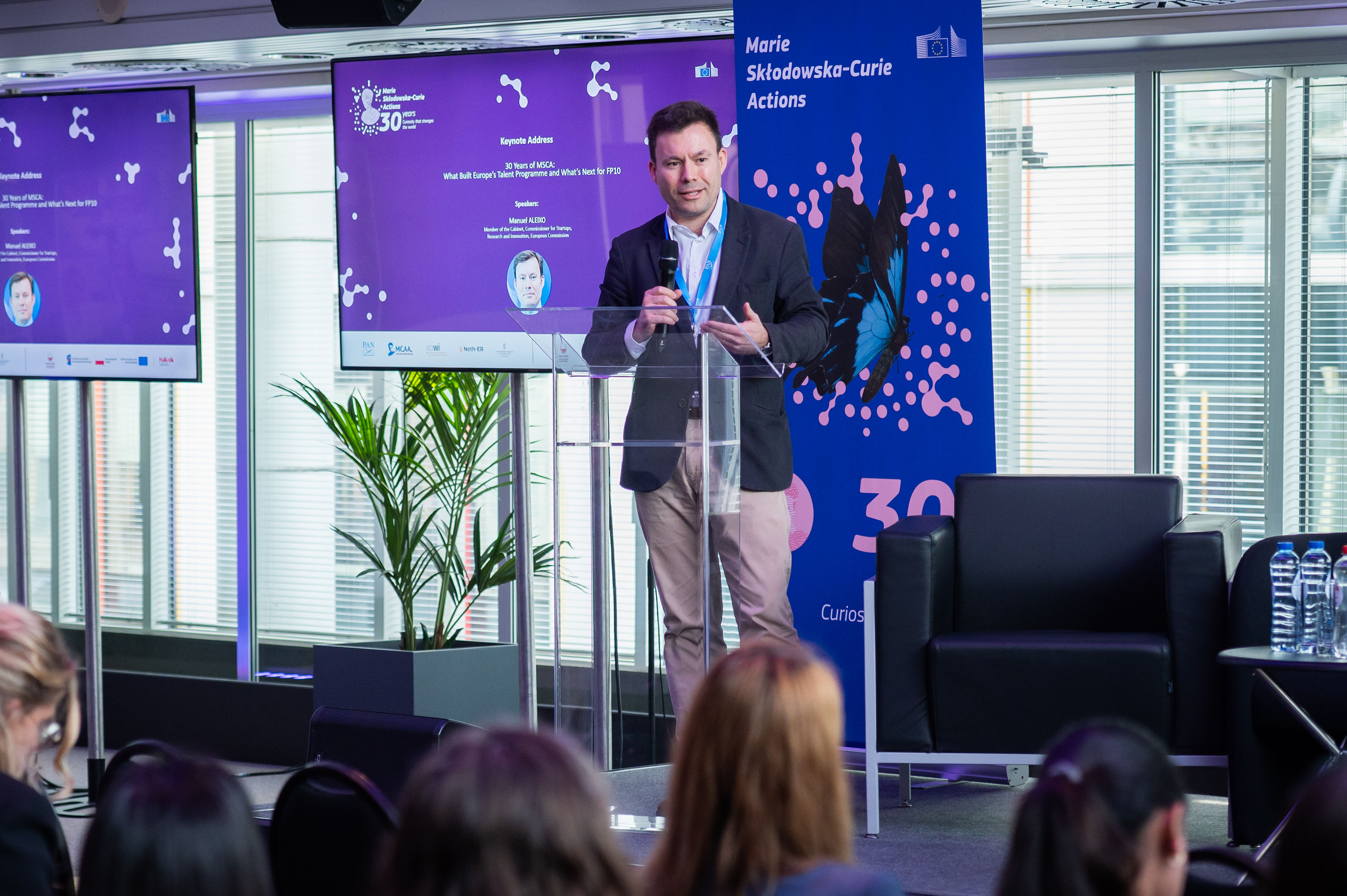
The opening keynote, delivered by Manuel Aleixo, Member of the Cabinet of the European Commissioner for Startups, Research and Innovation, framed these discussions within broader concerns about European competitiveness and talent policy ahead of FP10.
Research careers and institutional responsibility
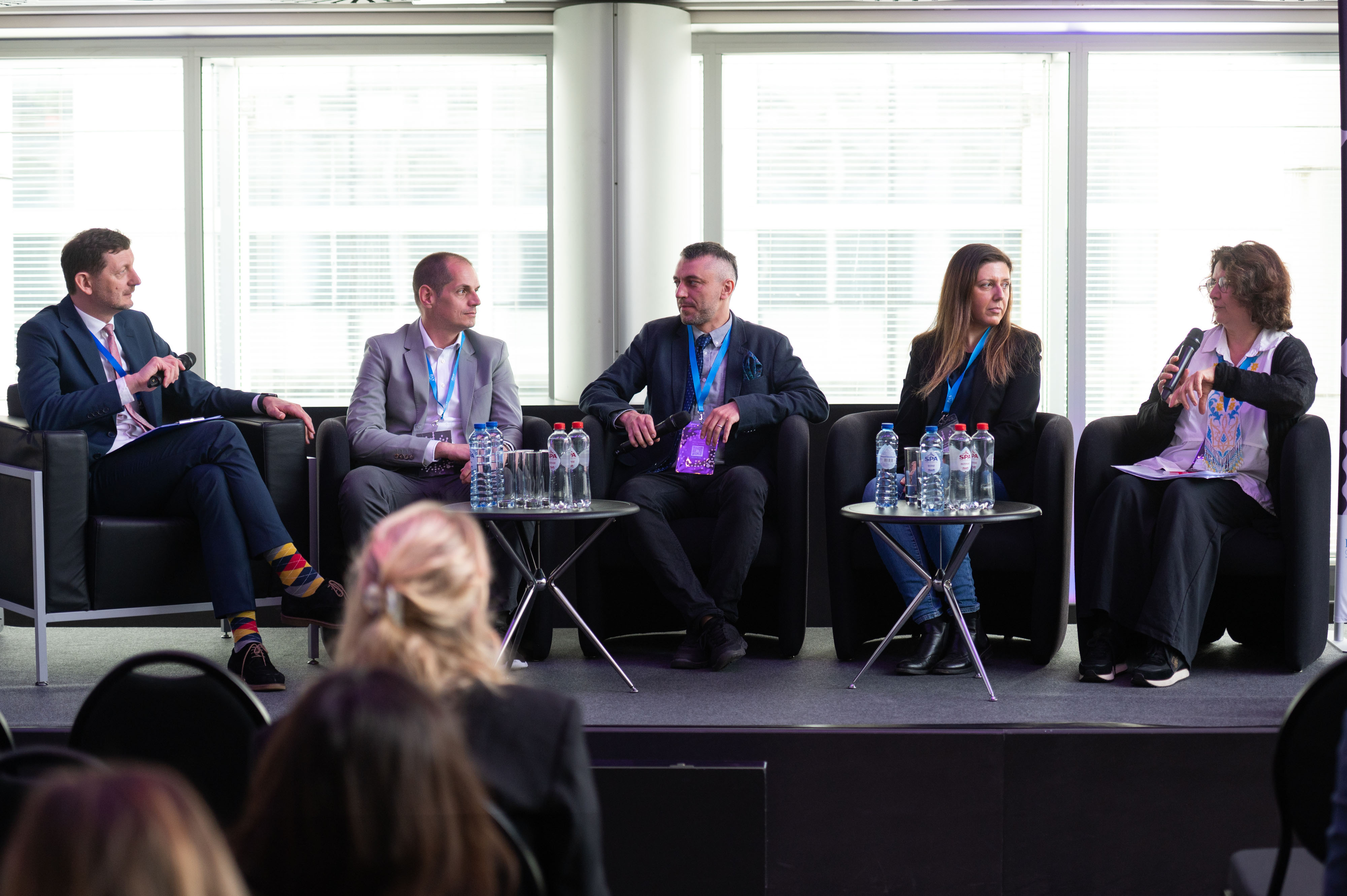
A panel discussion on practical challenges connected to the mobility rule highlighted that the MSCA's value lies not only in funding excellent projects but also in its capacity to improve employment conditions, mentoring quality, and recruitment transparency. Host institutions were identified as key actors: their ability to translate individual grant successes into lasting organisational benefits remains uneven across Europe. Participants called for more stable and predictable career pathways, better reintegration support for researchers returning to their country of origin, and stronger institutional engagement in future programme editions, spanning from early support at the writing proposal stage towards full support in terms of grant management.
An interactive session on talent circulation versus brain drain explored how researchers’ mobility can be converted into long-term regional and institutional capital. A presentation on Poland's NAWA–MSCA Network illustrated one practical model, tracing the full researcher journey from call identification and proposal preparation through to return and career reintegration, and highlighting the role of National Contact Points, host institutions, and the EURAXESS network.
Beyond policy discussions, many participants reflected on the personal impact of the MSCA. For thousands of researchers, an MSCA fellowship has provided access to international networks, new skills and long-lasting collaborations that continue well beyond the duration of an individual project.
Intersectoral mobility and institutional capacity
Afternoon roundtables addressed three interconnected themes. The first examined how the MSCA can function as a talent-attracting platform for doctoral and postdoctoral research fellows, stressing the need for longer grants, such as extended funding for young and mid-career researchers, more flexibility, better mentoring, and greater recognition of non-scientific factors, such as family circumstances. The second focused on intersectoral mobility, highlighting the benefits of collaboration with industry, NGOs, and other non-academic partners. At the same time, persistent challenges, including administrative barriers and cultural differences, were discussed, sharing experiences across countries and sectors. The third roundtable explored how research management structures, HR policies, and grant and tech-transfer offices shape project outcomes and how institutions can reduce administrative burdens while building durable research excellence.
During the event, a matchmaking component allowed participants to explore concrete partnership opportunities across career pathways, institutional collaboration schemes, and implementation support networks.
Shared conclusions and next steps
Case studies from Ghent University in Belgium, the HUN-REN Research Network in Hungary, and the Polish Academy of Sciences illustrated the diversity of pathways enabled by participation in the MSCA, from establishing independent research groups after international mobility to using instruments such as MSCA COFUND to drive institutional internationalisation, involving both researchers and local administration.
A clear message emerged from the discussions: thanks to MSCA, the EU does not face a shortage of talented researchers, but the challenge is to create stronger links among people, institutions, and sectors so that talent can thrive.
Participants repeatedly described the MSCA as a programme that builds trust, strengthens partnerships, and creates lasting communities, rather than simply supporting researcher mobility. In this sense, MCAA was recognised as an established alumni network that helps members stay connected through its wide variety of events.
The event closed with a live vote on priorities for the future of the programme. The organisers are now preparing a set of recommendations for FP10, which will be presented to European institutions as a contribution from the wider MSCA community.
Final reflections
30 years after its launch, the MSCA continues to support and boost research excellence through training, collaboration, and mobility. It connects people, creates opportunities and builds communities across and beyond Europe. As discussions on FP10 continue, participants agreed that investing in researchers remains one of the strongest investments Europe can make in its future.