Pick up the microphone: Responsible AI in global research careers
During the Marie Curie Alumni Association (MCAA) Annual Conference 2026, the MCAA Communication Working Group organised a blogging contest, inviting onsite and online participants to share key takeaways, insights, and reflections through engaging blog posts. This contest encouraged participants to engage deeply with various sessions and topics, providing a platform for sharing diverse perspectives and highlighting key moments from the event. After receiving several submissions, the top entries, showcasing exceptional quality and reporting, were published and honoured with awards. The blog post below earned third place in the blogging contest.
--
You did not ask for this. You are a researcher. Your submitted manuscript gets screened with an artificial intelligence (AI) tool. Your research proposal gets evaluated by an AI tool. You are in the AI system whether you opted in or not. Where is the border between human judgment and AI in research? That was the triggering question for our session “Responsible AI in global research careers: from principle to practice,” organised by the MCAA AI Working Group.
AI has entered all fields of research: methods, literature review, evaluation, and administration. We need to decide who is going to hold the microphone for writing the new rules. The 2026 MCAA Annual Conference, “Research careers beyond borders: 30 years of the MSCA,” was a key setting to let the microphone move across perspectives to discuss responsible AI: European Commission policymakers, academics, industry representatives, and MCAA members. Magdalini Theodoridou, Board member of the AI Working Group and Senior Researcher at the University of Cyprus, was our rapporteur.
AI is becoming part of the research system
After an introduction distinguishing between discriminative and generative AI by Quentin Loisel, Chair of the AI Working Group, the session moved to its consequences.
Liviu Stirbat, Head of Unit for AI in Science in the Directorate-General for Research and Innovation at the European Commission, explained a race that is worrying policymakers: AI-generated research proposals assessed by AI systems. That competition only erodes trust in institutions, researchers, and policymakers. No winners.
We need to define as a society what type of research deserves protection. We define our priorities and what deserves funding. If AI redefines funding and evaluation, the consequences will affect the construction of knowledge and trust in research.
Responsible AI requires infrastructure
Jens Bürger, Institute Manager at Leuven.AI, raised the key idea that there is a gap between AI guidelines and everyday research practice. Researchers need expertise in understanding and evaluating AI systems. Jens presented the model of "AI as a service," where experts can support researchers in exploring AI as a tool for their research.
Ornela Bardhi, Head of Research and Data Science at Success Clinic Oy and MCAA Board member, explained that in industry, it is important to have clear guidelines. Ornela differentiated between AI ethics, regarding what we value, and responsible AI, guiding what we do.
I argue that what is at stake here is fairness. AI systems can harm societal groups, for example, through bias and discrimination. AI systems should help us consider vulnerable groups of people in our research data and policy.
Authorship is a human problem returning in a new form
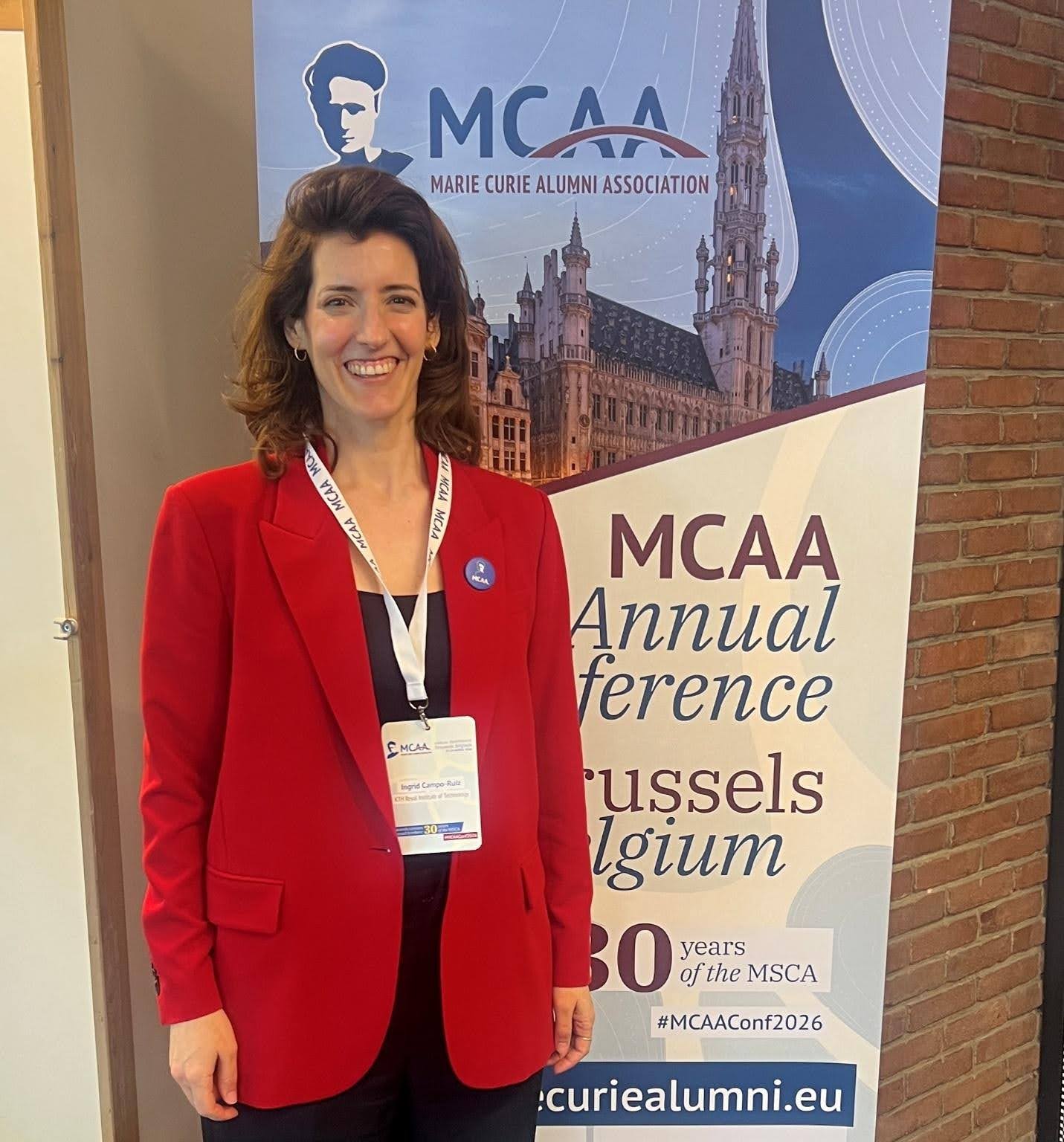
An audience member asked who should be considered the author when AI contributes to an idea. As a researcher examining how AI shapes the built environment and its societal consequences, at KTH Royal Institute of Technology and RISE Research Institutes of Sweden, and Board member of the MCAA AI Working Group, I brought the example of the French artist Marcel Duchamp's Fountain (1917): he brought a readymade urinal into a museum, forcing the art world to confront the question of authorship. Duchamp's contribution was to select the toilet, displace it, sign it, and give it a new context, reframing the readymade and giving it a new meaning. A similar tension arises for researchers working with generative AI, where authorship is at stake. I used the Duchamp example to insist that this question is not only technical and that experts in the humanities have long examined authorship and originality. Debates on AI governance need the perspectives of the social sciences and the humanities.
This is where the MCAA has a distinctive strength as a space where researchers from very diverse backgrounds, policymakers, and industry can meet. The MCAA is a key fertile ground for building responsible AI across disciplines and approaches.
AI has entered research in every imaginable aspect. Guidelines are being drafted. Frameworks are being approved. The question is who takes the microphone in the conversations to set the rules for responsible AI, and who is missing. The microphone moved freely across disciplines and sectors during our responsible AI session. The question is who picks it up next. Researchers from the humanities and social sciences need to be in the discussion. Vulnerable members of society need to be there, too. Responsible AI is a political choice about whose knowledge counts. Pick up the microphone.