ResearchAbility: How can we create a more inclusive environment?
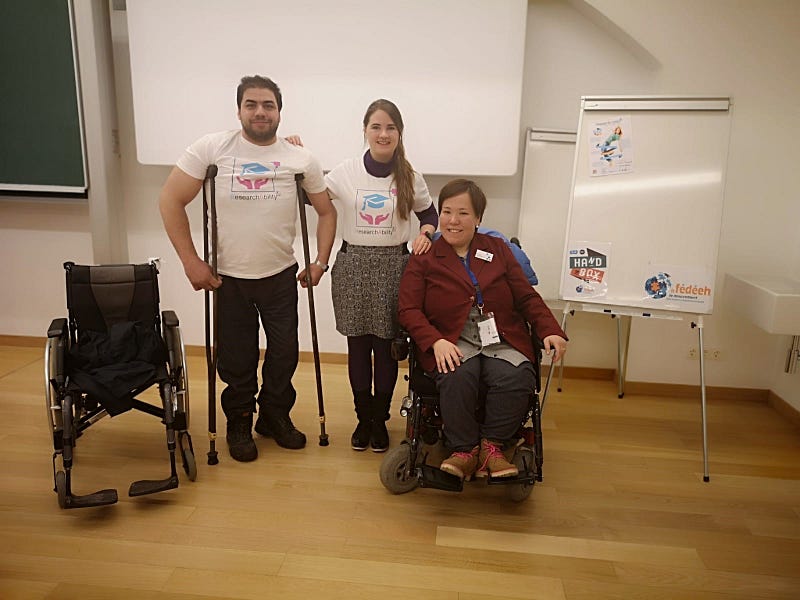
The ResearchAbility (RA) project was founded in the summer of 2018, by the Marie Curie Alumni Association’s (MCAA) Vice President Mostafa Moonir Shawrav and Alexandra Nothnagel to achieve a society that promotes accessibility and inclusion in Europe, ensuring equal chances in higher education for everyone.
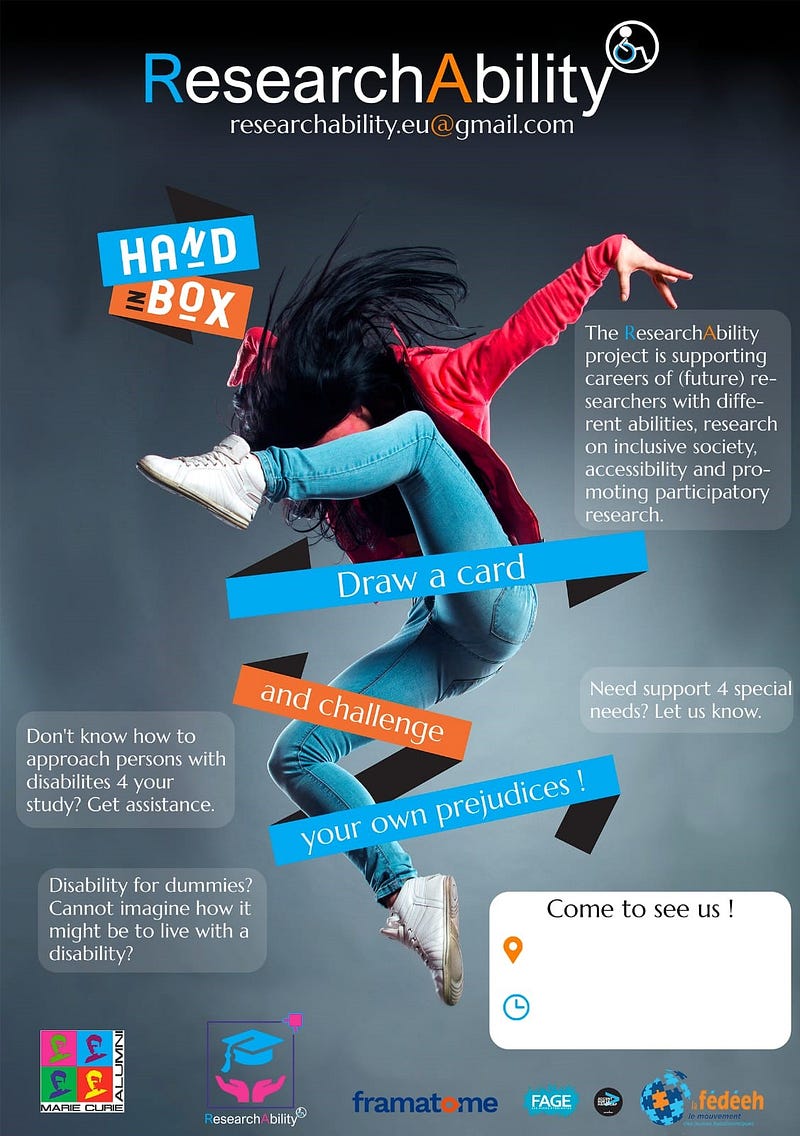
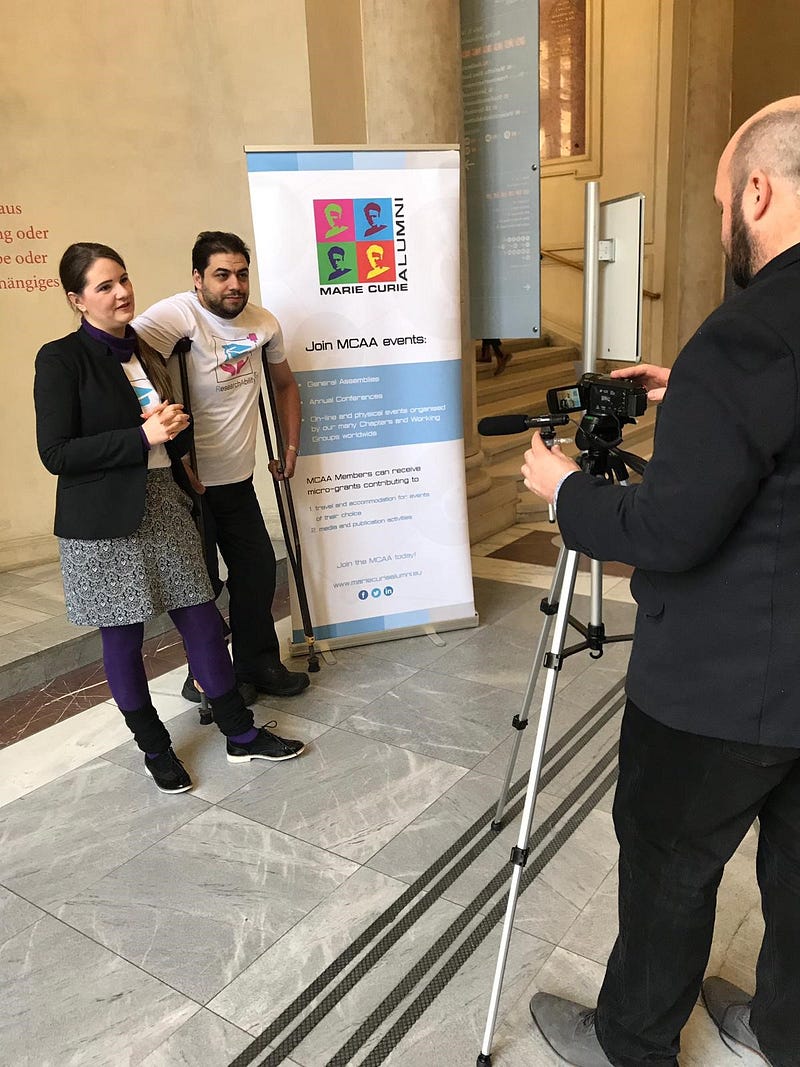
During the MCAA Annual Conference, the mission, scope and first activities of RA were presented by Alexandra Nothnagel.
RA aims to build an international network of researchers with disabilities and associations to promote participatory research and innovation fostering accessibility and inclusion, as well as provide chances for international mobility for persons with disabilities. The goal is to create equal chances for persons with disabilities by focusing on three pillars:
- Individual support through the organisation of Europe-wide activities for inclusion and mentoring for researchers with and without disabilities by the MCAA and partner associations. A pilot project is being carried out in collaboration with the French association for young persons with a disability (FEDEEH), started in March 2018, which consists of workshops and a conference during the three weekends of national meetings of FEDEEH per year (Rencontre Nationales).
- Research & expertise by building expert groups, including members with different disabilities, to analyse the different needs of students and researchers with respect to their specific type of disability, to provide the European Commission with data and guidelines.
- Policymaking to help the European Commission in their policymaking based on demands formulated during the meetings and workshops, in collaboration with international organisations. Policies can include ensuring European recognition of employees and students with a disability status, the European Mobility Card and suggestions for better support for persons with disabilities.
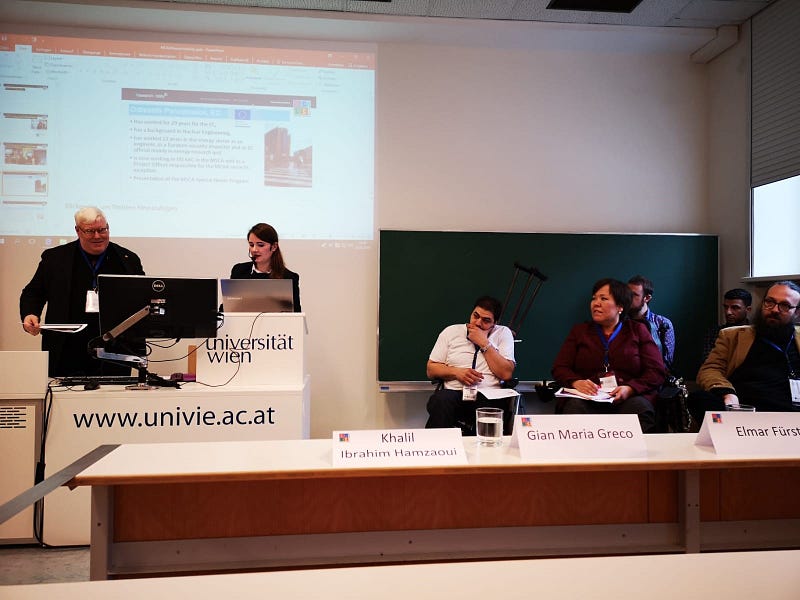
After Alexandra’s introduction, Odissefs Panopoulos from the European Commission introduced the Marie Skłodowska-Curie Actions (MSCA) Special Needs Programme that is currently holding a test run to support researchers with disabilities with extra support in terms of grants and individual accommodations.
During the remainder of the session, we heard testimonials from researchers with disabilities, all in different stages of their academic career.
-Elmar Wilhelm M. Fürst, Associate Professor from Transport and Logistics Management at WU Vienna, told the audience about his personal experiences and the career path that led him to become associate professor despite his visual impairment. He stressed that the key to his success was the support of his family and his persistence: “If one thing doesn’t work, something else (probably) will!”.
- We heard from Michaela Joch, PhD student at WU Vienna, who in a video message presented her research on the situation of academics with disabilities at public universities in Austria. There is very little research on this topic, partially due to the lack of clear definition of what a person with disabilities entails. She aims to “identify inclusion and exclusion mechanisms for academics with disabilities.”
- Madina Karsakpayeva is a disability activist from Kazakhstan and a PhD student. She described her experiences as a student with a motor disability, and how “the switch from the medical to the social model of disability got translated into differences in daily life and accessibility in Europe, the UK and the US”. For example, public transport in London is very well equipped to accommodate persons with a motor disability. She emphasised that — next to family support — “organisations such as Erasmus Mundus are crucial in enabling mobility for researchers with disabilities”.
- Khalil Ibrahim Hamzaoui currently works as a researcher at the University of Lille in computer sciences and was the first active member to join the RA project, focusing on the French branch. In 2018, he travelled 3,006 km in 33 days in his electric wheelchair during his Tour de France Scientifique, collecting data for his PhD project, but also stopping at major French universities to raise awareness for the issues persons with disabilities encounter as students. His next trip will be a tour through Europe using the bike routes from Spain to Sweden in 2020 to collect more data for his research, but also share his experiences with students with disabilities and collect information about accessibility at universities along the way. During this project organised with the RA team, there will be several events where other researchers and students from the MCAA and partner associations are invited to join.
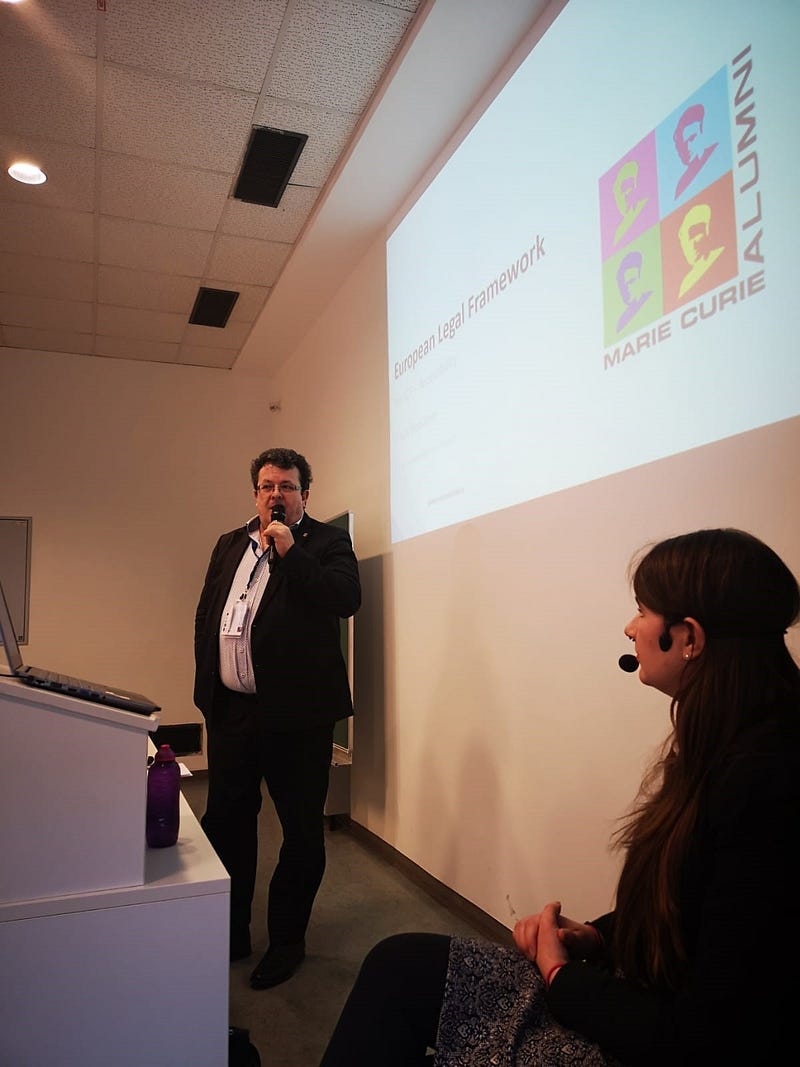
-Klaus Höckner is board member of the Austrian Association in supporting of the blind and visually impaired (Hilfsgemeinschaft der Blinden und Sehschwachen Österreichs) based in Vienna, member of the board of the Austrian Disability Forum — an umbrella organisation for Austrian organisations working in the field of disability — and Vice President of the Austrian Computer Society. He presented the European Legal Framework for ICT-Accessibility and the Web Accessibility Directive (WAD).
The session ended with Gian Maria Greco, MSCA Fellow at UAB and member of GALMA. In his presentation Accessibility: the theoretical, the political, and the practical and in the long debate afterwards, Gian Maria gave us a lot of food for thought. He started with some theoretical and practical aspects and then spoke of the political dimension of accessibility. “As a political issue, accessibility is often taken for granted. It is unquestioned as a positive tool” — said Gian Maria — “but who defines the politics of accessibility? What are the values and voices that guidelines, policies and services embed and promote? Whose experiences, needs and desires they express and foster? Who they empower?”. He emphasised that accessibility can be a creative tool for voicing crip experiences and discussed media accessibility and transformative empowerment. Gian Maria remarked: “accessibility has the potential to transform how we see, narrate and relate to ourselves, the others and the world. We should explore and foster the transformative potential of accessibility as a poietic device. People with disabilities are not mere passive users. They are poietic agents. They are creators and makers”. In the conclusion, Gian Maria recalled how accessibility can empower researchers with disabilities and recommended some actions the MCAA could implement.
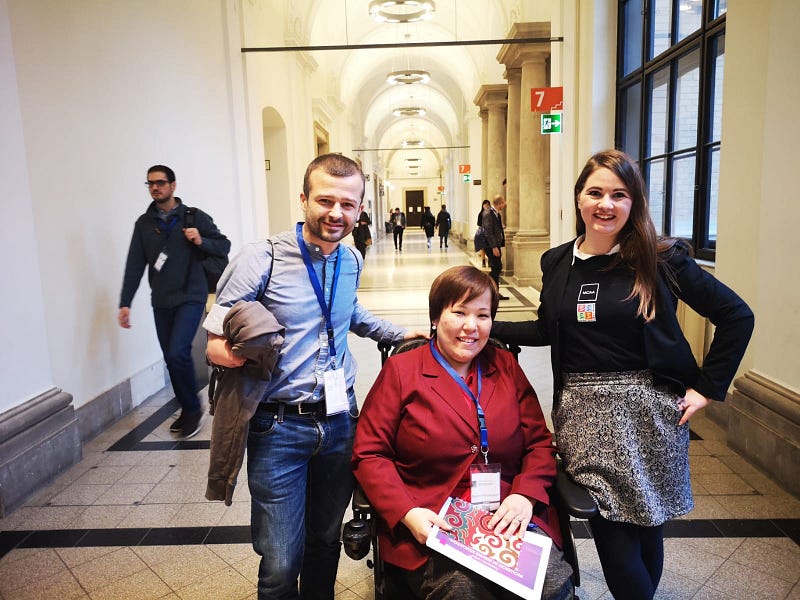
It is important to acknowledge that researchers with disabilities are a valuable asset to universities, the research world and our association; and that it is the duty of researchers, institutions and associations to enable better and equal opportunities for persons with disabilities. The RA project promotes inclusivity for everybody in research, regardless of ability, background, country of origin, etc. By starting with increasing inclusiveness and accessibility for persons with disabilities, we can ensure an inclusive and accessible research culture for all.
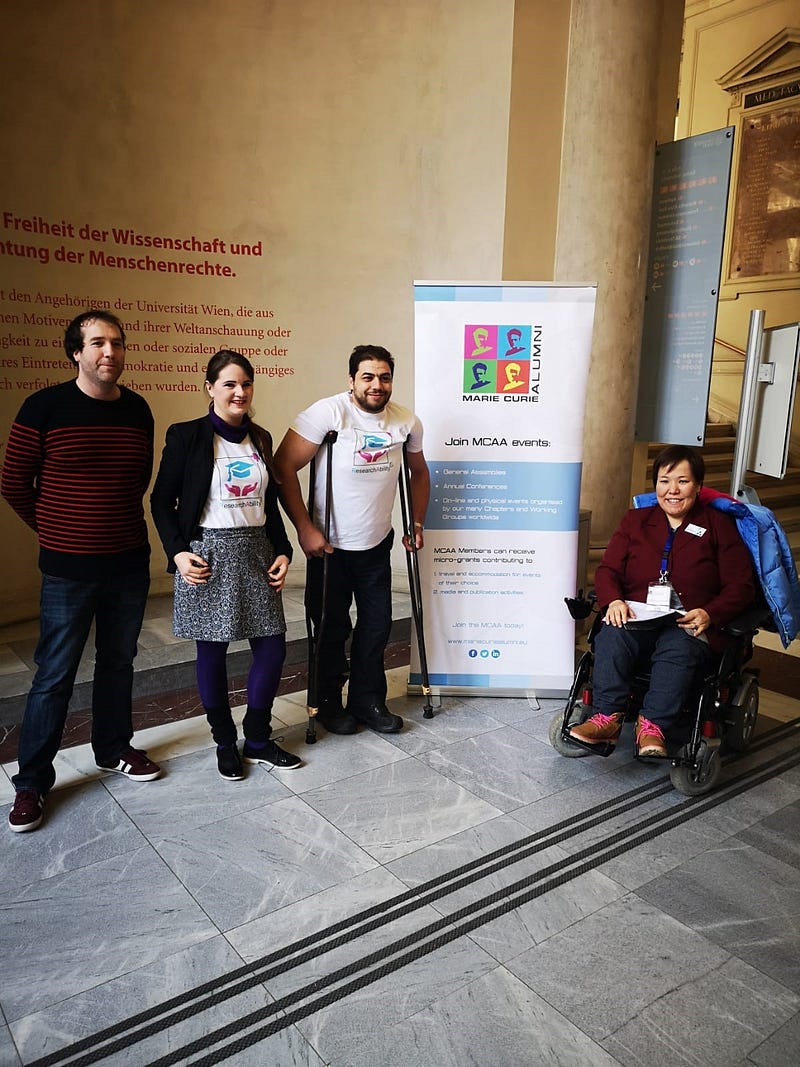
For questions about the ResearchAbility project: [email protected]
About the authors
Alexandra Nothnagel was an MSCA Early Stage Researcher at IBENS, Paris in the ITN ExtraBrain investigating “Extracellular matrix and synapse dynamics”. In 2018, she started working in software development and conception for an international IT services corporation. She’s currently president of the Young European Biotech Network and activity coordinator of the MCAA France Chapter, and initiated the ResearchAbility project for researchers with different abilities in cooperation with FEDEEH.
Valerie Bentivegna has recently completed a PhD in Life Sciences at the University of Dundee, where she was part of the MSCA ITN project PHOQUS. She currently works for a chemical engineering start-up in Seattle, and has an interest in science communication and informal education.
Follow us on Medium
Have any comments on this story? Make sure you share them, using the comment form below.