Ritmo Latino! The Ibero-American Chapters Meeting
by Silvana Munzi
During the MCAA Annual Conference 2025, the Communication Working Group organised a blogging contest, inviting onsite and online participants to share key takeaways, insights, and reflections through engaging blog posts. This contest encouraged participants to engage deeply with various sessions and topics, providing a platform for sharing diverse perspectives and highlighting key moments from the event. After receiving several submissions, the top entries, showcasing exceptional quality and reporting, were published and honoured with awards. The blog post below earned a special mention in the blogging contest.
--
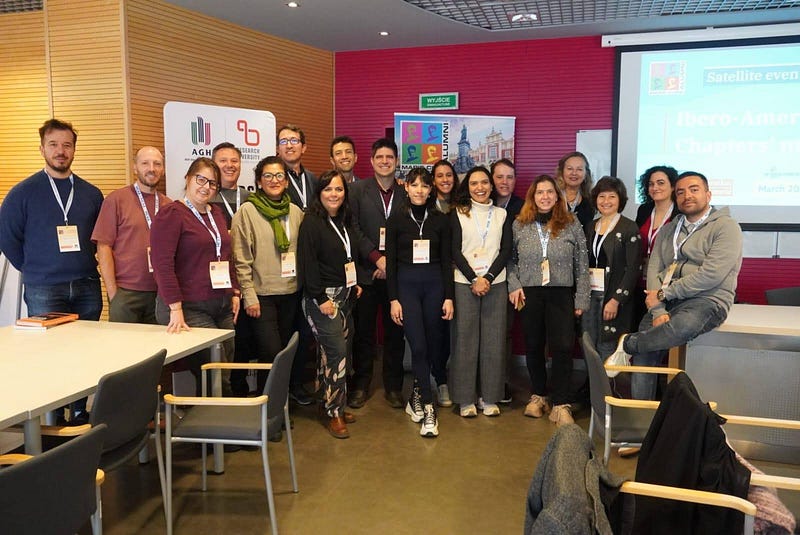
Maybe it’s because working on a project about oceanic navigation in the 15th and 16th centuries inevitably makes me see how these two parts of the world are connected by history, or maybe because using Spanish and Portuguese was enough for us to understand each other without using English, but I can only agree with the idea that the Marie Curie Alumni Association (MCAA) Ibero-American Chapters have a solid background and good reasons to join forces and find new coordinated ways to support their members.
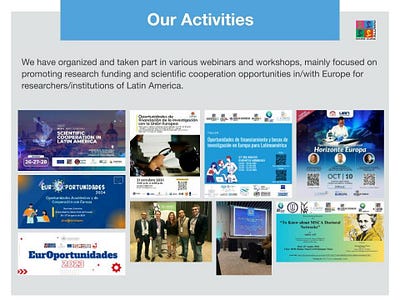
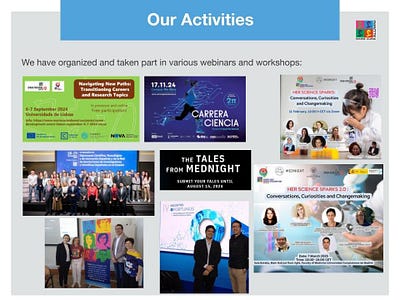
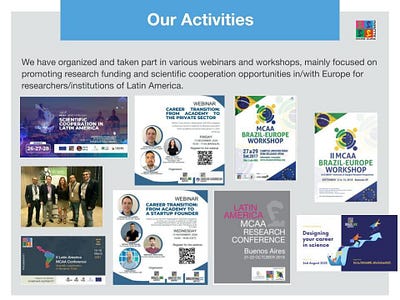
This idea of collaboration was the focus of the Andean-Caribbean, Argentina, Brazil, Chile, México and Spain-Portugal Chapters that gathered on March 20 in Krakow for one of the satellite events of the MCAA Annual Conference 2025. The Latin-American region is the area outside Europe with the highest participation in the Marie Skłodowska-Curie Actions (MSCA). The presentations of the recent initiatives developed by the groups showed how dynamic and full of ideas the Chapters are when it comes to organizing activities.
Looking at the webinars, participation in events, and topics, it emerges that the priorities of these Chapters are reinforcing collaboration with Europe, building bridges with other sectors beyond academia and creating a more inclusive working environment.
Although the path taken is exciting, the one ahead is just as important. In the roundtable during the meeting, all participants had the opportunity to contribute to the discussion on the common goals and challenges identified, the potential for new collaborations, and future needs of the Chapters. The questions at the base of the discussion were:
- What are the three main common/overarching goals that Ibero-American Chapters should look forward to collectively working on?
- How should Ibero-American Chapters collaborate to tackle our common challenges? What activities/events should we target?
- How can we ensure synergy and sustainability in the collaboration among Ibero-American Chapters?
Identified challenges
- Recruiting members for the Chapters is hard. We do not have access to the fellows who are not registered on the website (or haven’t updated their email address), and the Data Protection policies do not make things easier. This is a problem common to all the MCAA Chapters.
- Only a small percentage of the Chapters’ members are actively engaged in meetings and activities. Sometimes, Chairs and Vice-Chairs rotate between positions, while some “fresh blood” would be beneficial.
- In some cases, the MCAA itself is not known, requiring further efforts to involve people in the Chapters’ initiatives.
- In-person events are difficult because the distance between the Chapter’s members in some countries is thousands of km, and most of the face-to-face events happen in the capitals.
- Chapters outside Europe face additional difficulties than the European Chapters due to distance and regulatory differences in their countries.
- Not all countries have proper resources devoted to the constitution of National Contact Points to support researchers and institutions.
Opportunities
- Although the welcome package that new fellows receive contains information about the MCAA, there should be more emphasis on the value of becoming an MCAA (and Chapter) member.
- Since participation is voluntary, we should explore ways to show the relevance and benefits of getting involved. We could focus on training, mentoring, microgrants for participation in activities, networking with potential employers and collaborators, and contributions to creating a better scientific and working environment for all researchers.
- Chapters should make greater use of personal connections with relevant stakeholders in their regions (embassies, high decision makers in public administration, National Contact Points, EURAXESS, etc.) to enhance the program’s visibility. Members could benefit from this kind of knowledge and networking at, for example, info days.
- The Ibero-American Chapters should meet online or at least share information about opportunities of mutual interest, such as bilateral projects between Portugal and Brazil, and explore potential collaboration and funding. A monthly newsletter compiling relevant updates from each Chapter could be an effective way to facilitate communication and coordination.
Announcement
The next LATAM meeting will be held in Mexico on 2–4 October 2025 at UNAM on the topic “Science for a better world: Bridging Science and Society.” The goal will be to design concrete actions for science to make a lasting impact in Latin America. An important conference to further discuss our progress on a common path!
The connection between Iberian and Latin-American music is a living tradition, shaped by historical migration, cultural fusion, and shared artistic expressions. Despite evolving independently, these musical styles continue to influence each other. Inspired by that, we hope that science will continue to foster this cross-cultural exchange.