The science of linguistics scores major breakthrough
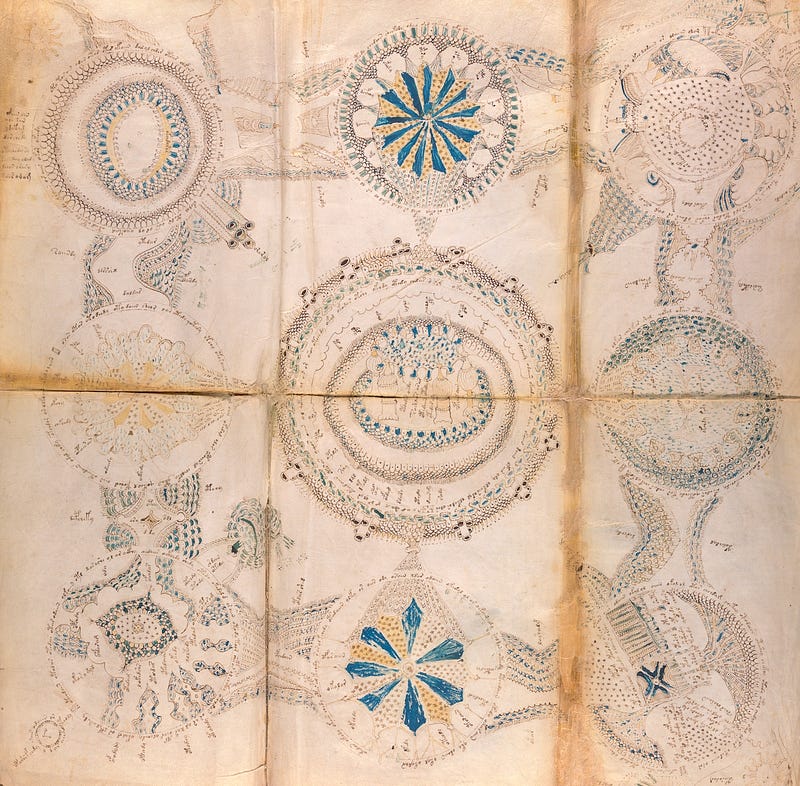
Finally, manuscript MS408 reveals its secrets
Until May 2017, the origins of the Romance languages were known only in theory. There were no known records of the archaic language as formal manuscripts were written in Latin, the official language of the state, church and academia.
Proto-Romance first emerged as a language of the streets, fusing Vulgar Latin with other Mediterranean languages. It was used in formal documents and preserved in monasteries, universities and castles. But lingua franca was instead used in everyday trade and communication between people who converged in the Mediterranean, the epicentre of Medieval civilization.
Much of the impasse spawned from manuscript’s use of proto-Romance, a unique alphabet and grammar. Without knowledge of the three, the manuscript made no sense.
The breakthrough came as experts assessed the manuscript as a document of the Medieval period, suggesting a link with a common language spoken in the Mediterranean region. Frequency analysis of the symbols revealed their alphabetic meaning while construction of the words revealed their contemporary presence, scattered among the modern Romance languages, where they had been sequestered since the late Medieval.
Origins
Translations subsequently revealed that the manuscript originates from Castello Aragonese, Ischia, and was written c. 1444 for Maria of Castile, Queen of Aragon, as a memoir and book of domestic information on matters of the heart, mind, body and belief. Maria happens to have been a great aunt to Catherine of Aragon, the first wife of Henry VIII.
When the manuscript was written, Queen Maria and her female companions had been holed-up in the castle without male company, whilst King Alfonso V and his men were away conquering Naples. So, the manuscript was a project to fill their time and distract them from boredom. Although Queen Maria was educated in Latin, the language and writing system of Ischia were used for the manuscript because it was not a formal document.
Content
The manuscript contains many illustrations of women bathing in the hot spas of Ischia and Lipari. It also contains many images of herbal plants and charts relating to astrology. The highlight of the manuscript is a fold-out picture map that relates the story of a rescue mission at sea, led by Queen Maria.
On 5 February 1444, a volcanic eruption on the island of Vulcano spurred the queen to save the islanders who had survived the disaster. Many of whom, in fact, had already managed to reach the nearby island of Lipari.
On 29 April 2019, a peer-reviewed paper was published in Romance Studies. It is titled, “The Language and Writing System of MS408 (Volcanic) Explained”
About the author
Dr Gerard Cheshire is a Research Associate with University of Bristol. He first encountered manuscript MS408 while conducting research for his PhD in an unrelated subject — he is a human behavioural ecologist. It took two weeks to solve the codex and identify the language.
Follow us on Medium
Have any comments on this story? Make sure you share them, using the comment form below.


