Sense about Science: what I have learnt
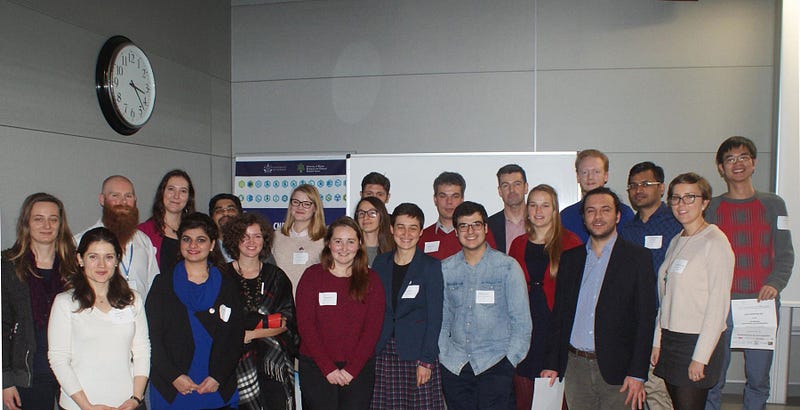
‘Standing Up for Science EU’, Sense About Science EU, Warsaw, Poland, 10th November 2017
First things first, do you have Twitter?
If you do, do you use it for communicating your research?
One of the main messages I took away from the recent Sense About Science workshop ‘Standing Up for Science EU’ in Warsaw, Poland, was that this social media platform is actually a hive of science communication activity. Whether using it to disseminate their own findings, to network with other researchers or to defend the scientific community, more and more experts are turning to this form of communication. This was just one of the nuggets of information doled out at the workshop.
Don’t forget about humour!
The day started with a panel of researchers from diverse disciplines who succesfully balance many forms of science communication with their research: anthropologist Anna Szołucha, engineer David McKeown and entomologist Gia Aradottir. The advice from those on the frontlines of science communication felt invaluable to us early career researchers in the room. A sense of humour and a good dose of humility are definitely required to tackle the challenges of public engagement. Situations that may arise could include planning to appear on the BBC via telelink, but due to your location in a field in the English countryside the tech fails and you are suddenly having an phone thrust in your face and you have to get on with the interview regardless! David and Anna also regaled us with tales of navigating the twittersphere or placing your reports in front of parliament.
The scientist and the politician
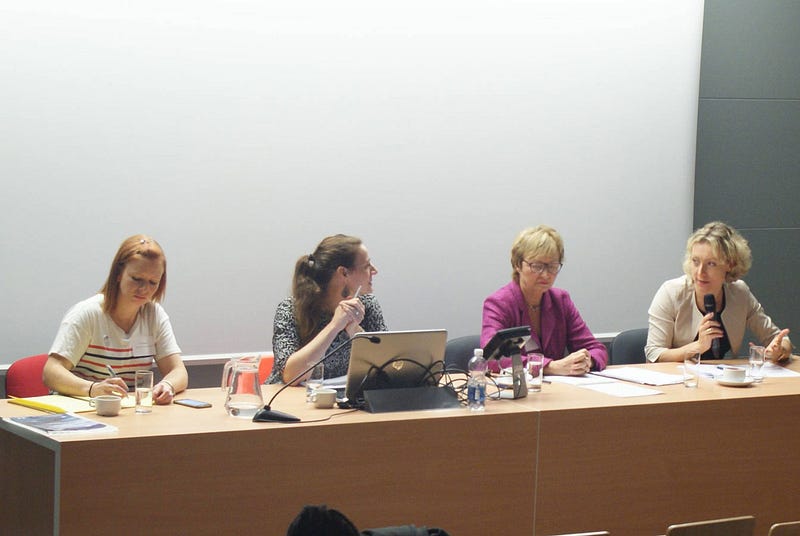
A change of tone occurred in the next session, which sought to bring policy and decision makers into the room to discuss the best methods and approaches for influencing governance with scientific evidence. This saw former Polish Minister for Science and Culture Lena Barbara Kolarska-Bobińska join a panel with Alicja Herbowska from the European Joint Research Centre and Roz Pidcock from the Intergovernmental Panel on Climate Change (IPCC). The panellists painted a fascinating picture of the many intersections between structures such as national governments and the EU, and the scientific community. I noticed an emphasis was placed on proactivity from researchers to present and make their relevant work available. I couldn’t help but laugh at the response to a question from the crowd asking about the need for politicians who are trained scientists — ‘Not all scientists would make good politicians, just like most politicians wouldn’t make good scientists!’
‘Your research isn’t done until you can communicate it in two sentences’
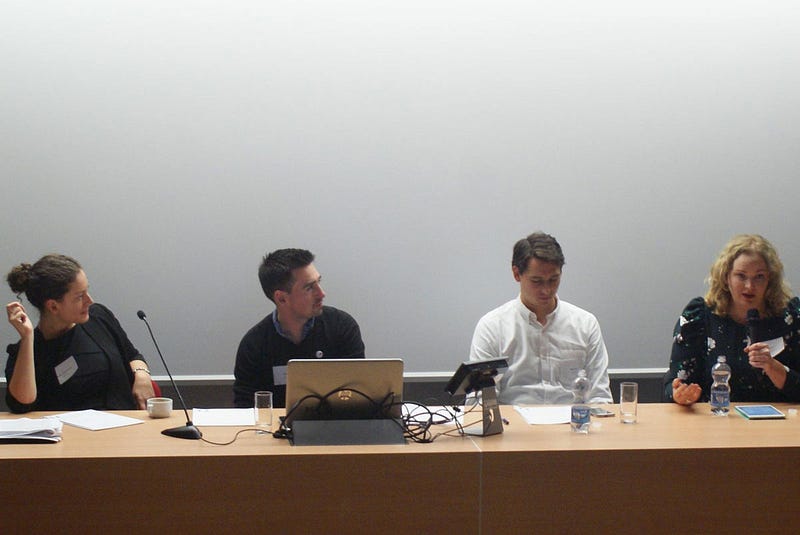
Throughout the first two sessions, the issue of reporting scientific findings and evidence in the media was a recurring topic. Therefore, it was no surprise that the next panel brought together journalists from across Europe — Maire Boran, a freelance science writer from Ireland, and Mat Hope and Karolina Zbytniewska, the respective editors of DeSmog UK and EURACTIV Poland. I have a feeling the media panel were keen to defend themselves in the discussions at lunch after being a bit of a scapegoat for poor public communication! A lively debate ensued about the respective responsibilities of the journalists and researchers in the quest for accurate, relevant and digestible scientific public engagement.
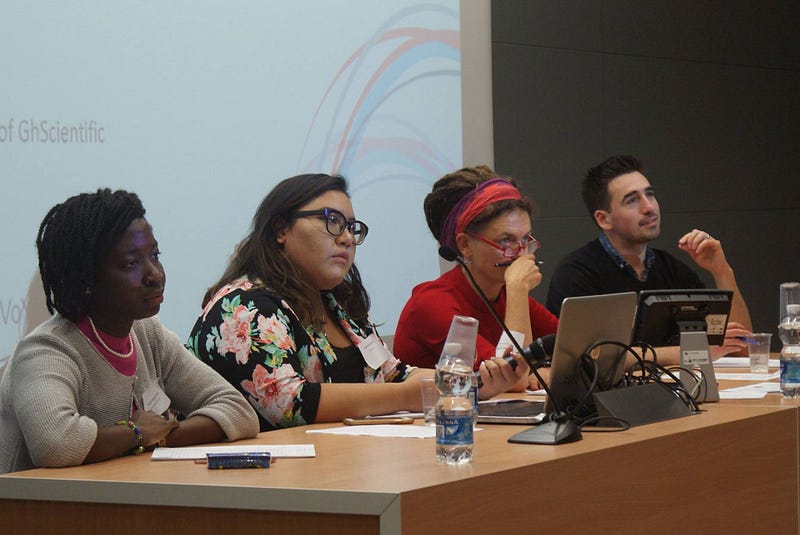
The final session of the day wrapped up the lessons from the previous panels and focused on the essential skills needed to become an effective scientific communicator. Former Sense About Science workshop attendee and award winning science communicator Hephzi Angela Tagoe, Kopernik Centre Director Irena Cieślińska, and Sense About Science staff members Ilaina Khairulzaman and Chris Peters took questions from the attendees about the practicalities of engaging with the public and the structures of media and government.
As with all gatherings of academics, we somehow found our way to a pub. This wonderful day, jam-packed with information and inspiration couldn’t have ended better than with sampling the delicious local food, pierogi, and chatting with the panellists and other early career researchers from across Europe.
About Sense about Science
Sense about Science (SaS) is an independent campaigning charity that challenges the misrepresentation of science and evidence in public life. They run Standing up for Science workshops across Europe every year. At these workshops early career researchers from all backgrounds of science and social sciences hear directly from journalists, press officers and policymakers as well as from scientists with media and policy experience. They learn how the media works, how policy is made and how to get their voices heard, and what journalists and policymakers expect from scientists. They also join the ever growing unique and dynamic Voice of Young Science (VoYS) network, currently made up of 3000+ early career researchers, engineers, scientists, social scientists and medics, who are changing the way the public, policymakers and the media view science and scientists. This network aims to cultivate the ethos of taking responsibility for public discussions about science and evidence in the next generation of European researchers and to give them the confidence and the know-how to do it.
Follow us on Medium
This post was written by Aisling Roche, PhD Student with PIPPI ITN at University of Manchester
Have any comments on this story? Make sure you share them, using the comment form below.


