Volunteering for the MCAA — 5 inspiring stories
by Luisa Merz
During the MCAA Annual Conference 2024, the Communications Working Group organized an exciting blogging contest. Participants were invited to write insightful blogs covering various sessions throughout the conference and capturing key insights. After receiving several compelling entries, the best entries, showcasing exceptional quality and reporting, were published and honored with awards. This contest not only encouraged attendees to engage deeply with the conference content but also provided a platform for sharing diverse perspectives and highlights from the event.
This initiative fostered active participation and highlighted the conference’s rich array of topics.
Volunteering is defined as offering something that you do not have to do, without having been asked to do it and without expecting payment. At first glance, you might wonder: why would anyone do that? What’s the benefit for you? Yet, when participants of the session were asked this question, many answered that they have been volunteering for years and that it has been very fulfilling. Thanks to volunteering they improved their time management, leadership, and communication abilities, and boosted their confidence.
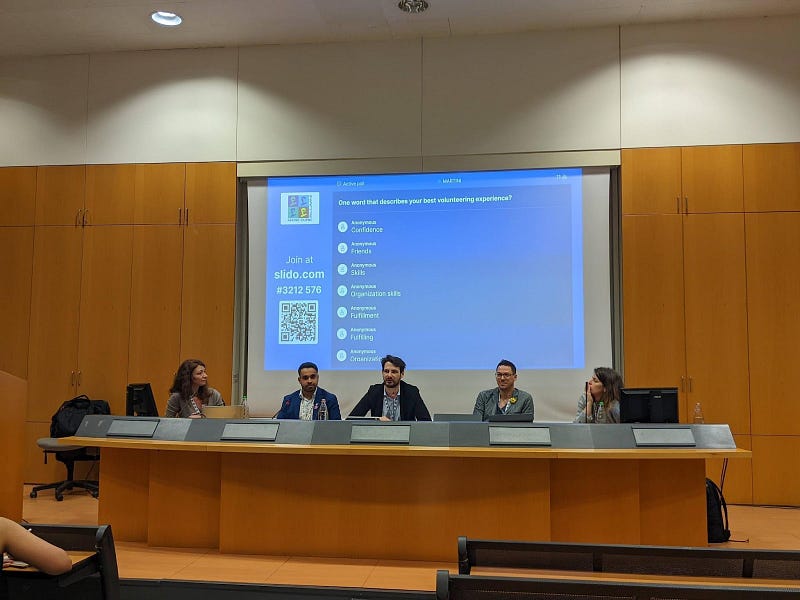
These improvements not only contributed to their personal happiness, but also served as a catalyst for their career, as the stories of the following 5 MCAA members show:
Fernanda:
Feeling stuck in academia, Fernanda needed a change, but had no idea how to move forward, since life in academia only exposed her to a limited number of different perspectives. Seeking guidance, she met with a career advisor who steered her towards a more proactive role in the MCAA. Fernanda followed that suggestion and joined several groups and participated in the annual conference — an experience that proved to be profoundly eye-opening. As her responsibilities within MCAA increased, she gained invaluable management skills. Utilizing the prize money from her “Outstanding Contributor” award, she was able to finance a clinical trial, a big step towards her career as clinical research manager. Her years of dedicated volunteering within the MCAA rewarded her with many new skills and a remarkable CV. Thanks to her experiences in management as MCAA chair, in communication with the members of the MCAA and the European Commission, and in organizing the MCAA annual conferences, she can confidently substantiate all of her qualifications.
Ashish:
In 2017, Ashish joined the MCAA, initially to meet new people and expand his professional network. His journey took a turn when he spontaneously responded to a call to create a video for a communication workshop and his effort was rewarded with a positive outcome. When the chair of the Communication WG needed volunteers, Ashish stepped up and committed his time and energy to the working group. Assisting with organizing events, live-blogging, and managing social media, he quickly became a very active and an invaluable member of the MCAA. Initially, he felt uncertain at times about what he was doing, but he persisted, learned, made progress, and now finds himself in a position where he can help and guide others. His involvement in the MCAA sparked a passion for policy making and stakeholder management. This newfound interest together with his engagement for the MCAA ultimately helped him secure a spot in the highly coveted Bluebook traineeship of the European Commission — a testament to his abilities and the benefits of volunteering.
Ruben:
As a PhD researcher, Ruben never really considered a career outside of academia. Despite being a member of the MCAA for a while, his active involvement only began when his program required more outreach activities. Joining the Communication Working Group, he got quickly involved and highly engaged in the works of the WG. Through his volunteering he uncovered his passion for communication, and science communication in particular. Fascinated by SciCom, his interest for an academic career faded. After successfully completing his PhD studies, he decided to take a leap of faith and transitioned into the business sector, where he now works as Medical Communications Manager. He secured his position not only because of his academic achievements, but also because of the communication and management skills that he acquired through volunteering with the MCAA. His active participation in the MCAA allowed Ruben to explore new interests, identify his talents, and develop skills that now contribute to his job satisfaction. His engagement was honored with the “Outstanding Contributor” Award, affording him to undergo additional training. Despite his career switch, Ruben continues to contribute to the MCAA as communication manager, driven by the desire to give back for the support he received.
Renaud:
Renaud shows volunteering for the MCAA can also enhance your academic career,. After earning his PhD, Renaud completed three Postdocs, including one as a MSCA fellow. It was during that time the MCAA was formed and Renaud became one of its first members. Coming from a family of non-academics, he was looking for a role model of professional leadership, since life in academia can be difficult to navigate without a mentor. Once he established himself in academia, Renaud decided to take it upon himself to become a mentor. His involvement with the MCAA’s Policy Working Group and his position in the board of the MCAA and as Chair of the Swiss chapter paved the way for broader engagements. He was invited to join the board for the Initiative of Science in Europe and subsequent roles as stakeholder in European projects. Through his dedication to the MCAA, Renaud gained the experience and confidence necessary to embrace leadership roles; he is now chairing several committees at his university. These invaluable leadership skills simply cannot be learned from a book.
Joana:
Joana started volunteering later in life, yet it directly influenced her current career. As a Portuguese national working in London, she joined the Portuguese Association of Researchers in the UK, an experience which she describes as impactful and empowering. Suddenly exchanging emails with Portuguese Nobel Laureates became a surreal reality. Initially drawn to the association to find friends in a foreign country, Joana quickly saw the potential to network and gained insights into societal challenges through her volunteering . Empowered by her experiences, Joana decided that something had to be done, and she co-founded the social enterprise Native Scientists, a non-profit organization aimed at promoting science and language literacy among school children and to celebrate diversity in science, education and society. Juggling her roles as a full-time researcher, founder of the NGO, and mother, Joana found herself at a crossroad. Realizing the limitations of time, she decided to be brave, quit her job as a researcher and became the full-time director of the NGO, embarking on a new chapter in her life. She recruited hundreds of scientists for Native Scientists to visit schools and talk to children about science, 80% of whom are women, providing important role models for young girls.
Joana also presented some statistics from her volunteering experience. A survey conducted among volunteers in Portugal and the United Kingdom revealed that the benefits of volunteering extend beyond enhancing one’s CV and skills. Remarkably, 50% of respondents reported experiencing improved physical health and fitness as a direct result of their volunteer work, and 71% replied that volunteering helped them combat feelings of depression. Additionally, employers recognize the value of their employees volunteering, with 83% viewing employees who volunteer in a more positive light, and 43% believing that voluntary work aids in skill development, subsequently leading to promotions and salary raises.
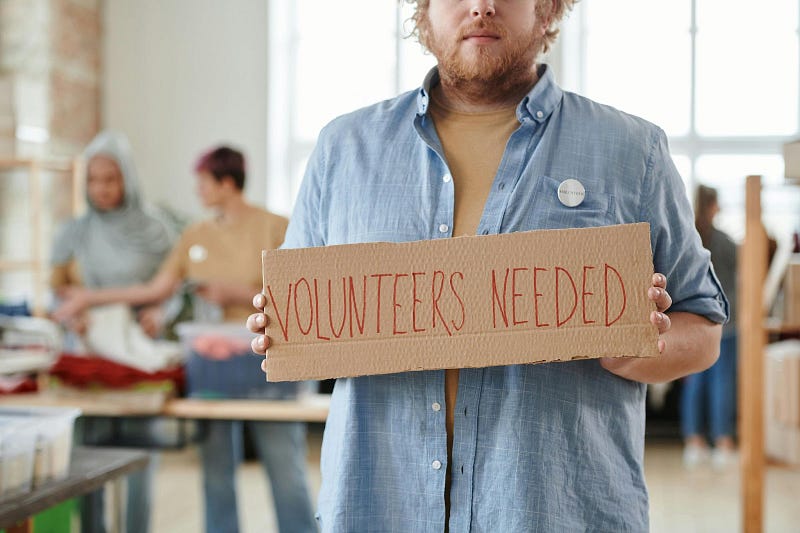
If you are interested in how you can contribute to the MCAA, acquire new skills and advance your career, check out the working groups and chapters who are always looking for enthusiastic new members: https://www.mariecuriealumni.eu/groups
About the Author:
Luisa Merz is a PhD student in Biotechnology at KTH Royal Institute of Technology in Stockholm. She is an active member of the MCAA Benelux chapter and Communication working group. Her first volunteering experience was in cleaning up her hometown.