Special Issue - Science communication: Making research accessible - Integrating science communication in a natural sciences project: Reflections from Eco2Wine
While science communication is increasingly acknowledged as important, it remains peripheral in many natural sciences projects. The MSCA Doctoral Network Eco2Wine takes a different approach, positioning science communication as a core research and training objective. As the project nears its halfway point, Eco2Wine offers early lessons on what the meaningful integration of science communication looks like in practice.
In natural science projects, science communication is often treated as an afterthought, with, for example, a press release or newsletter article once the research is done and published. The MSCA Doctoral Network Eco2Wine is taking a different approach. In this project about investigating microbial interactions for sustainable winemaking (Grant Agreement 101119480), science communication is an integral component from the outset, embedded into its research, training and practice.
Following a recent trend of MSCA Doctoral Networks in the natural sciences formally integrating science communication as a core competency, Eco2Wine can serve as a case study for how communication can be embedded within research objectives, including a reflection on the benefits and challenges associated with this approach. The project is now nearing its halfway point, and this article reflects on the motivations behind this approach, how it has been implemented, and emerging insights thus far.

A priority from the beginning
Eco2Wine brings together ten doctoral candidates (DCs), beneficiary institutions and associated partners in a consortium that spans seven countries: Spain, France, Germany, Italy, Slovenia, Georgia, and South Africa. The interdisciplinary nature of the project, combined with strong industry partnerships, creates a research context where a focus on communication is essential.
From the beginning, the project leaders recognised that traditional dissemination models would be insufficient for addressing the complex, applied, and highly localised nature of knowledge exchange in the wine sector. Instead, communication was embedded into the design of the project, with DCs receiving training in science communication alongside their research. While eight of the ten DCs work on technical aspects, one DC focuses exclusively on communication between scientists and wine producers, and another focuses on communication and marketing with wine consumers. This integration of science communication was a deliberate attempt to equip the young researchers with the skills and experience needed to engage meaningfully with diverse stakeholders across linguistic, cultural, and disciplinary boundaries.
What it looks like in practice
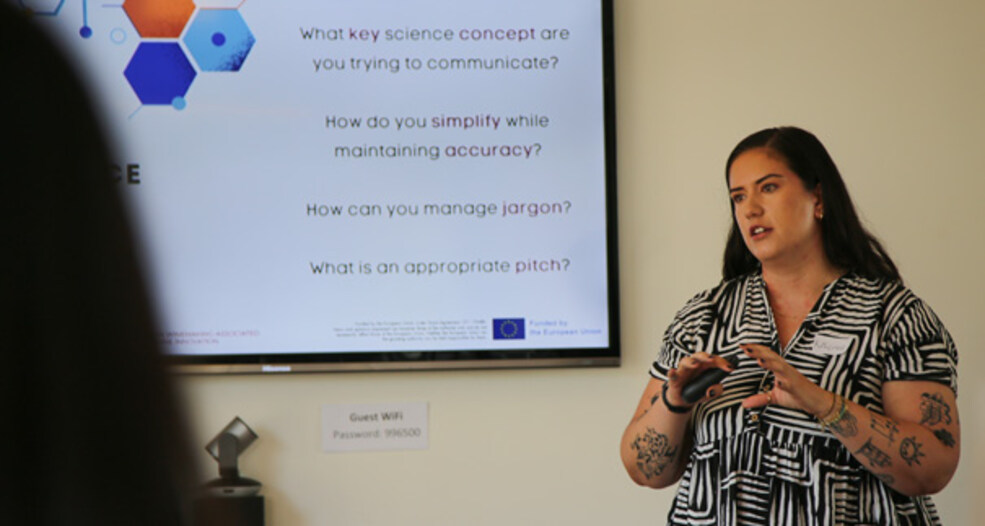
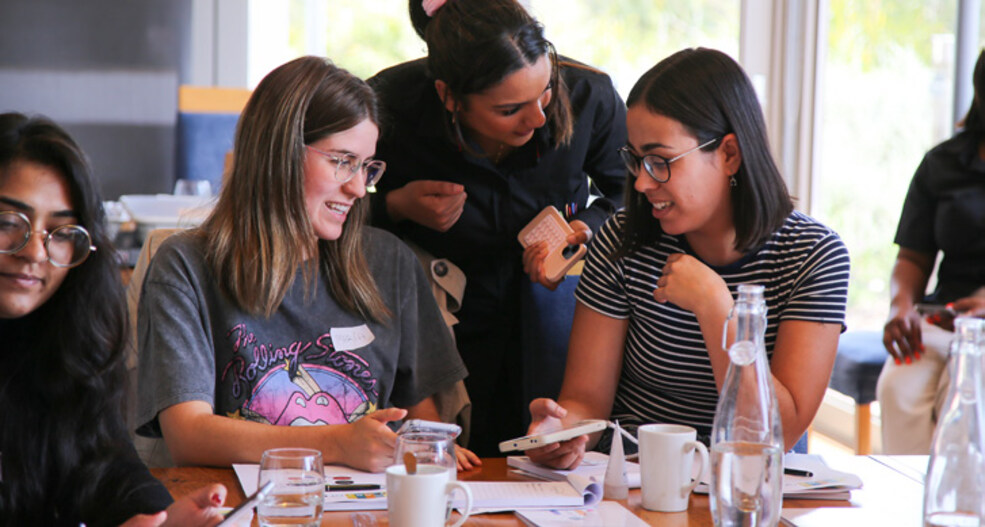
All Eco2Wine doctoral candidates are trained in science communication and take part in the communication and dissemination activities related to the project. In small groups, they rotate through managing and contributing to relevant social media channels and write popular articles shared on the website. While together in South Africa in October 2024, they worked with a professional media company and a local journalist to film short videos explaining their research projects and write blog posts reflecting on their PhD journey so far.
This approach has strengthened not only their skills in communicating to audiences outside of academia, but it has also supported communication within the project consortium. With researchers spanning multiple disciplines, including microbiology, biotechnology, economics, and marketing and science communication, being able to communicate one’s research clearly with colleagues is a key professional skill.
Nonetheless, challenges persist. All researchers entered the project with different comfort levels with science communication, and in some contexts, communication is still viewed as secondary to other scientific work. Navigating these cultural and epistemological differences takes time, patience, and institutional support.
Challenges and opportunities
While the integration of science communication into Eco2Wine has created value for the project, it has also presented some challenges. MSCA Doctoral Networks are rigorous and demanding programmes, requiring the completion of a PhD in only three years. Therefore, the DCs’ time is already stretched across their own research and scientific training requirements. Investing time in forms of communication that do not lead to traditional academic outputs can feel at odds with publishing demands and other research metrics.
That being said, the benefits so far are notable. The DCs have been encouraged to reflect on the relevance and impact of their research as they work to communicate it in accessible and engaging ways. Many DCs have also noticed their confidence increasing in communicating both in academic and non-academic settings as they have begun to build a portfolio of science communication experiences and outputs that will continue to serve them post-PhD.
From output to practice
Eco2Wine offers one model for embedding science communication as practice in a large research project, ensuring meaningful connections between science and its publics. For other MSCA networks, particularly in the natural sciences, lessons from Eco2Wine can provide insights into how to incorporate science communication as a core competency and commitment. This shift aligns with the broader goals of the MSCA: to produce researchers who can engage across sectors, cultures, and communities.
Follow along with Eco2Wine on our project website, LinkedIn and Instagram pages.
Katherine Rabik
Stellenbosch University, South Africa