Special Issue - Science communication: Making research accessible - From TikTok to trust: Rethinking science communication in the age of algorithms

In a world of viral videos and endless scrolling, scientists are learning to tell their stories in new ways. But can they keep their messages honest and clear in the race for clicks and views?
The attention challenge in the digital age
In a world where a 30-second video can shape beliefs and public opinion, scientists are competing with viral content for both attention and trust. The digital age has opened new doors for researchers to creatively expand their public outreach, but has blurred the line between information and entertainment. A 2020 article in Frontiers in Communication by Pavelle and Wilkinson explored how platforms like Instagram and YouTube are reshaping science communication, becoming the new arenas for communicating science. We are continuously learning how these platforms influence a new, informal way of engaging with science. While they play a valuable role in making science more accessible and engaging for diverse audiences, researchers face the challenge of adopting a more humanistic approach to communication, as presenting raw data and complex figures is no longer sufficient. Instead, researchers are encouraged to translate their findings into stories that connect scientific knowledge with everyday experience and emotion. Yet, this is no easy task. How can researchers balance accessibility, nuance, and trust in an algorithm driven world?
From journals to feeds
Digital platforms have transformed how people encounter science. From static journal pages to scrollable, shareable content, science is more accessible than ever before. Social media not only connects people across the world, but also enables scientific ideas to reach audiences that traditional academia rarely engages. These amplified voices are creating a more diverse picture of the scientific community, empowering early-career researchers, women, and underrepresented groups to share their own stories. For many younger audiences immersed in digital media, this can be their first introduction to real-world science, whether through a podcast clip or YouTube video. This shift invites scientists to become storytellers and adapt their communication strategy to suit the nature of each platform.
One of the most effective strategies for digital science communication is using a narrative tone to give scientific ideas a human voice. Neuroscientist Samantha Yammine has mastered this approach on Instagram and TikTok. Through conversational reels, she explores a range of topics from brain plasticity to the sounds sharks make, using plain language and a friendly tone. By drawing on her own lab experiences and curiosity, she turns complex topics into relatable narratives and engaging educational videos.
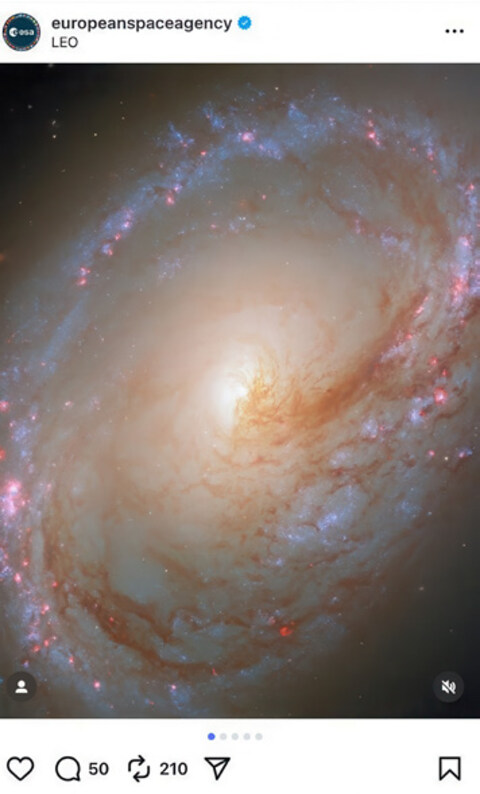
The European Space Agency’s (ESA) Instagram presence offers another model. Through breathtaking satellite images, mission updates, and astronaut perspectives aboard the International Space Station, ESA transforms abstract space science into visual carousel posts that spark wonder and lively discussions in the comment sections. Each post connects data to emotion, reminding audiences that space exploration is not only a technological pursuit but a shared human adventure for the benefit of humankind.
Successful science communicators avoid jargon and build emotional connections with their audiences through visual and narrative cues native to their chosen social media platform. TikTok rewards humour and immediacy while Instagram thrives on aesthetics and consistency. Effective communication is not about diluting the science, but about matching message and medium.

When algorithms meet ethics
The tools of communication that expand reach can also create ethical tensions. Algorithms amplify what is engaging, not necessarily what is accurate. In this environment, there is a temptation to oversimplify, dramatise or create clickbait content. Scientists should walk a careful line between accessibility and rigour, and between entertainment and credibility. Ethical and responsible science communication involves transparency and accountability. Citing sources, acknowledging uncertainty when it is warranted, and being transparent about the limits of current knowledge are all methods that contribute to building a credible reputation. A fast-paced, eye-catching video might attract attention, but trust is built when researchers show humility and honesty about their work. As astrophysicist Becky Smethurst notes, admitting what we don’t yet know can strengthen credibility rather than weaken it. Scientists on digital platforms are not just content creators; they are custodians of credibility in an oversaturated information landscape.
Digital science communication democratises access to knowledge, but it also risks distortion when engagement becomes the only goal. The most effective communicators recognise that creativity and responsibility must go hand in hand. By embracing storytelling, visual aesthetics and dialogue, researchers can make their work resonate far beyond academia. Communicating research is no longer an optional activity, but an essential step in ensuring that knowledge serves society.
In an age where algorithms shape what we see, the future of science depends not only on what we discover but on how we tell its story.
Reference:
Pavelle, S., & Wilkinson, C. (2020). Into the digital wild: Utilizing Twitter, Instagram, YouTube, and Facebook for effective science and environmental communication. Frontiers in Communication, 5, 575122. https://doi.org/10.3389/fcomm.2020.575122