Special Issue - Science communication: Making research accessible - Storytelling brings data stewards to light
When the new profession of data steward emerged in science, even experts struggled to define it. The European Open Science Cloud (EOSC CZ) has used storytelling to make these hidden professionals visible – turning data stewardship into a relatable story about people, collaboration, and the future of Open Science.
A new role in science
Data has accompanied humanity for centuries, from carved symbols and handwritten records to digital spreadsheets stored in the cloud or forgotten on old drives. Today, the challenge is to care for modern research data. But who should ensure this care?
Researchers are often overwhelmed by their projects and the growing volume of data they produce. To help them manage, share, and preserve this data effectively, a new group of professionals has emerged, people who understand both the scientific process and data management. They are known as data stewards: experts who organise, secure, and prepare research data for reuse.
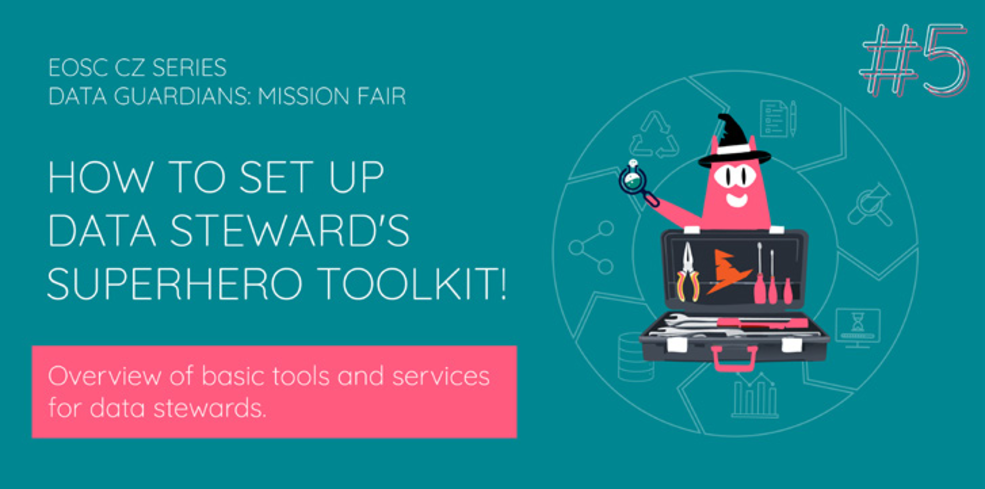
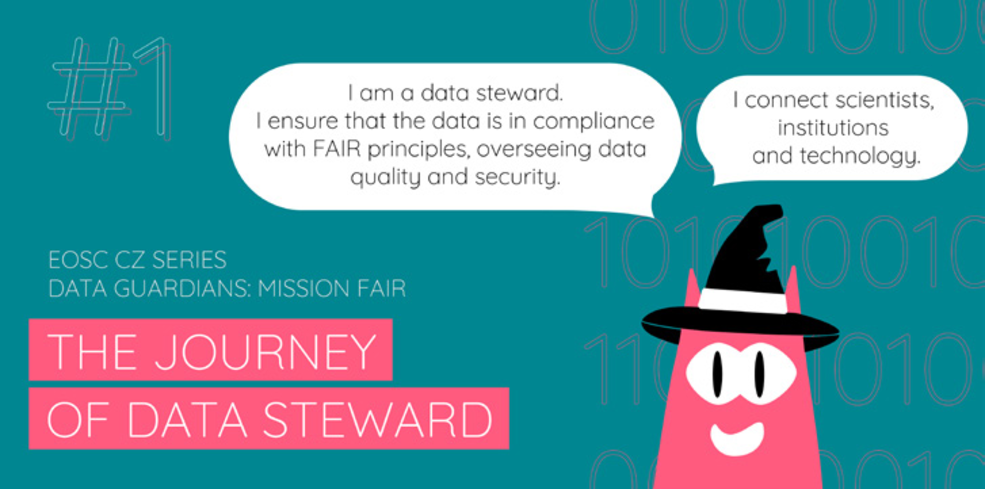
To help researchers and institutions understand why data stewardship matters and how this role can transform scientific practice, EOSC CZ decided to take a creative route. Instead of publishing another technical guide, the team launched a six-episode web series called Data Guardians: Mission FAIR. Using humour, narrative, and visual storytelling, the series brought this new profession to life and showed its real value for modern research.
Why storytelling works
Each episode of the series explored a different part of data stewardship, using short illustrated stories to make complex ideas easy to grasp. The series showed how these experts establish their roles and connect research with everyday practice. Later episodes highlighted tools, training, and community building, introduced the national map of data stewards, and demonstrated that good data management enables science to be repeatable, verifiable, and open.
“We wanted to show what data stewards actually do and why their work is vital,” says Pavlína Špringerová, UX designer and co-author of the campaign. “Storytelling gave us a way to connect with researchers on a human level and make them care about data.”

A fictional university
The series takes place in a fictional university, with characters facing problems familiar to any researcher, from preparing a grant proposal to choosing tools or setting up repositories. The model setting allowed the team to combine humour and realism while avoiding institutional sensitivities.
Zuzana Morkesová, illustrator of the series, explains: “Fiction helped us make the role universal. Each story reflects real challenges — collaboration, communication, and curiosity. And it was fun to make.”
The illustrated format also made the campaign visually appealing, helping it to reach audiences beyond the research community through social media and university channels.
Mapping the community
Alongside the campaign, EOSC CZ developed a national interactive map of data stewards, a practical tool that turned awareness into action. It helps researchers find local support and allows stewards to connect, exchange experiences, and build recognition within their institutions.
“For many stewards, the map proved they are not alone,” says Martin Dvořák, data analyst and author of the map. “Every new dot on the map confirms that this profession is becoming recognised.”
The initiative shows that science communication can bring tangible infrastructure improvements, not just awareness. What began as a creative outreach campaign evolved into a functional national network and a model for others to follow.
Impact and lessons
The campaign raised awareness of who data stewards are and why their role matters, helped professionals gain confidence and visibility, and offered practical tools, such as the national map for researchers seeking support. Most importantly, it showed that science communication can mix creativity with real impact.
From the EOSC CZ experience, several lessons emerge: use stories to make expertise visible, combine narrative with practical tools to turn awareness into action, show real dilemmas rather than only successes, and add humour and empathy to build trust. These principles can apply to any communication effort aimed at changing research culture.
A fun and serious mesage
Data Guardians: Mission FAIR proves that science communication does not need to be dry to be effective. By turning a complex institutional change into an engaging story, the campaign helped legitimise a new profession and build a stronger open-science community.
Lucie Skřičková
Masaryk University, Czechia
Dominika Králiková
Masaryk University
Zuzana Morkesová
Masaryk University
Pavlína Špringerová
Masaryk University