Conversations on science communication - Bringing science into everyday spaces - December 2025
From turning classrooms into escape rooms to bringing science to market stalls and music venues, Salva Ferré has spent over a decade finding creative ways to connect research with people’s daily lives. As Co-founder of Eduscopi and Co-director of the UVic–Eduscopi postgraduate programme in science communication at the University of Vic - Central University of Catalonia, he shares his reflections on what makes communication meaningful, why face-to-face encounters often create a deeper impact than online reach, and how curiosity remains at the heart of every good story.
What methods work best for reaching different audiences?
At Eduscopi, we use a wide range of formats, including books, videos, podcasts, museum exhibits, escape rooms, and citizen science projects. The key is not the medium itself but understanding which format best suits each audience and objective.
Lately, I have been reflecting on how we often confuse reach with real impact, particularly on social media. A large number of followers does not necessarily mean meaningful engagement. In contrast, what we call ‘on-life’ communication, which involves direct and proximity-based activities, often leaves a stronger and more lasting impression. When you can look people in the eye, talk and listen, that exchange stays with them.
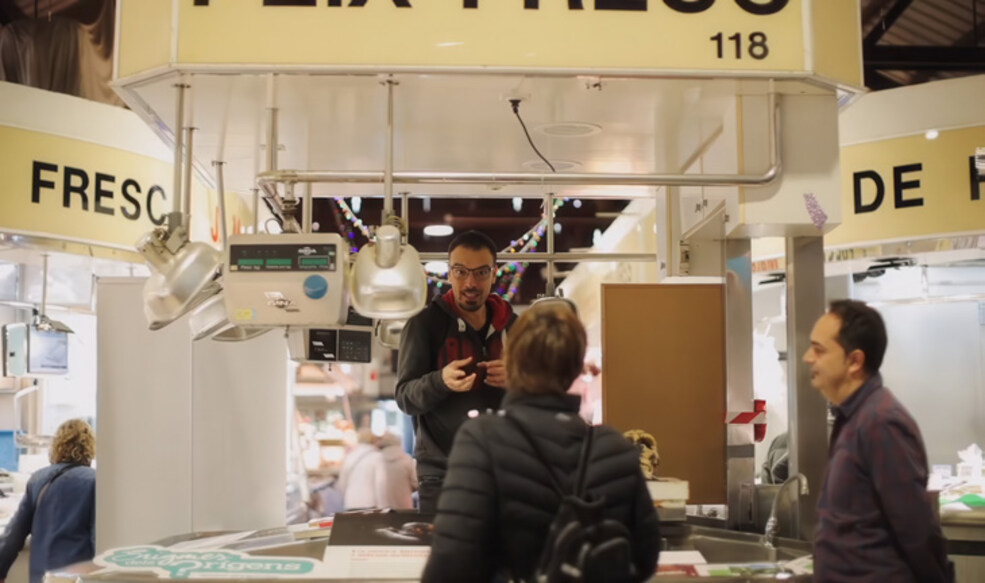
For example, when designing the Strategic Scientific Communication Plan for L’Hospitalet de Llobregat in Catalonia, Spain, we brought science to unexpected places such as market stalls, the underground and even as opening acts for blues and jazz concerts. This approach invited dialogue with people who might never attend a science talk. Similarly, our museum exhibits and citizen science projects in schools have shown how participatory experiences can genuinely change perceptions about science.
This idea of measuring real impact, rather than just visibility, reminded me of the book Science with Impact by Anne Helen Toomey, which offers insightful reflections on how communication and research can make a tangible difference. I highly recommend it.
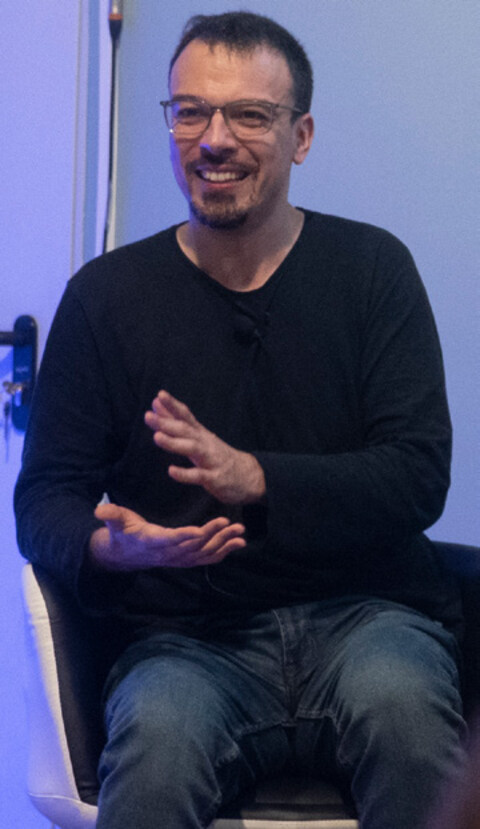
Salva Ferré is a biologist with a PhD in Biochemistry and Molecular Biology. During his PhD, he realised he loved science so much that he couldn't focus on just one specific research area: He wanted to learn more and, most importantly, explain science to others. This led him to a career in science communication, outreach, and education, where his work includes writing and editing books and articles, scripting videos and animations, and developing exhibitions and escape rooms. Ten years ago, he co-founded Eduscopi and created the UVic- Eduscopi postgraduate programme in science communication.
How do you use storytelling and creative formats in your work?
Even before Eduscopi was founded ten years ago, we were already using applied creativity techniques to develop new ideas for formats, narratives, examples, and metaphors. We often draw on resources such as Neuronilla, which help us to explore creative thinking and discover original approaches, especially for educational materials.
Unfortunately, the stereotype of science explained as a simple list of facts still persists. Too often, lessons focus on memorising rather than understanding, reinforcing the idea that science is just a collection of truths to be recalled when asked. But science is much more than that. It is a way of interpreting the world that everyone, by nature, is equipped with. Every person asks questions, observes, experiments, and draws conclusions, often without realising they are applying scientific thinking.
For decades, science communicators have worked to move away from this cold and distant image. Cosmos, by Carl Sagan and Ann Druyan, remains a landmark example of how storytelling can make science emotional, philosophical, and deeply human. When we go beyond asking only ‘what’ to also explore ‘who’, ‘how’, ‘when’, ‘where,’ and ‘why’, we open a richer world of communication, one that helps people see themselves as part of the story of science.
How do you deal with misinformation and build public trust, especially now that AI tools amplify the problem?
Misinformation and mistrust existed long before the internet, but digital platforms have given them extremely fertile ground. Today, false information spreads like an uncontrolled wildfire, and AI is fuelling the flames even further. A recent Kurzgesagt video captures this perfectly. We are seeing more and more bot- generated comments and low-quality content. That content then trains new AIs, which produce even more misinformation, creating a feedback loop that erodes trust.
At Eduscopi, we don’t engage in reactive debunking, which often amplifies the very ideas we are trying to counter. Instead, we focus on two complementary strategies: proximity- based communication and high-quality online resources.
Proximity and experiential learning: We find that in-person, experiential communication has the greatest impact. It moves science away from a distant, elitist image and shows it as a human endeavour made by and for people. For example, we are launching a project with older adults, beginning with open, non-judgmental dialogue sessions where we simply ask what they want to know. We listen first, then design communication activities based directly on their real concerns and interests.

Reliable online resources: Social media is not always the best battlefield. Platforms follow opaque rules and rarely favour evidence-based content. This does not mean abandoning online communication, but rethinking where we place our efforts. Universities and scientific institutions should offer trustworthy, well-written and accessible material that can genuinely compete in search results. Good search engine optimisation (SEO) for high-quality information is essential.
Institutions such as Berkeley’s Understanding Evolution or the Portal Clínic from Hospital Clínic de Barcelona are strong examples. A more local example is our Catalan science- popularisation podcast Ciència imprescindible (2021), in which we answered questions submitted by users of the Barcelona Public Library Network.
This combination of proximity-based engagement and reliable online resources allows us to build trust without feeding the cycle of misinformation.
How do you evaluate your science communication projects’ effectiveness?
Evaluation is fundamental, as Craig Cormick emphasises in The Science of Communicating Science, where he devotes an entire chapter to it. Each project needs its own indicators and methodologies, which we define on a case-by- case basis. This has been especially important in our citizen science projects and in the strategic communication plans we prepare for universities and public administrations.
In L’Hospitalet, for example, we analysed three years of previous activity and created indicators that later shaped the city’s five-year objectives. These same indicators also became creative tools, helping us design new actions that already take metrics into account.
We use a mixed-methods approach, combining quantitative and qualitative evidence. Beyond basic numbers like attendance, we focus on what we call significant engagement: meaningful questions, thoughtful conversations, or people shifting from passive presence to active involvement. A large event may generate only a few such moments, while a small action in a public market can produce dozens.
For some activities, such as museum exhibitions, we also track the number and type of questions received, which we later answer on a webpage. This gives us both engagement data and insight into what genuinely interests people.
We complement this with qualitative input from open-ended questionnaires or focus groups to understand changes in attitudes or understanding.
Time constraints mean we cannot publish everything we learn, but even so, I have produced more scientific publications at Eduscopi than during my entire PhD.
What advice would you give researchers who want to improve their science communication skills, especially when engaging broader publics or policy audiences?
I believe there are two simple yet powerful tools:
Seek inspiration: This is perhaps the most important one. Consume a lot of science communication and outreach, both within your specific field of research and, crucially, from more distant fields. Actively analyse it: What do I like, what don’t I like, how do they keep my attention? Do this across all possible formats, including books, articles, podcasts, and videos. Craft your own communication voice.
Define your message: Honestly ask yourself what your main message, primary objective, and specific audience are. If you ask yourself these questions, you shouldn’t get the same answers when you think about a scientific article, a poster for a conference, or a visit to an elementary school. The creation of the communication should take all three contexts into account.
Beyond that, dare to try, test, analyse, play, and have fun! If you find a format interesting, launch a few pieces of content to gain experience. However, if you gain this experience by generating content or giving talks for other people or organisations, you should charge for it. Your training and experience enable you to create that content, and that has a price. Unlike other human disciplines, like economics and law, researchers often communicate too freely or solely out of a sense of responsibility. Science communication is a profession.
And if we can help you with any training or consulting, we’re here! Feel free to contact us.
Interviewee
Salva Ferré
Eduscopi
Srishti Goyal
MCAA Newsletter Editorial Board